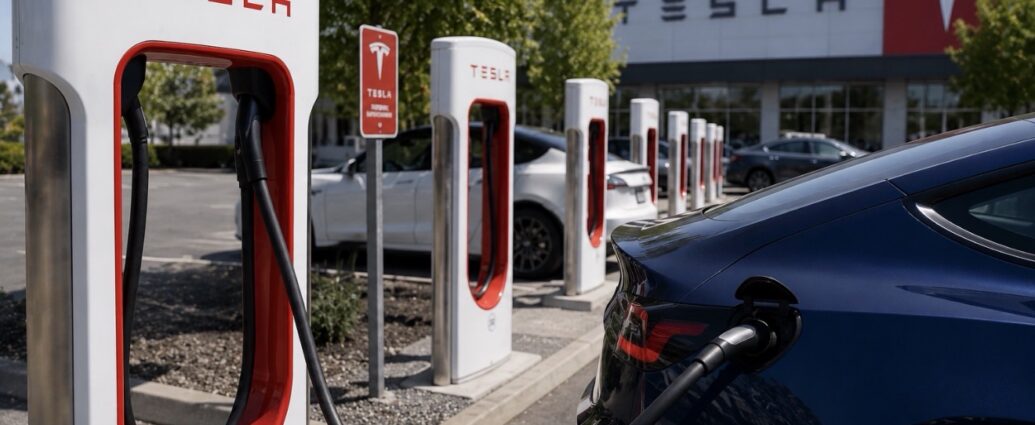
With the last of the federal electric-vehicle subsidies now stripped away, the case for going electric increasingly comes down to plain math — and a growing pile of real-world data is telling buyers the most expensive part of the car lasts far longer than they feared.
The timing matters. On Thursday, July 2, 2026, Tesla reported through its investor-relations release from Austin, Texas that it delivered 480,126 vehicles in the second quarter, its strongest Q2 ever and a 25% jump from a year earlier. But the strength was overseas. In the United States, Cox Automotive estimates Tesla’s sales fell about 20% after the $7,500 federal tax credit for new EVs expired on September 30, 2025 under the One Big Beautiful Bill Act. The companion $4,000 used-EV credit is gone too, and the federal tax break for home chargers lapsed on June 30, 2026 — less than a week ago. For American shoppers, the government’s thumb is off the scale.
That is exactly why battery durability has become the number that counts. For years, buyers treated the battery like a ticking clock, bracing for a $5,000-to-$20,000 replacement before the loan was paid off. New fleet data says that fear was overblown for most drivers.
On April 28, 2026, telematics company Geotab published an analysis of more than 22,700 electric vehicles across 21 makes and models and found batteries lose an average of just 2.3% of capacity a year. At that pace, a typical pack still holds about 80% of its original range after eight years — above the 70% floor most warranties guarantee. Geotab tracks battery health by measuring energy in during charging and out during driving, building a long-term trend rather than leaning on a single lab test.
Recurrent, a research firm pulling data from more than 30,000 EV drivers, reached the same conclusion from another angle. Liz Najman, the firm’s director of market insights, said cars with 150,000 miles or more still carrying their original battery are holding at least 83% of their original range. She describes battery aging as an “S curve” — a quick early dip, a long flat middle, then a steeper drop near the very end. Most of the wear people dread happens in the first few years, then nearly stalls.
Individual high-mileage cars back it up. Davide Giacobbe, co-founder and chief executive of Voltest, which tests used EV batteries for dealerships, said he has checked vehicles with 300,000 miles on the odometer still holding around 75% of capacity. “That is almost 500,000 kilometers,” he said. “I challenge you to do 500,000 kilometers in an internal-combustion car.” He noted that cheaper lithium iron phosphate (LFP) packs, now spreading across mainstream models, are aging even better than the older nickel manganese cobalt (NMC) chemistry.
The research is not all reassuring, and the warnings carry a price tag. Geotab pinpointed the biggest thing that shortens battery life, and it is in the driver’s control: heavy reliance on high-power DC fast charging above 100 kilowatts. Cars leaning on the fastest public chargers were projected to keep about 76% of capacity after eight years, versus 88% for cars charged mostly at lower power. Extreme heat speeds wear too. That gap changes the math for delivery fleets and long-haul commuters who live on fast chargers.
For the businesses built around cars — dealers, lenders and insurers — the durability data reshapes how a used EV should be priced. If the battery routinely outlasts the rest of the vehicle, a used electric car should be valued on mileage, accident history and software support, the same way a gas car is, rather than on a worst-case assumption that the pack is about to die. With no federal credits left to prop up sticker prices, the used market is where affordability now lives — and steadier resale values would firm up lease terms and lower the risk lenders price into EV loans.
Adam George of Cox Automotive said the rare early battery failures that do occur are almost always covered defects, not normal wear. “That’s what warranties are for,” he said, likening it to a blown engine on a gas car. Nearly every EV sold in the U.S. since 2012 carries a battery warranty of at least eight years or 100,000 miles.
The takeaway is not that EV batteries never wear out. It is that they wear out far more slowly than the market assumed — and in a post-subsidy market, that durability may do more to sell electric cars than any tax credit ever did.
JBizNews Desk | Austin, Texas
© JBizNews.com All Rights Reserved. Reproduction or distribution without written permission is prohibited.