Anyone acquainted with yesteryear footage or recordings of Yemenite musical endeavors in this country will, no doubt, have noted the rudimentary nature of some of the instruments. In particular, there was the ubiquitous olive oil can or cookie tin used – with great dexterity, one should note – as a percussion anchor.
Eyal Wahab subscribes to the basic apparatus approach to music-making as a member of the El-Khat trio. “A dominant feature of the group is the instruments we play that I built myself – it’s a sort of upcycling,” Wahab explains. “We also play original material, with colors of the traditional Yemenite music.”
That provides useful pointers to Wahab’s artistic philosophy – although it is the Ethiopian Yemenite Takzina ensemble that he will be heading at this year’s Hullegeb Israeli-Ethiopian Arts Festival (June 23-25). The event, which has, among others, been providing a stage for Israeli artists with Ethiopian roots since 2010, takes place under the auspices of founding venue Confederation House, overseen by the institution’s long-serving CEO and artistic director, Effie Benaya.
Over the years, the Jerusalemite center for ethnic music and poetry has spread its disciplinary wings and cultural baggage hinterland – from its idyllic perch opposite the Old City walls – with an expansive gallery of acts ranging from Swedish folk songs and jazz to classical Iraqi music and much betwixt. Hullegeb, by the way, means “All are welcome” in Amharic; so that suits.
The Takzina Troupe fits that eclectic bill. (In Yemenite, “takzina” translates as family gathering or family event.)The band is due to play at the Mazkeka in downtown Jerusalem on June 24 (doors open 9 p.m., show starts 9:30 p.m.). Wahab, a second-generation Kfar Saba-born, now Berlin-based, Israeli whose grandparents made aliyah from Yemen, says he is always open to new ideas and is willing to go with the impromptu flow as the opportunities present themselves.
That stands to reason considering Wahab is only 42 years old – and a young-looking 42 at that – and, in musical terms, the product of both his ethnic DNA and the 1970s and 1990s rock music he gleefully wrapped his young ears around.
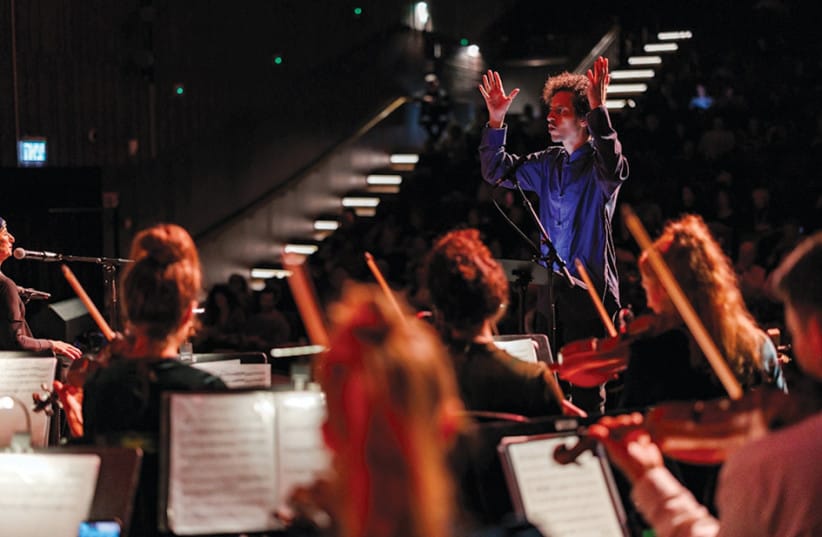
All the above come into the equation of both the groups he performs with. That goes for his work as an instrumentalist with El-Khat, and as the musical director and conductor of the ensemble he fronts, at next week’s Mazkeka gig.
“That [musical backdrop] comes into play more with El-Khat, but there are quite a lot of things we do with Takzina which are less traditional, and the arrangements [which Wahab writes] take on those colors. We can call it more modern colors.”
While never straying too far from the nuts and bolts of the genre, Wahab says there is plenty of room for maneuver betwixt the time-honored lines and hooks to which his Yemenite forebears adhered. “That comes through in the way we play. We don’t necessarily stick to the structure of the [foundational musical framework] maqam, or the specific musical articulation,” he explains. “That varies with the artistic content of each concert we do.”
Takzina has been around for four years now, but anyone who has not been living under a rock will be able to appreciate that it has not been exactly plain sailing for the group throughout, for all sorts of political, logistical, and other reasons.
“We started the orchestra in February 2022, and we had our first show around June,” Wahab recalls. “But things didn’t run smoothly because, you know, of the events of October 2023. Everything ground to a halt. We did a lot of things then, but there were a lot that we simply couldn’t do.” No need to dot the “i”s and cross the “t”s where that painful subject is concerned.
Wahab wanted Takzina to spread the good Yemenite musical word as far and as wide as possible from the get-go. Naturally, however, that became an almost insurmountable obstacle after Oct. 7. “We had a lot of gigs canceled [abroad]. We encountered what all Israeli artists had to endure then.”
So much for the official, media-fueled front. But when it comes down to individual brass tacks, things often take on a very different hue. An Israeli multidisciplinary artist I spoke to recently, who currently has an exhibition running in Europe, confided that while there were picket lines and protests outside the display hall, counterparts from Iran and Lebanon – among others – came up to him and expressed their support for his creative work.
Wahab says he has also received some behind-the-scenes slaps on the back after performances in foreign climes.
‘They are so happy they came, and are supportive’
“We have lots of friends – Muslims, Arabs, from Yemen, Lebanon, and Iraq who come to our shows. People often don’t know where we are from. They often think we are from Yemen. After the show, we meet, and talk, and we embrace. They are so happy they came, and are supportive.”
Contrary to general public perception, Wahab says, there are plenty of positive apolitical vibes and healthy dynamics to be had. “It goes beyond mere words and hugs. We often sit down to eat together [with Muslims], and they host us. We get so much love.”
The orchestra leader proffers a street-level handle on the source of the bad press. “All the hatred and the fear and the racist behavior that I experience come from young people – Europeans or Americans – not from Arabs, not from Muslims. It comes from the less intelligent members of the younger generation, who are insensitive. And they wave flags of peace! It is absurd and totally ludicrous.”
Today, Wahab spends much of his time on the road, setting off from his current base in Berlin for all points across the global map. But his route through life, particularly in a musical sense, could have turned out very differently had he not experienced a cultural epiphany quite some way down his personal timeline.
Like many of his generation and the previous one, the first one born in Israel to parents who brought their ethnic baggage with them to the Promised Land – and stuck to it in this largely westernized sliver of the Middle East – Wahab eschewed the centuries-old Yemenite sounds his grandparents clung to. It wasn’t easy.
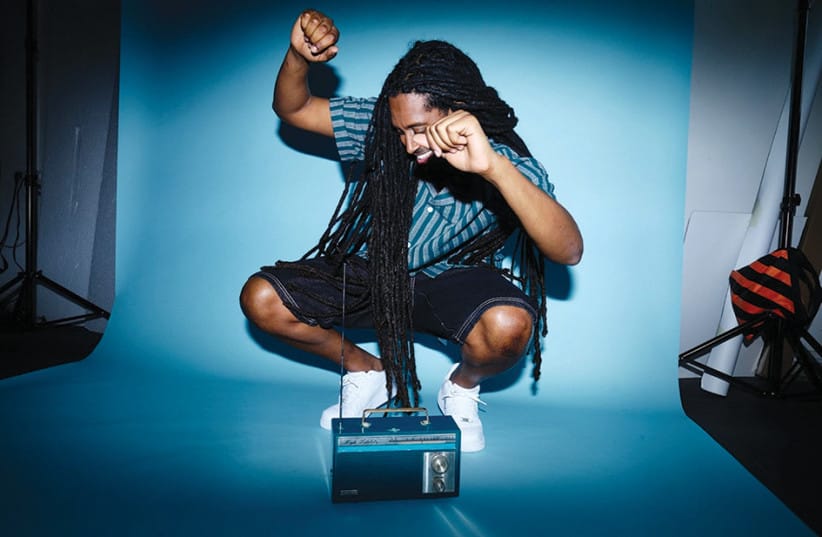
“I was surrounded by that music,” he recalls. “The singing and the music exist in the synagogue. You absorb it. It feels like an integral part [of the Yemenite community]. You take it in from an early age. And there were cassettes of music played at home, the traditional stuff or the 1980s Yemenite fusion music of artists like Zion Golan and [Yemenite-born] Aaron Amram.”
But Wahab wasn’t going to stick to the familial straight and narrow. “I heard the [Yemenite] language, but I didn’t understand it,” he says. Presumably, then, he developed some childhood inquisitiveness and a desire to understand what the older folks were going on about. Apparently not. “On the contrary, I hated it. I wanted to get it out of my life.” The Middle Eastern-looking kid just wanted to be accepted as a bona fide member of predominantly Ashkenazi Western-leaning Israeli society. “I even thought I was white,” he chuckles.
That is a familiar course traveled by the offspring of Sephardic olim (“immigrants”), such as now globally-acclaimed 70-year-old oud player-violinist Yair Dalal, who was born in Israel just one year after his parents made it over here from Iraq. He, too, grew up surrounded by the traditional sounds played, sung, and celebrated by generations of Iraqi Jews across two millennia.
And like Wahab, he also kicked out against “the old stuff,” starting his musical path playing blues and a little rock on electric guitar. It wasn’t until his 20s that he rediscovered his Iraqi roots, took up the oud and began zestfully delving into his genetic music.
Wahab also returned to the fold, albeit by a more prolonged route. “I followed a similar road, but it took me a lot longer to get back to my roots,” he observes. “It happened when I was in my early 30s.” In the interim, he grooved to British and American rock, especially of the early Seventies glam ilk, fronted by the likes of David Bowie.
Wahab says he “only” realized music was going to be his career at the age of 13 or 14. That doesn’t seem to be too late in life to discover what you are going to do for a living, but the germ was sown much earlier.
“I think I first picked up a guitar when I was around four.” That was a plastic toy shaped like the real thing. The preschooler was never going to stop there. “I was always focused on that. That developed to a wooden guitar, which I asked for and which, thankfully, I was given, and things just moved on from there.”
It transpires that Wahab’s previously stated declaration of war on his familial musical baggage was a little on the inaccurate side.
“I tried to repress it, but fortunately, I didn’t manage to do that. That was part of me. It drew me to it, and I liked it.”
The spanner in his musical heritage works was down to local microsociopolitics and peer pressure. “I was ashamed of it. I wanted to be ‘an Israeli.’ But I liked the music I heard in my backdrop, and I had friends in my neighborhood from the community. We’d hang out together and sing Yemenite songs. It was fun, but we kept it under wraps. People around us gave us the feeling that we didn’t belong [to Israeli society]. That’s the only reason why we pushed against Yemenite music.”
Wahab is a big boy now, and he has no need to repress anything. Happily and proudly, he touts the sounds he imbibed with his mother’s milk around the world, and he will bring some of that to Jerusalem next week.
He may have reconnected with his ethnic genealogy but Wahab is still very much a product of his own era, and tends to bend the rules. That is also reflected in the instrumental choice du jour.
“We’ll have 10 musicians at the Mazkeka, instead of 20 [full complement]. We’ll have the classic instruments, like brass and violins, but also a drum machine and some DIY instruments.” Wahab has made a habit of crafting his own music-making means, affixing a neck and strings to jerry cans and other detritus of contemporary urban life that he finds, putting them to good artistic use on stage.
“That’s what Ethiopians have traditionally done. So it will be a slightly different concert from the regular Yemenite orchestral thing. It will be different because of the instruments and the sound we create.”
Wahab also feels the June 24 show is in line with the spirit of the festival. “There is a deep cultural bond between Yemen and Ethiopia… and a little with regard to the musical elements of both countries. So I think that works for Hullegeb.”
That broadly sweeping ethos is evident right across the three-day agenda with plenty of quality fare on offer, both from the Ethiopian and extramural sides of the tracks. The homebase culture is well represented by the likes of singer AvevA Dese, veteran songstress Ayala Ingedashet, and rappers Mangisto, Fucho, and Tiki. And, as the festival finale, there is a fitting tribute to iconic Ethiopian songwriter Abebe Melesse, who wrote over 2,000 songs in the 1980s and 1990s.
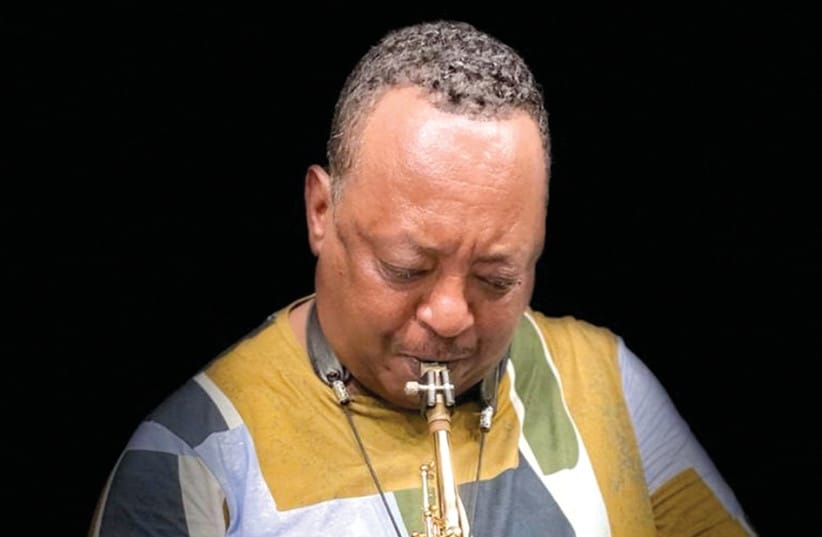
The boundaries of Ethiopian cultural fare are stretched at the Yellow Submarine on June 23 (doors open 8:30 p.m., show starts 9:30 p.m.) with a stellar trio of multi-genre pianist Omri Mor, Ethiopian-born jazz and blues-oriented saxophonist-vocalist Abate Berihun, and Brazilian percussionist Joca Perpignan.
Mor dips into jazz, classical music, Andalusian material, and an abundance of other styles and cultural milieus. So there will be plenty there to keep the audience fully engaged. Acclaimed bassist-producer Yossi Fine is also in the programmatic mix when he guests with singer Oshi Masala, and there is a perennial dance slot in the lineup at Confederation House on June 25 (6:30 p.m.) with the Zu-Ethiopia group.
For tickets and more information: *6226, www.tickets.bimot.co.il, (02) 539-9360 and www.confederationhouse.org