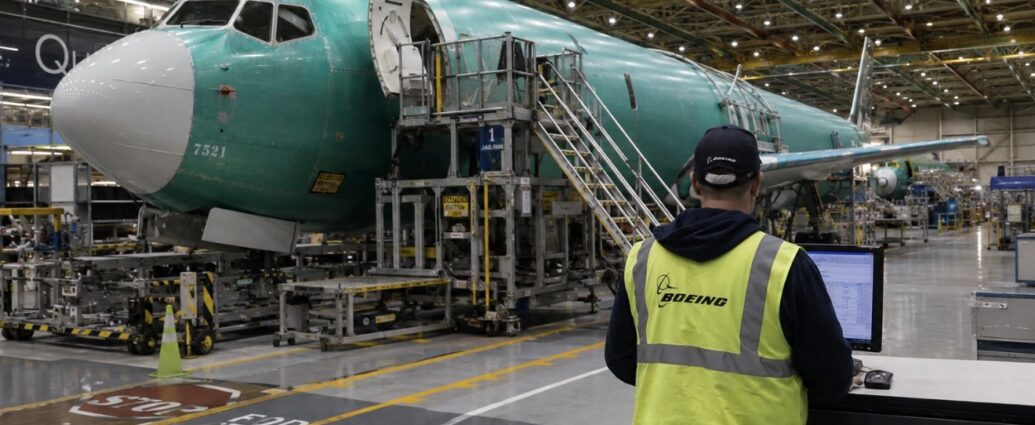
The Federal Aviation Administration proposed a rule on Thursday that the agency said would cut the cost and time required to win approval for new aircraft and engines, according to the proposal the FAA released, a change it framed as easing red tape without lowering safety standards. “This rule would be both deregulatory and relieving by reducing the number of exemptions, special conditions, and equivalent level of safety findings required during the certification process,” the agency said.
The proposal lands as a potential boon for the companies that build planes and the parts that power them. The FAA said the change could reduce the costs and time it takes to gain approvals of new aircraft and engines, a benefit for manufacturers like Boeing and GE Aerospace. For an industry where bringing a new model to market can take years, a faster path through the regulator’s review has direct financial value.
The core of the change is procedural. The FAA wants to modernize and streamline its certification standards for transport aircraft and propulsion systems, paring back the exemptions, special conditions and equivalent level of safety findings that slow the process, which in turn would “reduce certification costs and time to certify new and changed products.” The agency said the modernization would cut certification time and costs “while maintaining or increasing safety.”
The effort has been building for some time under new leadership. FAA Administrator Bryan Bedford has pushed for reforms and disclosed earlier this year that the agency had several projects working with industry to streamline the process, while Reuters first reported the planned changes in September. The reform also dovetails with international coordination. Last week, the FAA and the European Union Aviation Safety Agency said they were making significant progress toward approving two new variants of the Boeing 737 MAX.
The backdrop explains why the proposal matters so much to planemakers. Boeing has struggled with significant delays certifying its 737 MAX 7, 737 MAX 10 and 777X models amid design, quality and safety concerns. Those holdups carry a steep price. Certification delays are expensive not just for Boeing but for airlines planning their fleets, lessors, suppliers and passengers, who must wait years for aircraft with better fuel efficiency, lower emissions and quieter engines, and they raise the risk of cost overruns.
The business read-through runs straight to airlines and, eventually, to the flying public. When a new model is stuck in review, carriers cannot retire older, thirstier jets on schedule, and the operating savings that come with newer aircraft stay out of reach. A quicker, more predictable certification pipeline lets manufacturers book deliveries sooner and gives airlines firmer timelines for the fleet planning that underpins fares, routes and capacity.
The politics here are delicate, and the agency knows it. The FAA is aware of past scrutiny following the 737 MAX accidents and 787 production issues, and is under pressure from Congress, industry and the public to show its oversight is sound. That history is why the agency has repeatedly paired the word “streamline” with a promise that safety will be maintained or improved, an assurance critics will watch closely as the proposal moves through public comment.
Supporters argue the change is about cutting redundancy, not corners. The proposal focuses on streamlining bureaucratic bottlenecks: fewer exceptional rules, clearer guidance on design changes, and greater international alignment of regulations, resulting in less redundant work. The FAA has already been expanding its use of Technical Advisory Boards, groups of internal and external experts who review certification projects early to flag risk and avoid late-stage surprises.
The same deregulatory current is running through other corners of aviation policy. In March, the FAA consolidated commercial space launch and reentry licensing under its Part 450 rule, folding four old rules into one to reduce administrative and cost burdens on industry. Thursday’s proposal extends that philosophy to the heart of commercial aviation, the long, document-heavy process of certifying the jets that carry hundreds of millions of passengers a year.
For now, the rule is a proposal, not a finished regulation, and it will pass through review and public input before taking effect. But its direction is unmistakable. The FAA is signaling that it wants to make it cheaper and faster to bring new aircraft and engines to market, a shift with real consequences for Boeing, GE Aerospace and their competitors, for the airlines that buy from them, and ultimately for the cost and quality of the seats travelers book. The central test, as ever in aviation, will be whether faster approval can be reconciled with the safety record the public expects.
JBizNews Desk
© JBizNews.com All Rights Reserved. Reproduction or distribution without written permission is prohibited.