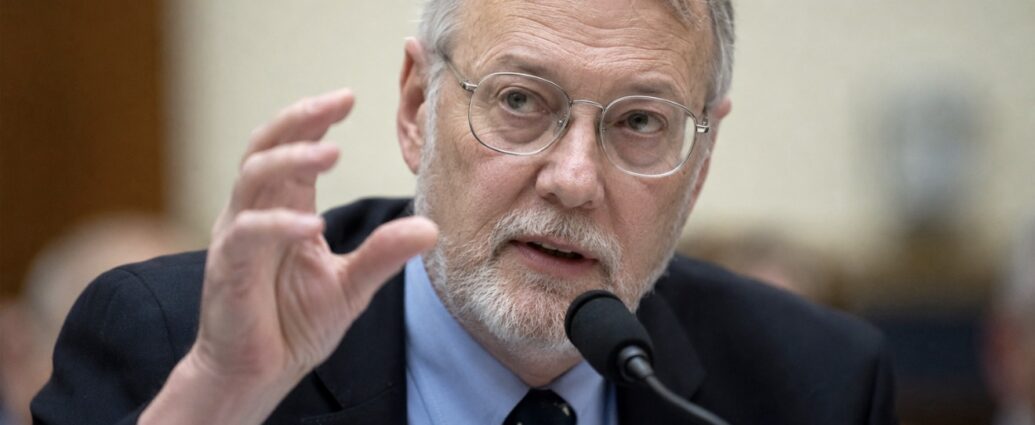
David Morens, a longtime senior adviser at the National Institute of Allergy and Infectious Diseases who worked closely with former NIAID director Anthony Fauci, pleaded guilty Tuesday to a federal conspiracy charge tied to efforts to hide government communications from public-records laws and influence federal grant decisions.
Morens, 78, admitted that he and others deliberately used private channels to keep official communications away from Freedom of Information Act requests and federal recordkeeping requirements. Prosecutors say the conduct centered on sensitive coronavirus-research matters and NIH funding decisions that had already drawn intense public and congressional scrutiny.
The mechanics of the scheme were simple and consequential.
Instead of keeping government business inside official NIH systems, Morens and others used his personal Gmail account for communications they expected might eventually be sought through FOIA. According to the Justice Department, those exchanges included nonpublic NIH information, discussions about restoring or protecting research funding, edits to letters intended for senior NIH officials and communications routed through a back channel to a senior NIAID official.
The guilty plea turns what had previously been a records-management controversy into a criminal matter.
Morens admitted conspiring to commit offenses against and defraud the United States, a charge carrying a maximum penalty of five years in federal prison. His ultimate sentence will be determined later under federal sentencing rules and could be substantially lower than the statutory maximum.
The plea also reaches beyond records concealment.
Prosecutors say Morens admitted participating in a conspiracy involving illegal gratuities. A co-conspirator provided him with wine and discussed meals at Michelin-starred restaurants in connection with assistance Morens was providing. The government says Morens identified work on a scientific commentary supporting a natural origin for COVID-19 as one of the official acts he could perform in connection with the gift.
That detail matters because it shifts the case from improper use of private email into the territory of using government influence for outside interests.
The Justice Department says Morens also worked to advance the interests of a company tied to bat-coronavirus research after an NIH grant had been terminated. Prosecutors allege he used nonpublic information and his position inside NIAID to help shape communications and influence decisions affecting that research.
Morens served as a senior adviser in NIAID’s Office of the Director from 2006 through 2022, placing him inside one of the federal government’s most important public-health agencies during the COVID-19 pandemic.
His proximity to Fauci guarantees political attention, but the legal distinction is important: Fauci has not been charged in the Morens case, and Morens’ guilty plea does not by itself establish that Fauci participated in the conspiracy.
The case is significant for a different reason.
FOIA is one of the primary tools journalists, watchdog groups and the public use to reconstruct how federal agencies make decisions. If officials intentionally move government business onto private accounts to keep it outside that process, the result is not simply missing paperwork. It can prevent the public from seeing how policy, grants and scientific decisions were made in real time.
Morens’ plea now gives federal prosecutors an admitted insider in a case involving hidden communications, grant influence and government decision-making during one of the most scrutinized periods in modern public health.
The next question is no longer whether those records practices were improper.
It is how far the conduct reached, who else participated and what prosecutors can establish from the communications Morens tried to keep out of public view.
JBizNews Desk | Washington
© JBizNews.com All Rights Reserved. Reproduction or distribution without written permission is prohibited.