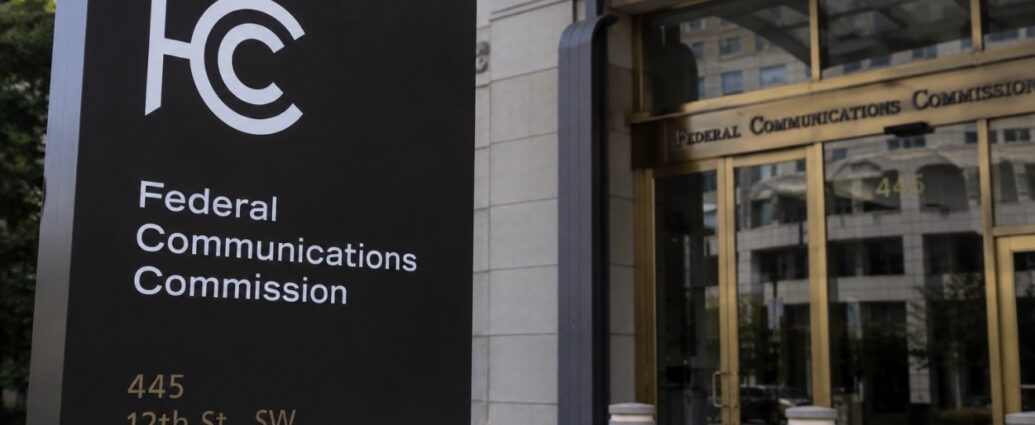
The Federal Communications Commission voted Thursday to eliminate the rule that prevented any one television-station owner from reaching more than 39% of U.S. television households, removing a restriction that for decades shaped how large broadcast companies could grow.
The 2-1 decision matters because the cap was not simply a regulatory percentage. It directly influenced dealmaking.
A broadcaster that approached the 39% threshold could still buy additional stations, but often only by selling other properties, restructuring ownership or relying on regulatory exemptions. That limited how aggressively companies could assemble national station portfolios even when the economics of a transaction otherwise worked.
Removing the cap changes that calculation. Broadcasters can now think about scale nationally without automatically running into a federal ownership ceiling.
The FCC said the restriction no longer reflects the competitive environment facing local television stations. Traditional broadcasters now compete for viewers and advertising against streaming services, social-media platforms, digital video companies and technology firms that were never subject to the same ownership limits.
That shift has steadily weakened the commercial logic behind treating local television as an isolated market. A station group with greater national reach can spread programming, technology, advertising sales and administrative costs across more markets, potentially making each station more profitable.
It can also make station portfolios more valuable.
For an acquirer, the ability to buy a large group of stations without immediately divesting assets can increase the strategic value of both individual stations and entire broadcasting companies. Larger groups may also have more leverage when negotiating advertising, retransmission fees and programming contracts.
The decision arrives as consolidation is already reshaping local television. Nexstar’s acquisition of Tegna demonstrated how valuable national scale has become in a business where local stations increasingly need size to compete with much larger digital platforms.
There is still a legal question hanging over the FCC’s move. Democratic Commissioner Anna Gomez argued that Congress, not the commission, has authority over the national ownership threshold. That could leave the rule vulnerable to court challenges or future congressional action.
For now, however, the commercial message is clear.
A regulatory ceiling that once determined how large a U.S. television-station group could become has effectively disappeared, potentially setting up a new round of broadcast mergers and acquisitions.
For station owners, private-equity firms and media companies, the change could mean more buyers, larger deals and higher strategic valuations for local television assets.
JBizNews Desk | Washington
© JBizNews.com All Rights Reserved. Reproduction or distribution without written permission is prohibited.