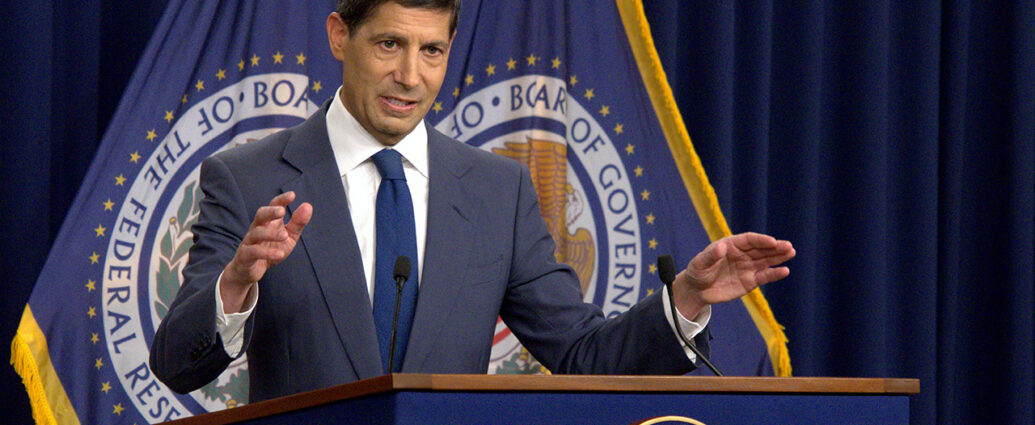
Federal Reserve Chair Kevin Warsh on Friday is delivering his first keynote at the annual monetary policy conference in Jackson Hole, Wyoming, against a backdrop of uncertainty over inflation, as well as how he will guide policymakers as they consider interest rate moves.
Warsh’s speech comes as the Federal Reserve has held interest rates steady at each of its five meetings so far this year amid persistent inflation, which moved further away from the central bank’s 2% target amid the Iran war.
The annual Jackson Hole conference, which features central bank leaders from around the world, is historically an opportunity for the Fed chair to reset expectations about monetary policy and give their perspective on how economic conditions are developing over the near- and long-term.
Warsh is opposed to giving so-called forward guidance about how policymakers will approach upcoming monetary policy moves, and has taken steps to remove such language from the Fed’s post-meeting statements. That has left some Fed watchers hoping for a clearer view into how Warsh evaluates incoming data and views the economy’s path ahead.
The Fed chair offered an overview of his speech – joking that it could be called an outline or trail map, but not forward guidance – and said he plans to discuss the practice of forward guidance and how markets and the central bank interact. He also said he would address the impact of artificial intelligence (AI) on the economy, as well as key principles for monetary policy.
FED CHAIR WARSH FACES JACKSON HOLE SPOTLIGHT WITH INFLATION, RATE PATH IN FOCUS
“With the unchanging picture of the Tetons as our backdrop, we are here to survey an economic landscape that is anything but static,” Warsh said, saying that the world is at a hinge point in history.
He said that progress in AI has been faster than anticipated and that the “potential for substantially higher growth is on the rise. Ever-expanding pools of capital pouring into AI-related infrastructure of all sorts. A kind of super Moore’s law seems to be playing out.”
Warsh noted the Fed created an AI task force that will track things like the impact of AI on productivity, jobs and employment, how the industry is developing and how returns are accruing across the labs, chipmakers, energy producers and cloud providers driving it.
This is a developing story. Please check back for updates.