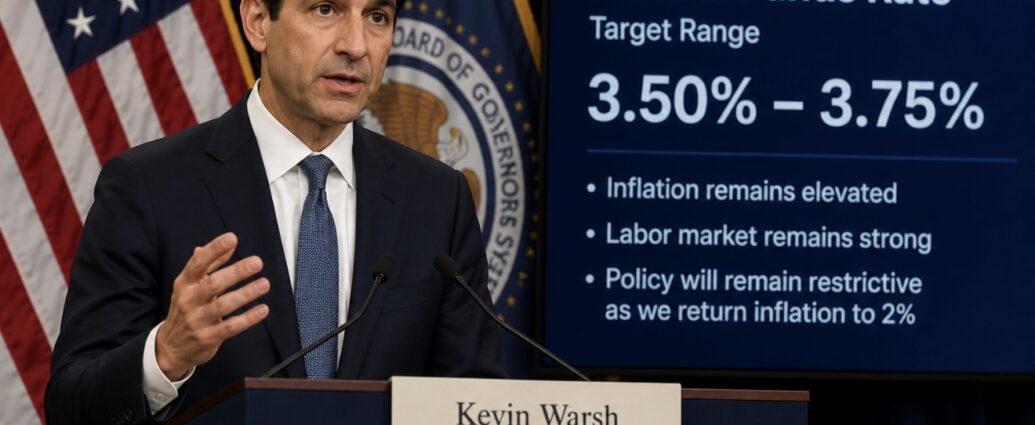
Americans hoping for lower mortgage payments, cheaper car loans, or relief from record-high credit-card rates will have to keep waiting. The Federal Reserve left interest rates unchanged Wednesday and signaled that inflation remains its top concern, meaning borrowing costs are likely to stay elevated for the foreseeable future.
The Federal Open Market Committee voted to keep the federal funds rate in a range of 3.5% to 3.75%, marking the fourth consecutive meeting without a change. While many investors entered the year expecting rate cuts, the Fed’s latest projections suggest policymakers are becoming more concerned about inflation than economic slowdown.
For consumers, the decision has direct consequences.
Mortgages Remain Expensive
Mortgage rates do not move in lockstep with the Fed, but they are heavily influenced by expectations for future interest rates. With the central bank showing little appetite for cuts, prospective homebuyers are unlikely to see meaningful relief this year.
Many buyers who delayed purchasing a home in hopes of lower borrowing costs may now face a longer wait. The good news is that rates are not expected to surge dramatically higher in the near term, helping maintain stability in the housing market.
Car Loans Stay Costly
Auto financing remains one of the most expensive forms of consumer borrowing. The Fed’s decision gives banks and lenders little reason to reduce rates on new or used vehicle loans.
Consumers planning vehicle purchases should compare offers carefully, as financing costs can vary significantly between lenders and dealerships.
Credit Cards Feel the Impact Fastest
Credit-card borrowers continue to face some of the highest borrowing costs in decades. Unlike mortgages, credit-card rates tend to move closely with Fed policy.
If the central bank ultimately raises rates later this year, cardholders carrying balances could see their annual percentage rates climb even further. Financial advisors continue to recommend paying down high-interest balances as a top priority.
Savers Continue to Benefit
While borrowers face challenges, savers remain one of the few groups benefiting from elevated interest rates.
High-yield savings accounts, certificates of deposit, and money-market funds continue offering attractive returns. Consumers holding significant cash reserves may want to lock in current yields before rates eventually begin to decline.
Inflation Remains the Fed’s Focus
The central bank’s reluctance to cut rates stems largely from stubborn inflation pressures.
Fed officials now expect their preferred inflation measure to end 2026 at approximately 3.6%, significantly higher than the 2.7% forecast issued in March. Consumer prices rose 4.2% over the 12 months ending in May, driven in part by higher energy costs following disruptions tied to the conflict with Iran.
The Fed’s updated projections show a notable shift in thinking. Earlier this year, many policymakers anticipated rate cuts. Now, forecasts suggest rates could actually move slightly higher before year-end.
Nine of the eighteen policymakers who submitted projections expect at least one additional rate increase during 2026.
Warsh Signals Tough Stance
New Fed Chair Kevin Warsh, presiding over his first policy meeting, emphasized that fighting inflation remains the central bank’s primary mission.
Asked whether the Fed might eventually relax its long-standing 2% inflation target, Warsh rejected the idea.
“The commitment to restoring price stability is strong, unanimous, and unambiguous,” he told reporters.
The Fed’s confidence stems partly from continued labor-market strength. Employers added 172,000 jobs in May while unemployment remained at 4.3%. As long as hiring remains healthy and consumers continue spending, policymakers feel less urgency to lower rates.
What Households Should Do Now
Financial planners say consumers should assume borrowing costs will remain elevated through at least the remainder of 2026.
That means:
- Prioritize paying down high-interest credit-card balances.
- Lock in attractive savings rates while they remain available.
- Shop aggressively for mortgage and auto-loan offers.
- Build major purchase plans around today’s rates rather than expecting significant declines.
Markets are increasingly preparing for the possibility that the Fed’s next move could be upward rather than downward. According to CME Group futures pricing, investors are assigning meaningful odds to another rate increase before the end of the year.
For now, the message from the Federal Reserve is straightforward: inflation remains the priority, borrowing remains expensive, and relief for consumers is likely to take longer than many had hoped.
JBizNews Desk
© JBizNews.com All Rights Reserved. Reproduction or distribution without written permission is prohibited.