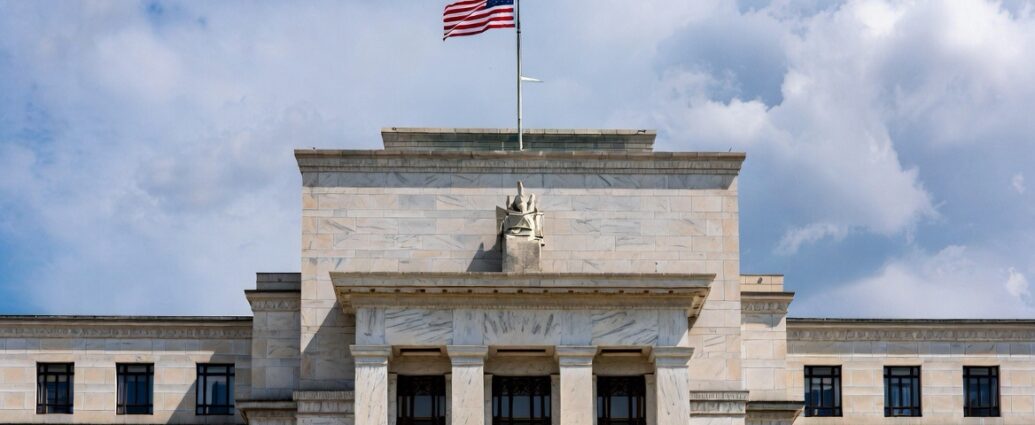
JBizNews – Beth Hammack, president of the Federal Reserve Bank of Cleveland, stated that the central bank might need to raise interest rates if inflation remains persistently above its 2 percent target, dramatically reopening the possibility of a rate hike and underscoring fresh concerns over sticky price pressures driven by elevated energy costs.
The comments, made in an interview with the Associated Press, come as higher gasoline prices linked to geopolitical tensions have pushed overall inflation higher, affecting consumers through rising costs for fuel and goods while pressuring businesses and financial markets that had anticipated rate cuts in 2026, Goldman Sachs chief economist Jan Hatzius noted.
Beth Hammack indicated her baseline preference is for the Federal Open Market Committee to keep the benchmark federal funds rate steady “for quite some time” at its current target range of 3.50 percent to 3.75 percent. However, she explicitly outlined conditions for tightening. “I can foresee scenarios where we would need to reduce rates if the labor market deteriorates significantly. Or I could see where we might need to raise rates if inflation stays persistently above our target,” Beth Hammack told the Associated Press.
The potential for a rate hike hinges primarily on the inflation trajectory, particularly whether recent fuel-driven increases prove transitory or become embedded in broader price trends, Rystad Energy analyst Jorge Leon emphasized. Cleveland Fed estimates suggest inflation could reach 3.5 percent in April 2026, the highest level in some time.
Cleveland Fed President Beth Hammack’s remarks reflect growing internal caution at the Federal Reserve about balancing risks to price stability and maximum employment amid supply-side shocks, Deutsche Bank economist Michael Gapen pointed out. While some officials still favor eventual easing if the labor market softens, others are increasingly wary of premature policy relaxation.
Financial markets reacted with immediate repricing. Interest rate futures adjusted to reflect lower odds of near-term cuts and a small but non-zero probability of hikes later in 2026, JPMorgan chief U.S. economist Michael Feroli highlighted. Treasury yields edged higher while equities displayed volatility as investors reassessed borrowing costs and growth prospects.
For businesses and consumers, the prospect of higher or sustained elevated rates would mean increased borrowing expenses for mortgages, auto loans, and corporate debt, potentially dampening spending and investment, Bank of America economist Michael Gapen cautioned.
Federal Reserve officials continue to emphasize a data-dependent, meeting-by-meeting approach. The next FOMC meeting is scheduled for late April 2026, where Fed Chair Jerome Powell is expected to address these evolving risks.
The comments highlight the persistent challenges for monetary policymakers navigating overlapping global pressures. Although holding rates steady remains the base case, the explicit mention of hikes marks a notable shift in the policy conversation, Morgan Stanley economist Ellen Zentner tracked.
Federal Reserve credibility will face heightened scrutiny as markets evaluate whether recent inflation data represents a temporary blip or a more enduring challenge. The U.S. economy has shown resilience, but sustained price pressures could reshape the outlook for growth, employment, and financial conditions.
Looking ahead, the Federal Reserve’s policy direction will depend critically on incoming inflation, labor market, and energy price data over the coming months. Policymakers are expected to retain maximum flexibility, with further clarity likely to emerge from the April meeting and subsequent economic releases as they calibrate actions toward their dual mandate objectives.
JBizNews Desk
April 28, 2026