By JBizNews Desk
WASHINGTON — April 30, 2026
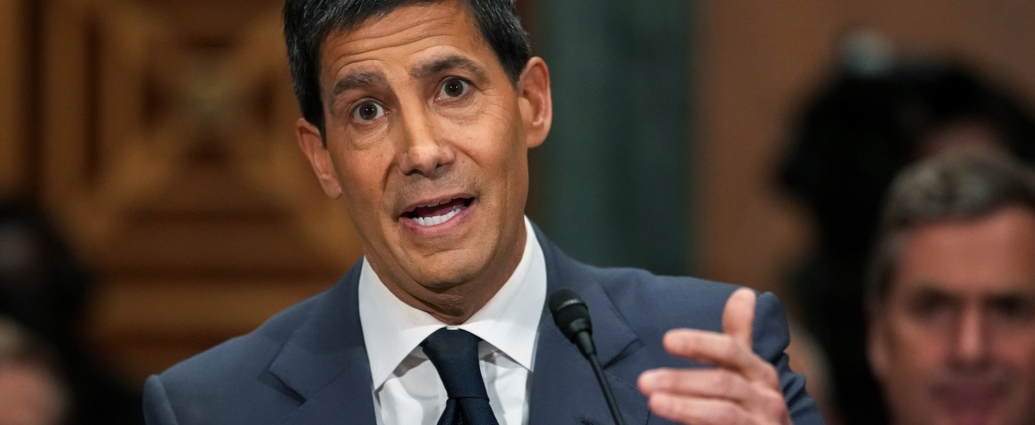
Kevin Warsh is on the verge of becoming the next chairman of the Federal Reserve — but if Wednesday’s dramatic policy meeting is any indication, he will arrive at the Eccles Building to find a committee in open rebellion against the very rate cuts he and President Donald Trump are pushing for.
The Federal Open Market Committee voted Wednesday to hold its benchmark federal funds rate in a range between 3.5% and 3.75% for a third consecutive meeting to start 2026. While that decision came as little surprise to markets, what followed was anything but routine. The four total dissents recorded at this meeting were the most at any Fed policy gathering since October 1992.
The fractures inside the committee cut in two opposing directions. Governor Stephen Miran dissented in favor of an interest rate cut, while Cleveland Fed President Beth Hammack, Minneapolis Fed President Neel Kashkari, and Dallas Fed President Lorie Logan dissented not against the rate decision itself, but because they did not support the inclusion of an easing bias in the policy statement. In other words, three of the four dissenters wanted to slam the door shut on any near-term rate reductions entirely.
At issue for the trio was a sentence in the committee’s statement referencing “the extent and timing of additional adjustments to the target range for the federal funds rate” — language that implies the next move would be lower, signaled by the word “additional,” which reflects that the most recent rate actions have been cuts.
Claudia Sahm, chief economist at New Century Advisors and creator of the well-known recession indicator that bears her name, said an early cut is “completely off the table.” With inflation elevated, ongoing tariff pass-through, and an active conflict in the Middle East driving energy costs higher, she noted that an early cut would require seven FOMC votes that Warsh simply does not have. “He doesn’t have the chops to make that argument persuasively on day one, and nobody would, because the data aren’t there yet,” she said.
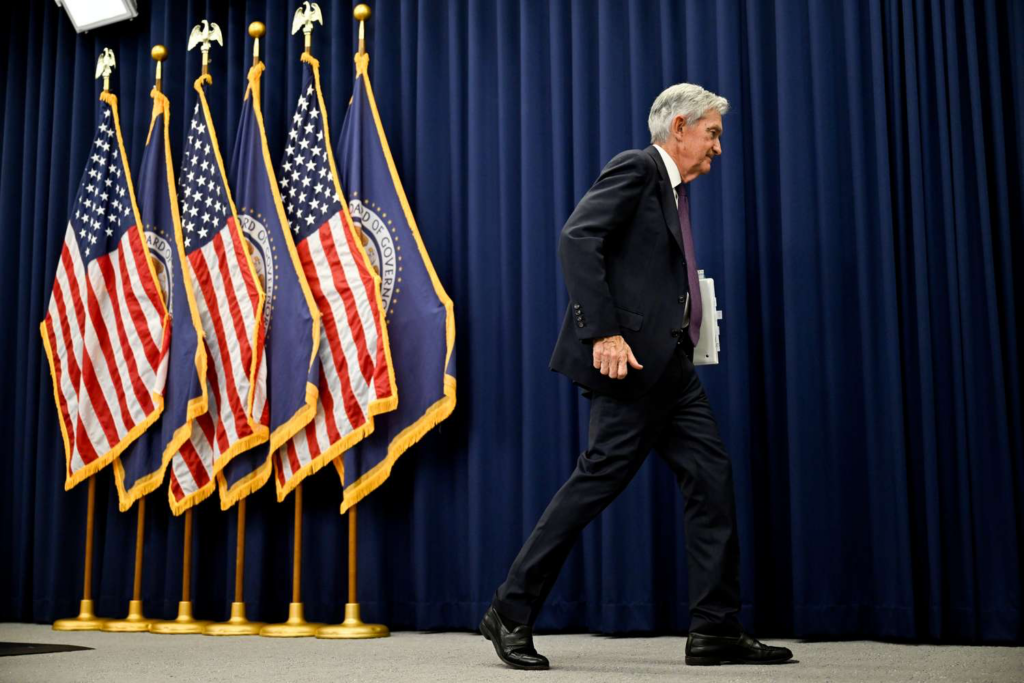
The meeting served as a backdrop to a pivotal moment in the central bank’s leadership transition. Earlier Wednesday, Warsh’s nomination as Fed chair was advanced from the Senate Banking Committee, setting up a final confirmation vote in the Republican-controlled Senate.
Chair Jerome Powell, in his post-meeting press conference, congratulated Warsh on advancing through the committee — calling it “an important step forward.”
Powell himself is expected to step down from the chairmanship when his term expires May 15, though he signaled his intention to remain on the Board of Governors for an indefinite period, citing concerns about legal threats to the institution from the Trump administration. His concurrent term as a Fed governor runs through January 2028. By staying on, Powell effectively denies the White House an additional board appointment.
For Warsh, the internal dynamics he inherits may prove as challenging as any economic headwinds. Josh Jamner, senior investment strategy analyst at ClearBridge Investments, noted that Warsh’s addition to the FOMC will not swing the balance between doves and hawks, as he will take Miran’s seat — with Powell’s seat remaining unavailable for the time being. Trump would have three appointees on the seven-member board: Warsh, Governor Christopher Waller, and Governor Michelle Bowman — both from his first term.
Jeff Kilburg, founder and CEO of KKM Financial, framed the dissents as a warning shot aimed directly at the incoming chair. “This is a new quarterback hitting the portal,” he said. “This was the rest of the players letting him know, we’re not going to let you lead us here.”
David Kelly, chief global strategist at JPMorgan Asset Management, offered a blunter assessment: “I think this is a renewed declaration of independence. This is a shot across the bow at Kevin Warsh.”
The market is reading the room. The CME FedWatch tool now shows no more than one rate cut all of 2026, and 56 of 103 economists in a Reuters poll expect rates to stay steady through September. JP Morgan forecasts the Fed will hold rates steady for the rest of the year before potentially hiking interest rates in early 2027.
The FOMC’s post-meeting statement acknowledged that “developments in the Middle East are contributing to a high level of uncertainty about the economic outlook,” while noting the committee “is attentive to the risks to both sides of its dual mandate.”
Warsh has not been without intellectual arguments for cuts. He has pointed to elevated long-term yields — with the 10-year Treasury rising from around 4% in early February to 4.44% by end of March — as a form of passive tightening in the real economy, spanning mortgages, corporate borrowing, and equity valuations. His argument: cuts on the short end could offset squeeze on the long end, keeping broader borrowing conditions stable. He has also pushed for reducing the Fed’s $6.7 trillion balance sheet, with that effort providing political cover for short-end easing.
But arguments are one thing. Votes are another — and on Wednesday, the Fed made clear that Warsh will need to earn every single one.
— JBizNews Desk
© JBizNews.com. All rights reserved. This article is original reporting by JBizNews Desk. Unauthorized reproduction or redistribution is strictly prohibited.