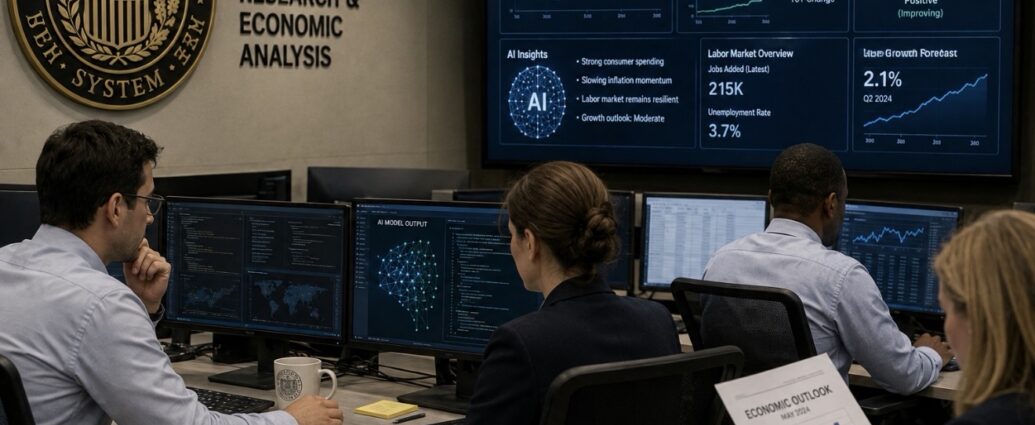
The Federal Reserve sets interest rates using government statistics that describe the economy as it was several weeks ago and get revised later. Chairman Kevin Warsh wants to change that, and the first concrete step is a small committee that includes the man who ran Walmart.
Warsh appointed a data task force last month charged with improving the “quality and timeliness of real economic signals that inform the Federal Reserve’s policy judgments.” Its members are Harvard economics professor Raj Chetty, former Walmart chief executive Doug McMillon, and University of Chicago economics professor emeritus Kevin Murphy.
The McMillon appointment is the tell. A retailer of Walmart’s size knows what Americans are buying, in what quantities, at what price and in which zip codes — daily. The Bureau of Labor Statistics publishes a survey-based figure weeks after the fact and then revises it. The argument for pulling in that kind of commercial data is that it is imperfect but less imperfect than dated federal surveys designed for a different economy.
The broader project
Warsh is attempting to rewire the central bank to use artificial intelligence to understand the economy in real time — aiming at better decisions a couple of years from now, while running current policy on the conventional playbook. He is pursuing what amounts to a change in how the Fed uses AI, though those tools will take time to build and to prove themselves, and inflation has been running above target for more than five years, which creates pressure to act with the instruments that already work.
That means the near-term posture is ordinary. The Warsh Fed is prepared to raise interest rates to fight inflation, based on established practice: analyze the government statistics, adjust the federal funds rate target range.
Why it got complicated
Running an institutional overhaul and an inflation fight simultaneously carries a cost, and Warsh paid some of it two weeks ago. Markets sold off and commentary turned sharply critical after his July 29 press conference, in which he was vague about the possibility of raising rates. Some analysts read it as a lack of commitment to bringing inflation down. His allies described it as a bump on the way to a more credible Fed.
Part of the confusion traces to a genuine difference in philosophy. Warsh argues that markets, not only central bankers, should carry more of the work of assessing the economy and setting financial conditions. He pointed after a recent meeting to a steep run-up in long-term interest rates — describing it as the largest move ever recorded between Fed meetings — as evidence that conditions had tightened without the Fed touching its benchmark rate. “Market participants are learning to play the ball, not the referee,” he said.
He has also separated two things that often get merged. Warsh told lawmakers that the AI investment boom will likely push measured prices up over the next year, but argued those increases are not automatically inflation in the sense that requires a policy response. At the same time, he has been direct that prices are too high and that price stability remains the primary objective, even as officials grow more open to the idea that AI could push costs down over time.
What it means for businesses
The practical stakes here are larger than they look. Every business that borrows — every mortgage, every equipment loan, every line of credit — is priced off decisions the Fed makes using data that is already stale when it arrives. The bottom line, as Axios framed it, is a Fed that keeps pushing on how technology shapes economic data and policymaking, with reassurance that the standard toolkit stays intact for now.
A Fed reading card-spend data, retail inventory turns and payroll processor feeds in something close to real time would, in principle, catch turns in the economy earlier — and would be less likely to keep tightening into a slowdown that the official numbers have not yet registered. The version Warsh’s critics and supporters are both imagining is a central bank running on fine-grained live data, analyzed without the worldview or interests of individual governors shaping the read.
The risk runs the other direction. Models that cannot be inspected making inputs to decisions that move mortgage rates is a governance problem, and the Fed has no established process for auditing that kind of system. Real-time private data also belongs to private companies, which raises a question about what a firm gets in return for handing its sales figures to the institution that sets its borrowing costs.
None of that gets settled soon. The task force is three people and a mandate. But the direction is now on the record, and the roster says plainly what kind of information this Fed intends to start listening to.
JBizNews Desk | Washington
© JBizNews.com All Rights Reserved. Reproduction or distribution without written permission is prohibited.