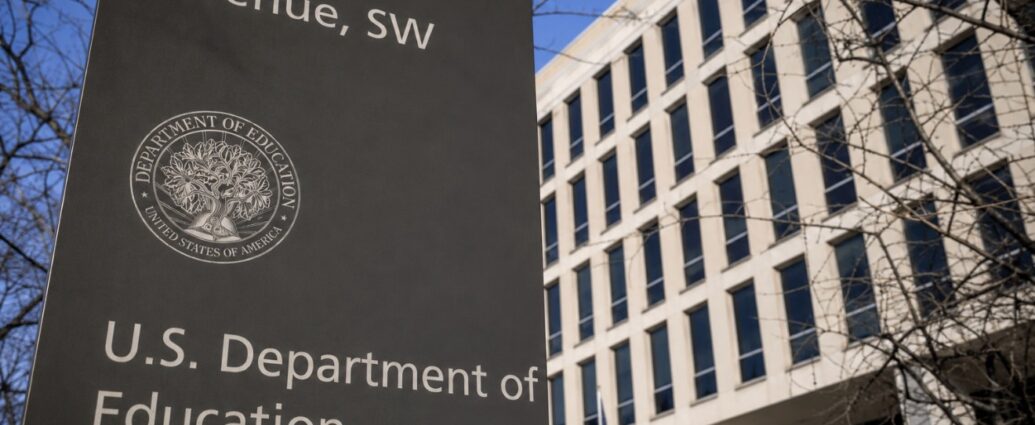
The U.S. Department of Education announced Thursday that federal student loan borrowers who use automatic payments will receive a full one-percentage-point cut on their interest rate starting July 1, a temporary break designed to pull millions of people back into steady repayment.
The reduction runs through June 30, 2028. Borrowers already enrolled in auto pay do not need to act — their servicer will apply the lower rate automatically. Those not yet enrolled have until September 30, 2026 to sign up and still qualify.
The math is simple and lands directly in household budgets. Auto pay has long carried a small discount of a quarter percentage point. An undergraduate borrower paying the current 6.39% rate would see it fall to 5.39% under the new, larger break. For a borrower already enrolled, the servicer adds another 0.75 percentage points on top of the existing quarter-point cut to reach the full one percent.
Under Secretary of Education Nicholas Kent tied the move to repayment behavior, not relief.
“The Trump Administration is making student loan repayment easier than ever, and borrowers should not wait to take advantage of this temporary interest rate reduction,” Kent said, adding that the department expects the incentive to raise repayment rates and improve the health of the federal loan portfolio.
That portfolio is the real reason behind the announcement. Before the COVID-19 pandemic, more than 80 percent of borrowers in active repayment used auto pay. After millions opted out during the long repayment pause — some making no payments for years — that share has fallen, and the federal student debt load has swelled past $1.7 trillion. The department now puts auto-pay enrollment at roughly 40 percent. Getting borrowers back on automatic monthly payments lowers default risk and keeps money flowing into the system.
The interest cut arrives alongside a broader overhaul of how Americans repay college debt. Two new repayment plans open July 1 under President Trump’s Working Families Tax Cuts Act: an income-driven plan called the Repayment Assistance Plan, known as RAP, and a new Tiered Standard plan.
Each works differently. Under RAP, a borrower’s monthly bill is based on income and number of dependents, and borrowers who make full, on-time payments are shielded from runaway interest while their balance steadily declines. The Tiered Standard plan sets fixed terms of 10, 15, 20, or 25 years based on total balance, giving borrowers with larger debts smaller monthly payments stretched over more time.
Enrolling in auto pay is straightforward but does require action for those not signed up. Borrowers who are not enrolled must log in to their loan servicer account, select auto pay, and enter their bank account details. Borrowers in default must first log in to StudentAid.gov, consolidate their eligible loans, and apply for a new repayment plan before they can enroll.
There is a catch worth noting for anyone weighing the offer. The discount only lasts as long as the borrower stays in auto pay; drop out, and the reduction disappears. The benefit applies to federal Direct Loans originated after July 1, 2012, and reaches both student and parent borrowers, including those who were enrolled in the now-defunct SAVE plan once they choose a new repayment option.
For households, the practical takeaway is a lower monthly interest charge in exchange for committing to automatic withdrawals. The timing matters as federal student debt approaches $2 trillion and the administration looks to restart repayment in earnest. A one-point cut will not erase anyone’s balance, but on a typical undergraduate loan it trims real dollars off interest every month for two years — and for borrowers juggling rent, groceries, and car payments, that is money that stays in the checking account.
The deeper bet is behavioral. By making auto pay the cheapest way to carry a federal loan, the department is nudging borrowers toward the one habit that most reliably prevents missed payments and default. Whether the incentive moves the 60 percent currently sitting outside auto pay will become clear over the next two years.
JBizNews Desk | New York & Washington
© 2026 JBizNews.com. All Rights Reserved. Reproduction, redistribution, republication, or retransmission of this content, in whole or in part, without prior written permission from JBizNews.com is strictly prohibited.