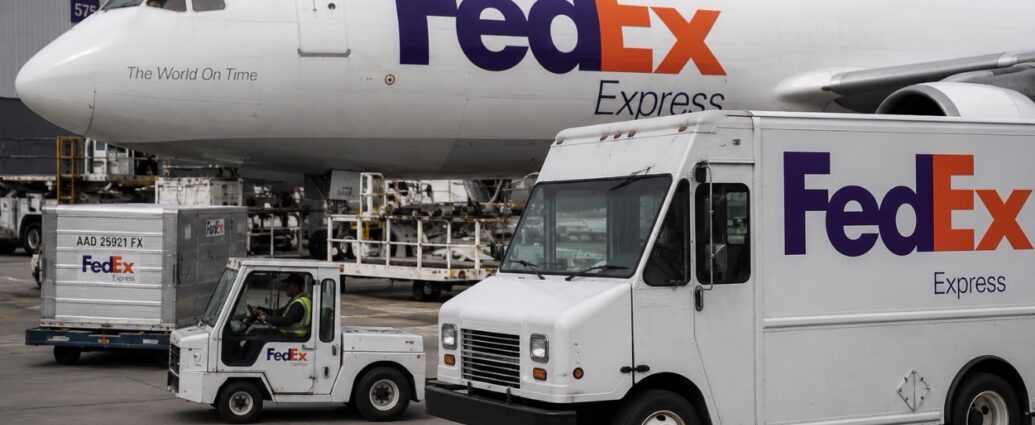
FedEx delivered stronger-than-expected quarterly results Tuesday, but investors focused on the company’s outlook rather than its earnings beat, sending shares lower in after-hours trading.
The shipping giant reported adjusted earnings of $6.31 per share for its fiscal fourth quarter ended May 31, exceeding Wall Street expectations of approximately $5.96 per share.
Revenue reached $25.01 billion, also topping analyst forecasts and helping push full-year revenue to $94.7 billion.
Despite the strong performance, shares fell roughly 6% after hours, as investors weighed management’s guidance, rising costs, and the company’s transition into a new corporate structure.
The quarter marked a major milestone for FedEx.
It was the final reporting period that included FedEx Freight, the trucking business the company officially separated into an independent public company on June 1.
As part of the transaction, FedEx Freight paid approximately $4.1 billion to its former parent through a special dividend. FedEx also retained an ownership stake that it may monetize in the future.
The separation leaves FedEx more focused on its core package-delivery operations.
The company’s Federal Express segment generated $21.57 billion in quarterly revenue, benefiting from higher shipping volumes and pricing improvements across key markets.
Investors, however, were more concerned about what comes next.
FedEx recently shifted its fiscal calendar and now expects approximately 11% revenue growth for calendar year 2026, while projecting adjusted earnings between $16.90 and $18.10 per share.
Management also highlighted several near-term headwinds, including costs associated with separating the freight business, a new pilot labor agreement, and expenses tied to fleet modernization.
During the quarter, FedEx recorded a $23 million charge related to retiring ten aircraft from service.
After a year in which the stock had already climbed roughly 40%, even modest caution from management was enough to trigger profit-taking among investors.
The earnings report also provided an important snapshot of the broader economy.
Because FedEx transports goods for businesses and consumers across the country, analysts often view the company as a barometer of economic activity and consumer demand.
The picture was mixed.
Package volumes improved, pricing remained strong, and management reported steady customer activity. At the same time, executives described overall demand as somewhat muted amid shifting trade policies, tariff uncertainty, and broader economic caution.
One notable bright spot remains Amazon.
FedEx continues handling deliveries of oversized packages for the e-commerce giant under a long-term arrangement that has become increasingly valuable as competitors adjust their own logistics strategies.
Rising costs also remained a major theme.
Fuel expenses surged 66% year over year, reaching approximately $1.43 billion, largely due to higher energy prices following geopolitical tensions in the Middle East.
Executives told analysts they have not yet seen elevated fuel costs significantly reduce shipping demand, but acknowledged the pressure on margins.
To offset those expenses, FedEx continued expanding its DRIVE cost-reduction initiative.
The company said the program generated more than $1 billion in structural savings during the year, while capital expenditures fell to $3.8 billion, representing approximately 4% of revenue, the lowest level in company history.
Chief Executive Raj Subramaniam said the company is entering a new chapter following the freight spin-off and believes the streamlined organization is better positioned for future growth.
FedEx ended the year with approximately $13.3 billion in cash and announced plans to repurchase up to $1 billion of stock through the remainder of 2026.
For investors, the message was clear.
FedEx is performing well operationally, generating strong cash flow, cutting costs, and maintaining pricing power.
The question is whether a leaner, package-focused company can accelerate growth in an environment where shipping demand remains steady but no longer enjoys the explosive growth seen during the pandemic-era boom.
JBizNews Desk | New York
© JBizNews.com All Rights Reserved. Reproduction or distribution without written permission is prohibited.