By JBizNews Desk — April 30, 2026
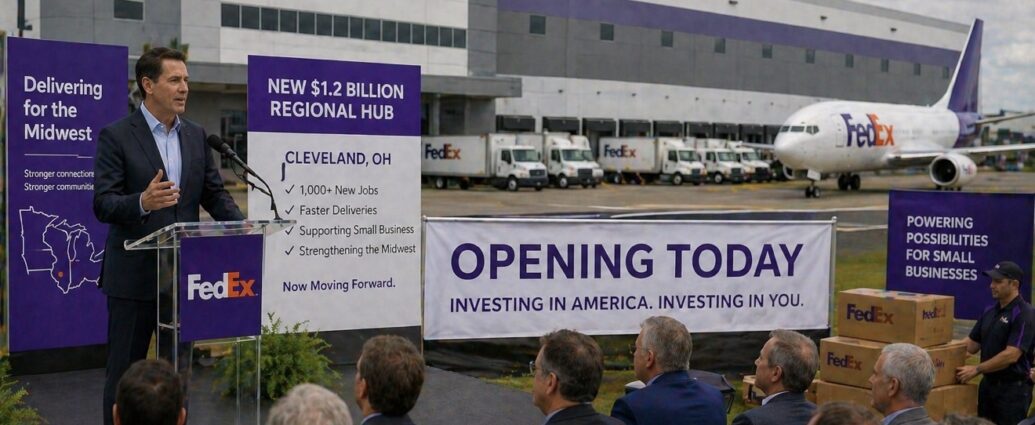
Building on JBizNews’ March 12, 2026 report on FedEx’s Dallas hub expansion, today the logistics giant announced the opening of a $1.2 billion regional hub in Cleveland, Ohio. The facility—spanning 1.8 million square feet—will serve as a new nexus for air, ground, and e‑commerce shipments across the Midwest, directly affecting the supply‑chain dynamics of thousands of small‑business owners, family‑run manufacturers, and local retailers.
Background
FedEx’s decision follows a three‑year feasibility study that highlighted growing freight congestion on the Great Lakes corridor and mounting pressure on small manufacturers to reduce delivery times and costs. The Cleveland hub will consolidate operations previously spread across three smaller centers in Ohio, Indiana, and Michigan, creating a single, high‑tech distribution point equipped with automated sorting, AI‑driven routing, and on‑site cold‑chain facilities.
Key Drivers
– Supply‑Chain Bottlenecks: Persistent truck driver shortages and port delays have inflated average shipping times by 12% in the Midwest since 2024.
– Rising Consumer Expectations: Same‑day and next‑day delivery expectations have surged, especially for e‑commerce purchases originating from small retailers.
– Technology Investment: FedEx is deploying robotics and machine‑learning platforms to cut handling costs by up to 15%.
– Regional Economic Incentives: Ohio’s “Manufacturing Growth Act” offered $150 million in tax credits and workforce training grants to attract the hub.
Impact on Small Businesses
The hub is expected to reshape daily operations for Main Street enterprises:
– **Reduced Shipping Costs**: Small manufacturers can now tap into FedEx’s bulk‑rate pricing, potentially saving $300‑$500 per pallet per month.
– **Faster Delivery Windows**: Average transit time from Cleveland to Chicago, Detroit, and Pittsburgh will drop from 2‑3 days to 1‑2 days.
– **Job Creation**: FedEx projects 5,000 new jobs, with an estimated 2,300 positions earmarked for local hires, many in logistics, IT, and warehouse management.
– **Training Partnerships**: Collaboration with local community colleges will launch a “Logistics Futures” certification program, aiming to upskill 1,200 workers annually.
– **Small‑Business Support Services**: On‑site consulting desks will provide free advice on packaging optimization, customs compliance, and e‑commerce integration.
Analyst Perspectives
– David McKinsey of Supply Chain Insights notes, “The Cleveland hub is a strategic pivot that aligns FedEx with the growing demand for regionalized, high‑speed logistics. Small manufacturers finally have a viable alternative to the legacy, cost‑heavy routes through the coasts.”
– Linda Martinez of the National Small Business Association (NSBA) adds, “For family‑run factories in Ohio and neighboring states, this means the difference between staying afloat and scaling up. Lower freight costs directly translate into higher margins and the ability to reinvest in product development.”
– Robert Chen of Midwest Economic Research cautions, “While job creation is a clear win, the community must monitor potential traffic congestion and ensure that the promised training programs deliver on quality to avoid a skills mismatch.”
Outlook
Looking ahead, FedEx’s Cleveland hub could serve as a template for future regional centers aimed at de‑congesting national freight lanes. If the projected cost savings and speed improvements materialize, small manufacturers may accelerate their shift from legacy carriers to FedEx’s integrated platform, potentially reshaping the Midwest’s manufacturing landscape. However, the hub’s success will hinge on FedEx’s ability to maintain service reliability, effectively train a local workforce, and coordinate with municipal authorities to mitigate any infrastructural strain.
JBizNews Desk
© http://JBizNews.com. All rights reserved. This article is original reporting by JBizNews Desk. Unauthorized reproduction or redistribution is strictly prohibited.