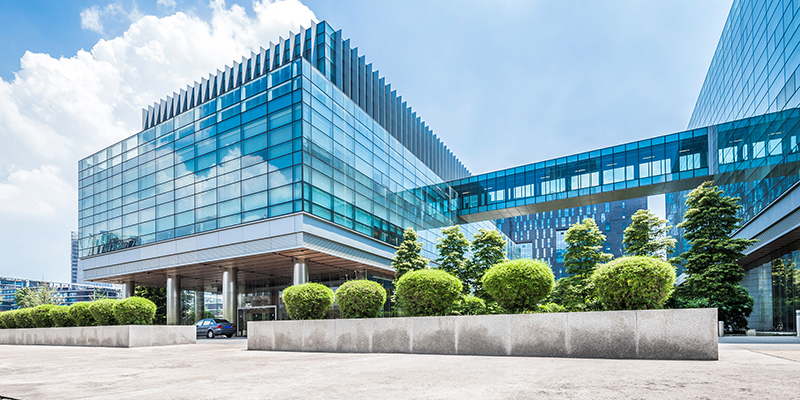
Today’s office market is increasingly bifurcated. Tal Diamant, partner and co-chair of the office practice group at BCLP, describes the divide as one between newly constructed Class A office buildings in high demand and older, Class B and C properties that may be candidates for conversion – or may simply be too old to remain viable.
At the CREDA Conference in Denver, Diamant hosted a panel of four industry experts examining which office markets are attracting tenant demand and what options remain for older buildings.
The Mismatch Challenge
The central challenge in mixed-use and office development is a mismatch between available office assets and tenant demand. According to Chris Payne, senior vice president of investments at Prime West Developments LLC, downtown Denver has a 38% vacancy rate, but only one-third of the available space meets what tenants want. Payne said tenants are looking for spaces that foster creativity, collaboration and innovation. He added that 70% of tenant representatives say their clients will not compromise on location.
Sergio Valentini, regional vice president at Ware Malcomb, said Los Angeles currently has a 40% vacancy rate. Valentini said companies are competing to recruit the best talent, which increases the importance of high-quality office space. He added that Class B buildings in the right environment can be brought to a Class A standards and that most new buildings are build-to-suit.
What Do Tenants Want?
Sean Whitney, senior director at JLL Capital Markets, suggested that tenants in certain markets will pay more for the right environment and location. He pointed to renewed tenant demand in metropolitan areas, saying demand in metro Denver has doubled year over year, while San Francisco demand is 150% of its 2019 level. The increased demand tends to centralize in highly desirable neighborhoods, such as Denver’s Cherry Creek.
Brandon Kramer, managing director of investments at Marcus & Millichap, explained that certain submarkets are faring much better than downtown. He called Denver’s Cherry Creek “one of the best submarkets in the country right now for office,” and said that tenant-to-owner conversion is becoming more common.
Cost Considerations
Both Whitney and Kramer offered optimistic perspectives on the future of mixed-use and office development, particularly in Denver. Whitney said 2.5 million square feet of older property in Denver is currently being converted, which would remove about 8% of current supply from the market. Meanwhile, Kramer said a reset is already underway in Denver’s downtown commercial real estate market, suggesting the market bottomed out about a year ago.
Despite those optimistic outlooks, all panel members agreed that the financial bottom line ultimately drives mixed-use and office development. Whitney said the cost of speculative construction has doubled in the past seven years. Valentini stated, “It’s really financial calculation more than anything. Most buildings, we can convert, we can tie into another use. We can reposition them. Some are going to be more efficient than others, and some are going to be more expensive than others to do. And so that’s why it becomes really a numbers game, whether or not it can be done.”
Regulatory concerns are another significant issue. Kramer argued that Denver’s challenges are entirely manufactured through over-regulation and high property taxes. He cited the Energize Denver Building Performance Policy, passed in 2021, which requires buildings over 25,000 square feet to convert fully to electricity. Compliance costs could range from $80 million to $400 million, making it impossible for commercial real estate developers to move forward.
Solutions
A solutions-focused approach is paramount for mixed-use and office real estate to move forward. Panelists pointed to record levels of office debt maturing over the next three years and said banks are increasingly unwilling to grant extensions. Against that backdrop, landlords and equity partners must determine which Class B and C structures still have value and which no longer serve a viable purpose. Valentini said Class B buildings in the right environment can be brought to a Class A standard. Class B buildings in the wrong location, as well as Class C and D buildings, require more critical evaluation. In many cases, he suggested the best approach may be: “Let’s just scrape them and move on.”
All panel members agreed that governmental policies fostering a business-friendly environment in metropolitan areas are essential for future mixed-use and office development, particularly the repurposing of Class B assets. One form of government support is public-private partnerships, which panelists cited as a tool for revitalizing downtown spaces. Payne pointed to tax incentives in Illinois and New York under which developers receive 30-year tax abatements to convert old buildings. He said such incentives have helped spur revitalization in Chicago and New York City and could potentially do the same elsewhere.
The bifurcated office market presents a complex challenge for investors, developers, landlords, tenants and communities. The panelists’ discussion, however, underscored that high vacancy alone does not tell the full story. Location, building quality, conversion costs, financing and public policy all help determine whether an office asset can compete, be repositioned or has reached the end of its useful life. As Payne puts it, “We’re not talking about real estate. We’re talking about solutions.”

This post is brought to you by JLL, the social media and conference blog sponsor of the CREDA Conference 2026. Learn more about JLL at www.us.jll.com or www.jll.ca.
The post Finding Solutions in a Bifurcated Office Market appeared first on Market Share.