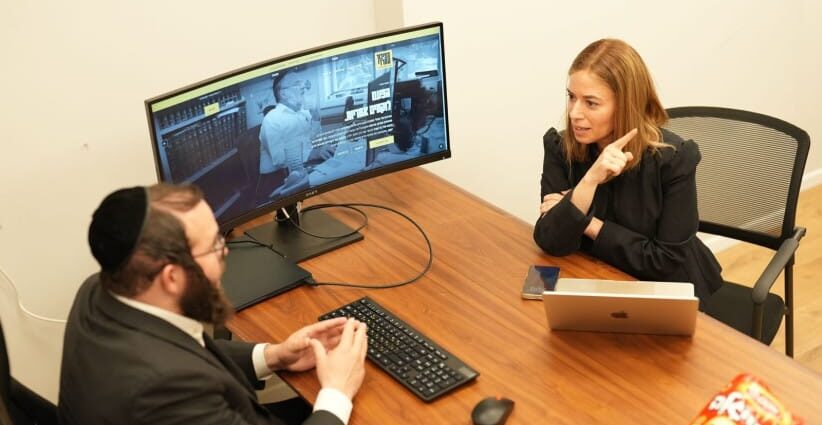
The first two women to run on a haredi (ultra-Orthodox) party’s Knesset list have been seeking to address issues facing women in the haredi community, including health, employment conditions, education, and the pressure of raising large families while men study in Yeshiva.
Nechumi Yaffe and Ziva Glanz, both running on the recently established Haredi Public party’s list, broke down their plans to The Jerusalem Post in a recent interview, voicing existing concerns for women in the haredi community they seek to address.
“There are issues that were overlooked. Women in the [haredi] community are dying 5% more than the rest of the community from birth, cancer,” Yaffe said.
Yaffe has been placed third on the party’s list and Glatz fourth, meaning both would enter the Knesset if the party passes the required electoral threshold.
The Haredi Public Party has sought to enter the Knesset independently of the two major haredi parties, Shas and United Torah Judaism (UTJ).
Prime Minister Benjamin Netanyahu has relied on Shas and UTJ as key coalition partners for years. Neither party has included women on its Knesset list.
Unlike the established haredi parties, the Haredi Public party has called for change within the ultra-Orthodox community and encouraged haredi enlistment in the IDF.
Though the party has been recently polling below the electoral threshold, Glatz said the Haredi Public party had been gaining momentum despite being new and having limited time to build support.
“People need this. There have been a lot of individuals waiting for a party like this for a very long time, myself included,” she said.
Women’s health among issues largely unaddressed by haredi community
Yaffe said women’s health was among the major issues that had received insufficient attention within the haredi community.
She added that haredi Knesset representatives had not sufficiently addressed women’s issues in the government’s past term.
“I’ve checked that not even one party member went to one of the Knesset committees dealing with it, for all kinds of various reasons,” she said.
Yaffe also argued that existing efforts to raise awareness of women’s health issues were not adequately reaching the haredi community.
Another issue the two candidates spoke on addressing was providing support for the issues of financial pressure on haredi women, many of whom work to support their children and families while their husbands study in yeshivas.
Yaffe said women’s participation in the workforce had increased significantly over the past two decades.
She said that haredi women continued to face lower average incomes than their non-haredi counterparts and that some experienced unfair employment conditions.
“Their average income is way lower than their secular counterparts, and some of them are being employed in really unfair conditions. There is exploitation. Very simple. And this is something that needs to be addressed,” Yaffe said.
She added that women supporting large families often had little time or opportunity to advocate for their own rights.
“Someone has to look at the numbers and ask what’s going on. And this is our job as women. These are our sisters and our daughters,” she said.
Yaffe said she sought to promote haredi women’s rights and opportunities, as well as improve access to health and education services.
Just being able to make them aware of their legal rights is also important, Yaffe said.
Glatz speaks on struggles faced by Haredi women
Glatz spoke on the struggle haredi women faced by being required to balance providing for their families in the workforce with raising children.
“We have to recognize that there is a limit to every human ability, and we are pushing people to the max,” Glatz said.
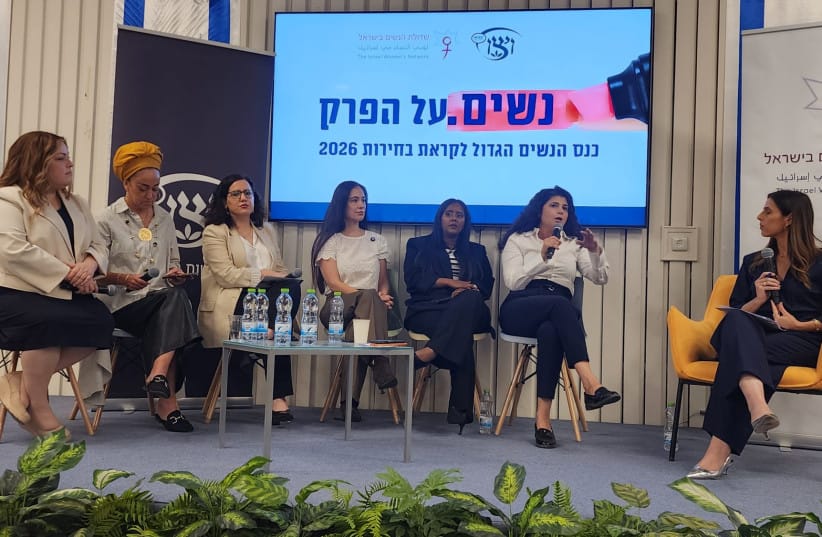
“These women are professionals. They have large families. They’re hosting and cooking big meals. And we have to make sure that they have the support that they need, because otherwise we’re going to deal with families collapsing because people have burnout, and that can’t keep on happening,” she added.
Glatz also spoke on the importance of ensuring that haredi schools teach core curriculum subjects, including math and English, with the state responsible for overseeing their implementation.
“There needs to be broad educational reform within the [haredi] community and, frankly, within the community at large. I think education reform needs to be a topic of this election, and more people need to be talking about it because it affects everybody,” she said.
“We want to push a core curriculum of math and English so that people should be able to employ themselves and have that opportunity to support themselves in the future, should they choose to. We also think that there need to be other changes in the education system,” Glatz said.
Regarding military service, Glatz raised concerns about the IDF’s readiness to accommodate women.
She said she did not believe the military was currently a suitable environment for many women, while adding that further work was also needed to address the challenges facing men who enlist.
“I do not think that right now the army is a good place for many women in general,” Glatz said.
“I also think that there’s a lot of work that needs to be done for men that are drafting,” she added.
Yaffe, Glatz as political pioneers in haredi sector
Ahead of the approaching October 27 elections, Yaffe said she believed that she and Glatz were pioneers in being the first women to run on a haredi party’s Knesset slate.
“[Haredi] women have been around doing amazing, really incredible jobs, being in key positions and helping and contributing. But politically, we are the pioneers,” she said.
“This is the first time that we are being invited to sit around the table and be part of the major political decisions,” Yaffe added.