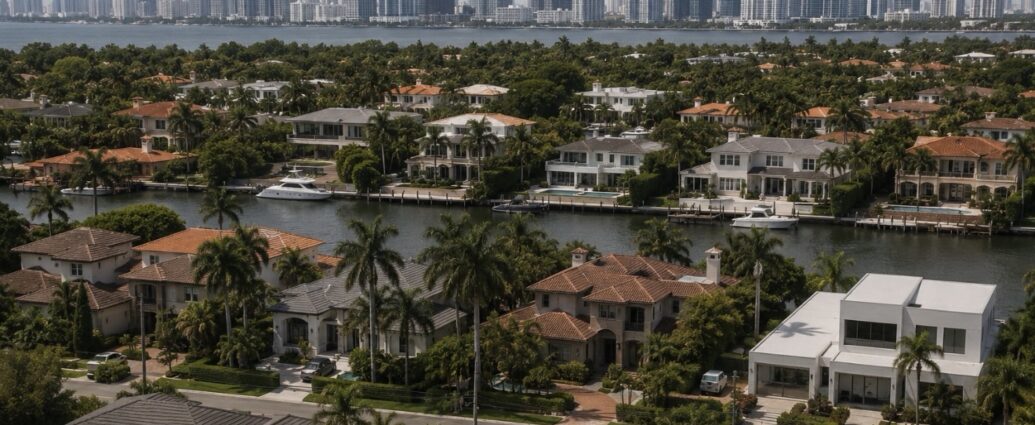
MIAMI — Florida’s pandemic-era housing boom created enormous wealth for homeowners, developers, and high-income transplants. Now it is creating something else: a growing affordability crisis that is steadily pushing middle-class residents out of the communities they helped build.
What began as one of the greatest migration waves in modern American history is increasingly reshaping Florida into a state where teachers, nurses, police officers, service workers, and even many professionals can no longer afford to live near where they work.
The numbers are becoming difficult to ignore.
According to Gay Cororaton, chief economist for the Miami Association of Realtors, the share of homes valued at more than $1 million in Miami-Dade County exploded from just 8% in 2019 to approximately 28% by the first quarter of 2026.
In Palm Beach County, nearly one-third of all homes are now worth at least $1 million.
Statewide, Florida’s median single-family home price has climbed to roughly $420,000, while median household income sits near $77,000, creating a price-to-income ratio above 5.4 — well beyond what most housing economists consider sustainable for middle-income families.
The imbalance reflects a migration wave unlike anything Florida has experienced in decades.
Between 2019 and 2023, Florida absorbed a net $137 billion in adjusted gross income from people relocating from other states, according to analysis of IRS migration data conducted by Miami Realtors.
The average income of new residents moving into Florida reached approximately $122,530, the highest inbound income migration level of any state in America.
Those wealthy arrivals fundamentally changed the state’s housing market.
Median annual single-family home prices in Florida surged 10.1% in 2020, followed by an extraordinary 23% jump in 2021 and another 11.1% increase in 2022, according to Cororaton.
While price growth has slowed more recently, affordability has not meaningfully recovered.
And increasingly, the defining force in many Florida markets is not financing — it is cash.
According to Arman Javaherian, CEO of homebuying platform Homa and a former Zillow executive, approximately 39% of Miami home purchases in recent years were completed entirely in cash. In West Palm Beach, the figure reached approximately 48%.
For luxury condominiums priced above $1 million in Miami, the all-cash share climbed to an astonishing 82% in 2025.
“Low rates lit the match, tight supply fed it, investors added heat, and wealthy newcomers poured gasoline on it,” Javaherian told Fortune.
That reality has left many local buyers effectively unable to compete.
Even relatively high-earning Florida households often struggle to bid against buyers arriving with large amounts of equity, investment capital, or proceeds from property sales in high-cost states such as New York, California, Illinois, and New Jersey.
The result is increasingly visible across the state’s economy.
Workers essential to maintaining Florida’s hospitals, schools, municipal governments, hospitality industry, and public safety infrastructure are being forced farther away from the communities they serve.
Some are leaving the state entirely.
Cities such as Greenville, South Carolina, and Knoxville, Tennessee, have increasingly attracted middle-class Floridians searching for lower housing costs and more manageable living expenses.
The affordability crisis extends well beyond purchase prices.
Florida homeowners now face some of the highest insurance costs in the country as private insurers continue retreating from the state’s hurricane-exposed market.
According to Insurify, the average annual home insurance premium in Florida has climbed to roughly $8,292, approximately 181% above the national average.
Those costs stack on top of elevated mortgage rates, rising property taxes, HOA fees, and maintenance expenses — creating monthly ownership costs that increasingly exceed what many middle-income households can realistically absorb.
At the same time, rents have risen sharply alongside home values, limiting escape routes for residents unable to buy.
The broader tension confronting Florida is becoming increasingly structural.
The wealthy households that fueled the housing surge have strong incentives to remain: no state income tax, warm weather, expanding luxury infrastructure, and growing concentrations of wealth and business activity.
The middle-class workers being displaced, however, possess little ability to counter the underlying market dynamics driving prices higher.
The migration wave was entirely legal, largely market-driven, and amplified by historically low interest rates, remote work expansion, and post-pandemic lifestyle shifts.
But its long-term consequences are beginning to raise uncomfortable questions about sustainability.
Florida’s economy depends heavily on service workers, educators, healthcare employees, tradespeople, first responders, hospitality staff, and countless other middle-income professions.
Yet in many of the state’s most economically important regions, those workers increasingly cannot afford the communities they are expected to support.
The risk for Florida is no longer simply expensive housing.
It is the gradual emergence of an economy dependent on a workforce that can no longer afford to live inside it.
JBizNews Desk
© JBizNews.com. All rights reserved. This article is original reporting by JBizNews Desk. Unauthorized reproduction or redistribution is strictly prohibited.