Readers may recall that some 14 months ago, I wrote in these pages about one of the most emotional moments of my life: the brit milah of my grandson, Lev Valeri.
It should have been a day of unalloyed joy. A new baby. A new generation. A grandfather privileged to perform the mitzvah himself. Children and grandchildren gathered together. A family moment overflowing with blessing.
But in Israel, joy so often arrives carrying grief by the hand.
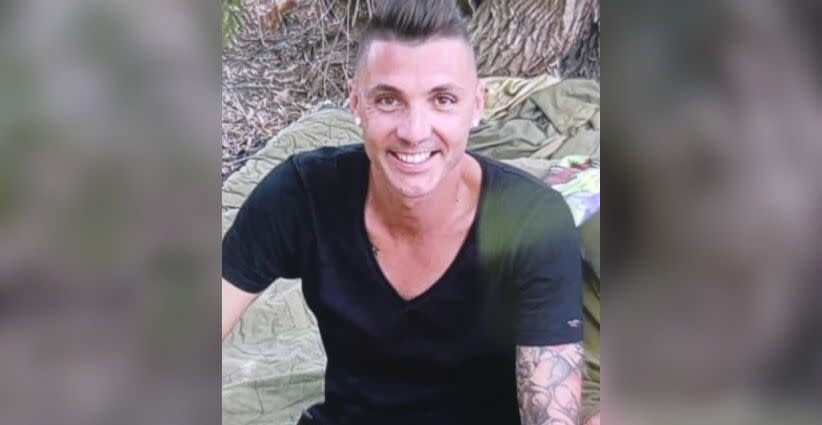
My grandson was named for Valeri Chefonov, a hero of Israel, a devoted husband, a father of two young children, and a close comrade of my son Bobby. They had served together as snipers in the army.
Their bond was not the casual friendship of two men who had simply passed through the same unit. It was the deep, wordless brotherhood forged in danger, in silence, in trust, and in the knowledge that one mistake could cost a life.
Valeri was killed by a drone on the Lebanese border.
At the brit, his widow Avigayil held my grandson in her arms as his name was given. Lev Valeri. The heart of Valeri. There are moments in life when language simply collapses under the weight of what the heart is feeling. That was one of them.
This past Tuesday evening, I attended the memorial service marking the second anniversary of Valeri’s passing.
I arrived with sadness. How could one not? There was the family. There were the friends. There were the soldiers. There were the photographs. There was the memory of a man who should have been standing there himself, his arm around his wife, his children running around his legs, his smile lighting up the room.
Avigayil was there, strong as always. But she looked strained. There is a kind of strength that does not look like triumph. It looks like exhaustion. It looks like getting out of bed because children need breakfast. It looks like signing school forms, making sandwiches, attending parent meetings, answering questions no child should have to ask, and somehow carrying on.
When Bobby asked her how she was coping, she answered with that particular stoicism that grieving Israeli war widows seem forced to acquire.
“Le’at, le’at,” she said.
Slowly, slowly.
And then she smiled. Not a carefree smile. Not the smile of someone fine. A tight smile. A brave smile. A smile that said, I am here. I am standing. I am doing what I must. What choice do I have?
There was a speech from the rabbi. He spoke with real emotion, urging all of us to value what we have. Hug your children, he said. Compliment your spouses. Tell the people you love that you love them. Do not spend your life scrolling through the next piece of nonsense on your phone while the living, breathing people who matter most sit beside you unseen.
His words were simple, but they landed heavily.
Because sitting there, watching Avigayil, one could not escape the thought: What would she give for one more ordinary moment? One more conversation. One more cup of coffee. One more argument about something trivial. One more chance to tell Valeri something she perhaps told him a thousand times, and yet would now give anything to say again.
We are so careless with the ordinary. We assume there will always be another evening, another Shabbat meal, another phone call, another chance to apologize, another opportunity to say thank you. We allow irritation to replace tenderness. We allow screens to replace faces. We postpone affection as though time were guaranteed.
But time is not guaranteed.
We must remember
Avigayil had prepared a short video of Valeri. It showed him in so many guises: soldier, husband, father, friend. But always smiling. Always full of life. Not the abstract life of a name engraved on a memorial plaque, but real life. Moving, laughing, embracing, living. The kind of life that makes death feel not only tragic, but absurd. How can someone so alive be gone?
And yet, as I left, I realized something unexpected had happened. I had arrived overwhelmed by sadness, but I left inspired.
Not because the grief had been softened; it had not. Not because time had healed the wound. I am not sure wounds like this ever fully heal. But because I had witnessed the quiet heroism of those who remain.
We speak, rightly, about the heroism of our soldiers. We speak about courage under fire, about sacrifice, about men and women who go to the front knowing they may not return. We must never stop speaking about that.
But there is another kind of heroism too.
The heroism of the widow who rises in the morning when part of her world has been buried. The heroism of children growing up with stories where there should have been arms around them. The heroism of parents who visit graves instead of hosting Shabbat meals. The heroism of friends who carry memories because the person himself can no longer speak.
As Israelis, we are living through a time when the headlines shift constantly. Ceasefire. Escalation. Political crisis. Northern border. Gaza. Iran. Elections. Unity. Division. Hope. Despair. Every day brings a new twist in this exhausting, topsy-turvy reality.
And with every twist, we hope and pray for the war to end.
Of course we do. We long for quiet. We long for our sons and daughters to come home. We long for sirens to stop, for funerals to stop, for soldiers’ names to stop being announced with the unbearable words “cleared for publication.” We long for normality, whatever normality can even mean in this country.
But Tuesday night reminded me of something we must never forget.
For some, the war will never be over.
Even when the last shot is fired, even when the politicians sign whatever document they sign, even when the reservists return to their families and the country tries to breathe again, there will be homes where the war continues every morning.
It will continue at the empty chair. At the school ceremony. At the birthday party. At the wedding canopy one day where a father should have stood. At the army draft where a son may wear the same uniform as the father he barely remembers. At every yahrzeit. Every Remembrance Day. Every family photograph with someone missing.
For Avigayil, and for thousands of others, the war is not a chapter that will close. It is a permanent presence. It has rearranged the furniture of life. It has changed the sound of the house. It has entered the souls of children. It has stolen futures that can never be restored.
And that places a responsibility on the rest of us.
Not merely to remember the fallen in speeches. Not merely to post their photographs once a year. Not merely to say “hero” and move on.
We must remember the living.
We must remember the widows, the orphans, the bereaved parents, the wounded soldiers, the traumatized comrades, the families for whom national history has become a personal tragedy.
And we must also take the rabbi’s words to heart.
Go home and hug your children. Tell your spouse what you admire about them. Phone your parents. Sit with a friend. Put down the device. Look people in the eye. Do not wait until a memorial service teaches you what should have been obvious all along.
Avigayil would surely give anything for one more chance to tell Valeri she loves him.
We still have that chance with the people around us.
Let us not waste it.
The writer is a rabbi and physician. He writes and teaches on Jewish ethics, leadership, and resilience. His work appears on rabbidrjonathanlieberman.substack.com and youtube.com. @rabbidrjonathanlieberman.