By JBizNews Desk | May 10, 2026
In a development energy markets, diplomats and governments around the world have been watching for since the Iran war began in late February, Reuters and LSEG shipping data confirmed Sunday that a Qatari liquefied natural gas tanker has successfully transited the Strait of Hormuz — marking the first such passage by a Qatari gas vessel since the conflict effectively shut down the world’s most important energy chokepoint more than two months ago.
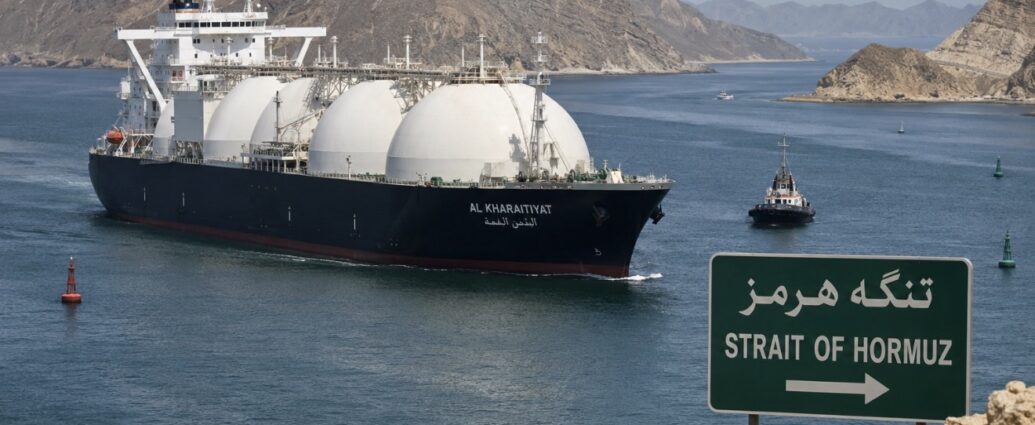
The tanker, identified as the Al Kharaitiyat, departed Qatar’s Ras Laffan export terminal and passed through the Strait of Hormuz en route to Port Qasim in Pakistan, according to LSEG shipping data. The vessel is managed by Nakilat Shipping Qatar Ltd, sails under the Marshall Islands flag, and carries approximately 211,986 cubic meters of liquefied natural gas.
The passage did not happen accidentally or through force.
According to two people familiar with the matter who spoke to Reuters, Iran specifically approved the shipment as a deliberate confidence-building gesture toward both Qatar and Pakistan — the latter of which has quietly emerged as one of the key diplomatic intermediaries between Washington and Tehran throughout the conflict.
The diplomatic mechanics behind the transit are as significant as the shipping data itself.
Pakistan has been engaged in direct discussions with Iran seeking permission for a limited number of LNG cargoes to move through the strait, driven largely by worsening domestic gas shortages after the Hormuz closure disrupted critical energy imports.
Iran ultimately agreed to permit the shipment, and the safe passage of the vessel was coordinated under Pakistan’s existing government-to-government LNG supply arrangement with Qatar, its largest gas supplier.
That structure gave Doha, Islamabad and Tehran a politically controlled framework that avoids the appearance of Iran broadly reopening Hormuz to unrestricted commercial traffic.
For global energy markets, the significance of the transit cannot be overstated.
The Strait of Hormuz normally handles roughly 20% of global oil trade and approximately 20% of global LNG shipments, making it the single most strategically important maritime energy corridor in the world economy.
Since the war began, those flows have been severely disrupted.
Qatar — the world’s second-largest LNG exporter — has seen much of its export network effectively paralyzed by the conflict. Iranian strikes earlier in the war damaged approximately 17% of Qatar’s LNG export capacity, with analysts estimating roughly 12.8 million tons per year of production could remain offline for between three and five years while repairs continue.
The crisis dramatically tightened LNG markets across both Europe and Asia.
Europe typically receives between 12% and 14% of its LNG imports from Qatar through Hormuz, while countries including China, Japan, South Korea, Taiwan and Pakistan depend heavily on the route for electricity generation, industrial production and long-term energy security.
Before Sunday’s transit, Iran’s control over the strait had appeared nearly absolute.
On April 6, Iran’s Islamic Revolutionary Guard Corps halted two Qatari LNG tankers — the Al Daayen and the Rasheeda — near Hormuz and ordered both vessels to hold position indefinitely without public explanation, reinforcing how completely Tehran had established operational control over the waterway after the outbreak of the conflict.
The International Energy Agency has already described the Hormuz shutdown as the largest disruption in the history of modern global energy markets.
Every day the Al Kharaitiyat’s transit continues without incident now becomes another signal that limited, politically managed shipping movements may be possible even before a formal peace agreement is reached.
The breakthrough comes during an especially delicate diplomatic moment.
U.S. Secretary of State Marco Rubio said Friday that Washington expected Iran’s response within hours to a formal U.S. proposal aimed at ending the war before broader negotiations begin over Iran’s nuclear program and regional security issues.
As of Sunday evening, no formal public response had emerged from Tehran, though relative calm prevailed around the Strait after several days of sporadic military flare-ups.
The Al Kharaitiyat’s passage appears to fit directly into that fragile diplomatic window — a small but concrete signal that Iran may be willing to selectively ease restrictions around Hormuz while broader negotiations remain unresolved.
For financial markets, however, the key question is whether Sunday’s transit represents an isolated diplomatic gesture or the beginning of a wider reopening pattern.
A single LNG tanker traveling from Qatar to Pakistan does not reopen the Strait of Hormuz.
It does not restore the massive energy flows that normally move through the corridor each day, nor does it eliminate the geopolitical risk premium currently embedded across oil, LNG and global shipping markets.
But it does demonstrate something markets had not seen since the war began:
Iran is willing — under tightly controlled political conditions — to authorize at least limited movement through the world’s most critical energy chokepoint.
Whether additional vessels follow, and under what conditions, may determine whether Sunday’s transit ultimately becomes the first sign of gradual stabilization — or simply a temporary diplomatic exception inside a conflict that has already reshaped the global energy system.
JBizNews Desk