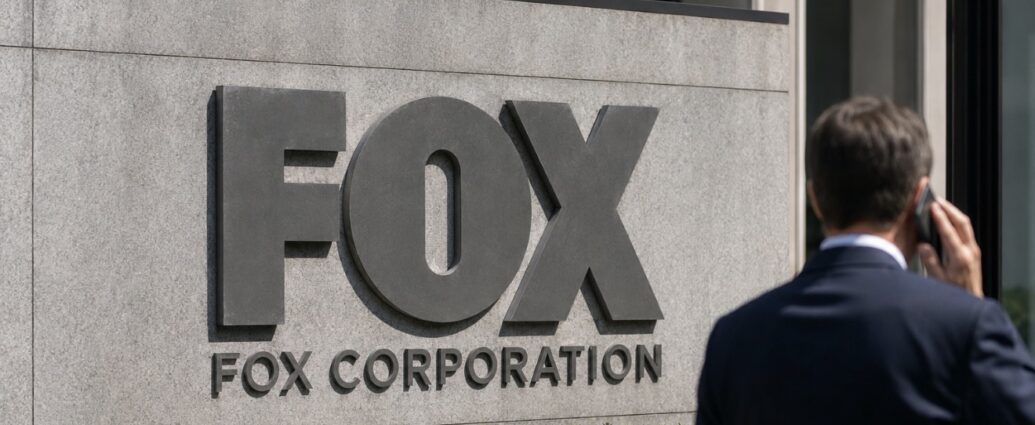
Fox Corporation reported lower revenue and profit for its fiscal third quarter Monday as the absence of a Super Bowl broadcast created a difficult comparison against last year’s blockbuster results, though CEO Lachlan Murdoch argued the underlying business remains strong and positioned for a major acceleration heading into the FIFA Men’s World Cup and the U.S. midterm election cycle.
The parent company of Fox News Channel, the Fox broadcast network, FS1, and free streaming platform Tubi reported quarterly revenue of $3.99 billion for the period ended March 31, down from $4.37 billion a year earlier. Net income attributable to shareholders fell to $166 million, or 38 cents per share, compared with $346 million, or 75 cents per share, during the same quarter last year.
The decline was widely expected on Wall Street because last year’s quarter included Super Bowl LIX, which Fox broadcast in February 2025 and which generated roughly $800 million in gross revenue from the telecast alone. That event dramatically inflated advertising comparisons and created what analysts viewed as one of the toughest year-over-year comparisons in the media industry this earnings season.
Advertising revenue for the quarter totaled $1.56 billion, down from $2.04 billion a year earlier. Murdoch, however, strongly rejected any interpretation that the slowdown reflected deterioration in the broader advertising environment or weakness in Fox’s audience position.
Speaking to investors Monday, Murdoch said Fox’s core advertising trends would have grown by “double digits” without the Super Bowl comparison, pointing to continued strength across live sports, Fox News, and Tubi. “Our fiscal third quarter results once again demonstrate continued strength and momentum across our business,” Murdoch said in the company’s earnings release. “This strong performance, led by robust core advertising trends, underscores FOX’s leadership in live programming, bolstered by continued strength at our leading free streaming service, Tubi.”
The numbers underneath the headline results support much of that argument. Adjusted EBITDA rose approximately 11% to $954 million, as lower operating expenses more than offset the decline in advertising revenue. Investors increasingly focused on profitability and cash flow in the media sector have been rewarding companies that demonstrate expense discipline while continuing to grow streaming and sports audiences.
The pressure from the Super Bowl comparison was felt most sharply inside Fox’s television segment, which includes the Fox broadcast network, local television stations, sports operations, and Tubi. Revenue in that division fell to approximately $2.2 billion, compared with $2.7 billion during the prior-year quarter. Advertising revenue within the segment dropped to $1.17 billion from $1.66 billion a year ago.
Even there, however, Fox pointed to several offsetting positives. The company benefited from broadcasting an additional NFL Wild Card game during the quarter, while Tubi continued posting strong digital audience growth and expanding advertiser engagement. Tubi has increasingly become one of Fox’s most strategically important assets as the media industry continues shifting toward ad-supported streaming models rather than purely subscription-driven streaming services.
Fox’s cable division — anchored primarily by Fox News — remained comparatively stable. Revenue in the segment came in at roughly $1.5 billion, down only slightly from the prior year. Distribution revenue increased approximately 3%, driven by 5% growth in cable network programming fees. Content and other revenue rose 12% due largely to higher sports sublicensing sales.
Murdoch also addressed sports-rights concerns directly during the investor call, pushing back against speculation that the NFL could seek additional mid-contract fee increases from broadcasters given surging sports-rights valuations across the industry. Murdoch said Fox continues paying what he described as market pricing under its current NFL agreements and expressed confidence in the long-term value of live sports rights despite escalating competition among broadcasters and streaming platforms.
What increasingly matters for Fox, however, is not the quarter that just ended but the extraordinary lineup of events ahead.
Fox Sports will broadcast all 104 matches of the FIFA Men’s World Cup 2026 beginning June 11 across Fox, FS1, and the company’s direct-to-consumer streaming platform Fox One. Analysts expect the tournament to become one of the single largest advertising events in global sports media, with revenue potential rivaling or exceeding a Super Bowl cycle because of the tournament’s scale and month-long duration.
Fox unveiled its World Cup broadcasting schedule earlier this year, including approximately 340 hours of live programming across 70 network matches. The company said advertiser commitments tied to the tournament are already accelerating significantly.
Fox One, launched as the company’s answer to shifting viewing habits and the decline of traditional cable bundles, is also showing stronger early traction than some analysts initially expected. Murdoch told investors that roughly two-thirds of Fox One’s audience currently consists of sports viewers, while approximately one-third primarily consume news content.
That audience mix matters strategically because it aligns directly with Fox’s two strongest programming pillars: live sports and live news — categories that remain among the few forms of television still commanding large real-time audiences and premium advertising rates in an increasingly fragmented media landscape.
Beyond sports, Fox is also heading into what is expected to be a highly lucrative political advertising cycle tied to the upcoming U.S. midterm elections. Political advertising has historically represented one of the most profitable periods for Fox News and local television stations, particularly during highly polarized election environments.
Murdoch described political advertising demand during prior earnings calls as “incredibly robust,” and industry analysts expect spending levels during the 2026 cycle to again reach record territory.
Taken together, the World Cup, political advertising, expanding digital streaming audiences, and continued growth at Tubi are giving Fox a strong runway into the second half of fiscal 2026. That outlook is central to management’s argument that Monday’s softer earnings report reflects little more than a temporary calendar comparison against one of the largest television events in the world — not a weakening business.
For investors increasingly focused on live sports, streaming advertising, and scalable digital audience growth, Fox’s message Monday was straightforward: the company believes its biggest revenue catalysts are still ahead.
— JBizNews Desk
© JBizNews.com. All rights reserved. This article is original reporting by JBizNews Desk. Unauthorized reproduction or redistribution is strictly prohibited.