By JBizNews Desk
PARIS — April 30, 2026
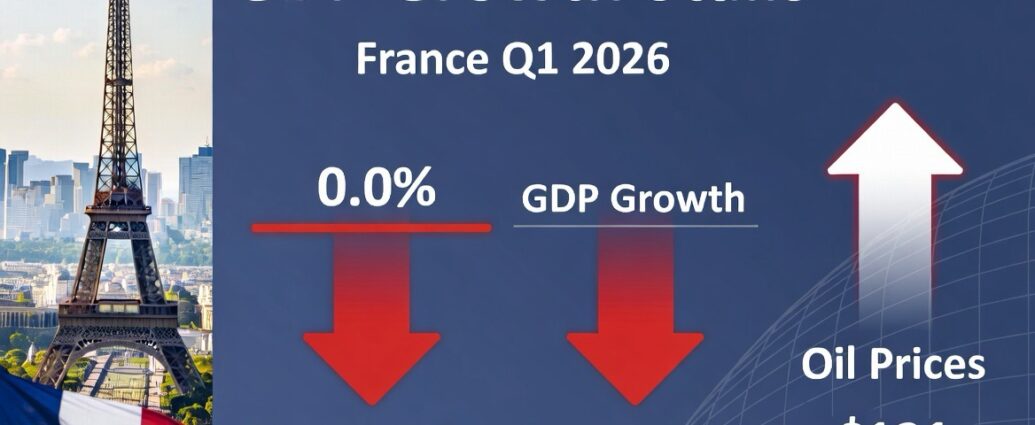
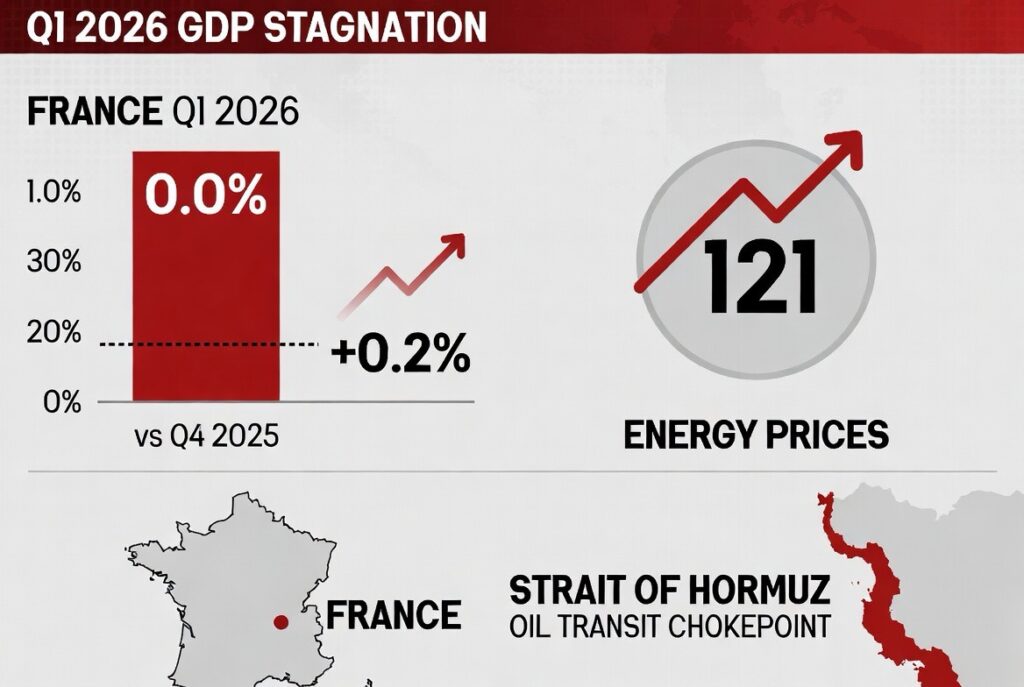
France’s economy came to a complete standstill in the first quarter of 2026, with preliminary GDP data showing zero growth (0.0% quarter-on-quarter), according to the National Institute of Statistics and Economic Studies (INSEE). The flat reading missed analyst forecasts of around 0.2% expansion and marked a sharp slowdown from the modest 0.2% gain recorded in the fourth quarter of 2025.
The stagnation reflects weakening domestic demand as households grapple with the spillover from escalating energy prices triggered by the ongoing U.S.-Iran conflict and the closure of the Strait of Hormuz. Brent crude’s surge past $121 per barrel has fueled higher inflation, eroding purchasing power and prompting precautionary saving rather than spending.
Final domestic demand contributed little to growth, while net exports and inventory changes offered only limited support. Business investment remained subdued amid heightened uncertainty and tighter financial conditions.
“This is a clear warning signal,” said one eurozone economist. “The energy shock is hitting France harder than expected, and with fiscal consolidation already underway, policymakers have limited room to respond.”
The data comes as France continues to wrestle with high public debt (now above 117% of GDP) and a delayed 2026 budget that aims to trim the deficit to around 5% of GDP — still well above EU targets. The government’s fiscal restraint, combined with the external energy shock, is weighing on near-term momentum.
Business Implications
For investors and multinationals with exposure to Europe, France’s stall adds to concerns about eurozone resilience amid geopolitical tensions. Sectors tied to consumer spending, autos, and energy-intensive manufacturing are most at risk in the coming quarters. However, the data may reinforce expectations that the European Central Bank will keep rates on hold longer, providing some relief on borrowing costs.
France’s 2026 full-year growth forecasts are now likely to be trimmed toward the lower end of the 0.9–1.0% range. Markets will watch closely for the Bank of France’s updated projections and any signs of fiscal or monetary easing later this year.
INSEE will release a more detailed breakdown in late May. JBizNews will continue monitoring the impact on European markets, corporate earnings, and global energy dynamics.
— JBizNews Desk
© JBizNews.com. All rights reserved. This article is original reporting by JBizNews Desk. Unauthorized reproduction or redistribution is strictly prohibited.