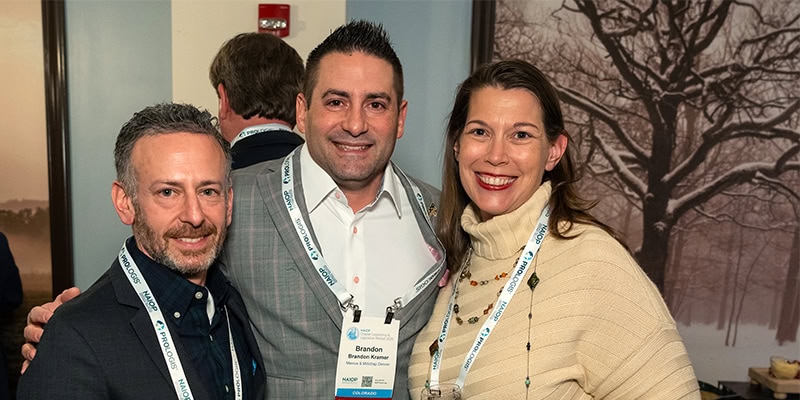
I never intended to work in commercial real estate. In college, I studied English literature (and I do still love reading poetry). I was fortunate enough to have a commercial real estate company take a chance on hiring me, and then arrogant enough to think that I would probably just do this a couple of years until I found a “real” job!
My boss encouraged me to join NAIOP just a few years into my career, and this helped me build a professional network in Colorado and, later, across the U.S.
How did you get involved in commercial real estate? Why do you find it engaging?
I love sharing with clients and users how the space they occupy can have a positive (or negative) impact on their lives and business. When we share with an investor how we take a “whole health” approach to our senior living communities, such that the building itself can improve quality of life and care; or I explain to an industrial tenant how modern column spacing can increase their warehouse efficiency by double digit percentages over dated Class C product; or work with an office client to show options that can increase employment recruitment and retention, helping their bottom line tremendously – my passion for our business reignites.
If we are trapped indoors nine hours out of 10, then those buildings need to work for us, not just be walls and a roof where we exist. That philosophy has kept me going for over 20 years; it turns out, I found the real job from the beginning!
What do you see as the biggest benefit of NAIOP?
Being a member of NAIOP is all about resources and connections. Our incredible national resources are further bolstered by an indispensable network of professionals with which you can have instant access to learn about best practices, new technologies and how to partner with cities to create better development policy. Those resources are truly invaluable.
How has NAIOP helped your career? Your business?
NAIOP has been an invaluable asset to my career and by business over the years. Having in-depth knowledge and proactive engagement in local public policy issues kept us at the forefront of changes in development practices and tax implications; our relationships forged through NAIOP have allowed our Denver-based organization, Confluent development, to grow toward development in nearly half the states in the country and in all four time zones.
Commercial real estate is an industry that is impacted by both national and local practices. While we are always a “boots on the ground” business, markets and municipalities are increasingly influenced by strategies in other regions. As a Colorado-based developer, we have gained tremendous benefit not only through the local relationships we have developed, but also through relationships at the federal level and local markets such as southern California, where public policy decisions have served as inspiration in our own local market. This combination of engagement has yielded tremendous opportunity for our organization.
How are Developing Leaders shaping both our association and our industry?
As one of the youngest NAIOP members to serve as chair, I have had the benefit of experiencing firsthand the engagement and enthusiasm of our Developing Leaders. In an industry that has historically been resistant to change, our DLs are ushering in a new way of thinking, leading all of us to embrace a combination of tested best practices with new innovations in the industry. I truly believe that commercial real estate, like many industries, will be required to embrace many new changes in operations and technologies to improve our efficiency and data resources, and our Developing Leaders will certainly lead the way in this regard.
Meet Celeste Tanner in this short video: