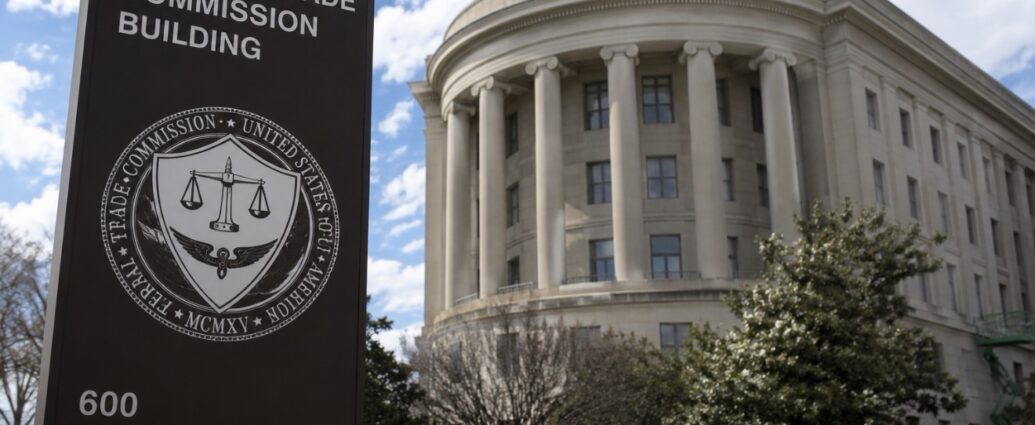
The Federal Trade Commission (FTC) on Monday issued warning letters to seven companies it says falsely marketed products as “Made in the USA,” and to an eighth that labeled goods “Made in Texas,” even though the products were imported in whole or in significant part.
Christopher Mufarrige, Director of the FTC’s Bureau of Consumer Protection, said consumers who pay a premium for products marketed as American-made deserve confidence that those claims are truthful. He said the agency will continue holding companies accountable if they undermine that trust through misleading origin claims.
The warning letters, made public on July 6, were sent to companies selling a wide range of products, including drums, industrial laser machinery, coordinate measuring machines and e-cigarettes. The recipients were A&F Drum Company, Z-Tech Advanced Technologies, Vtron Inc. (doing business as Vtron Lasers), Helmel Engineering Products, NebTech, Lucky Bar Holdings, and My Vape Order.
At the center of the enforcement effort is the FTC’s Made in USA Labeling Rule, which requires that products advertised as American-made be “all or virtually all” manufactured in the United States. Simply assembling imported parts domestically generally does not qualify. The overwhelming majority of a product’s components and manufacturing must originate in the United States before companies can legally make an unqualified “Made in USA” claim.
The latest warnings are part of a broader federal enforcement effort.
In March, President Donald Trump signed an executive order titled “Ensuring Truthful Advertising of Products Claiming to be Made in America,” directing the FTC to prioritize investigations involving deceptive domestic-origin claims. The order elevated enforcement of American-made labeling to one of the agency’s leading consumer-protection priorities.
The Commission has already begun acting on that directive.
Earlier this year, the FTC announced a nationwide enforcement sweep targeting companies marketing American flags, footwear and electronic dartboards using allegedly deceptive origin claims. Those cases resulted in enforcement actions requiring businesses to stop making unlawful claims and provide financial relief to affected consumers. Companies that continue violating the Made in USA Labeling Rule may face significant civil penalties.
For now, Monday’s letters stop short of formal enforcement.
Instead, they serve as official warnings urging the companies to review their marketing practices and bring their advertising into compliance. Historically, warning letters often precede stronger regulatory action if businesses fail to correct the alleged violations.
For manufacturers, retailers and distributors, the stakes are substantial.
Products marketed as American-made often command premium prices because many consumers intentionally choose to support domestic manufacturing and American jobs. If companies falsely claim domestic origin, they can gain an unfair competitive advantage over manufacturers that genuinely absorb the higher costs associated with producing goods in the United States.
The FTC emphasized that point in announcing the letters, arguing that enforcement protects not only consumers but also honest manufacturers that invest in American facilities, workers and supply chains.
The timing also carries symbolic significance.
The enforcement initiative comes as the United States approaches celebrations surrounding the nation’s 250th anniversary, with renewed attention on domestic manufacturing and “Made in America” initiatives. FTC Chairman Andrew Ferguson has repeatedly identified truthful country-of-origin advertising as a key priority for the Commission’s consumer-protection agenda.
For the companies receiving warning letters, the next step will likely involve evaluating whether their sourcing, manufacturing and supply chains fully support the marketing claims appearing on their products and websites. Many businesses manufacture products using a combination of domestic and imported components, making the distinction between “Assembled in the USA” and “Made in USA” increasingly important from both a legal and marketing perspective.
For consumers, the message is straightforward.
When shoppers choose to pay more for products advertised as American-made, regulators want to ensure those claims accurately reflect where the products were manufactured. Monday’s warning letters signal that the FTC intends to closely scrutinize those claims and, when necessary, take action to protect both consumers and businesses that play by the rules.
JBizNews Desk | Washington, D.C.
© JBizNews.com All Rights Reserved. Reproduction or distribution without written permission is prohibited.