JBizNews Desk | Thursday, May 7, 2026
What began as one of the most surprising takeover attempts in recent Wall Street history quickly spiraled into a credibility crisis this week after GameStop CEO Ryan Cohen delivered a tense and widely criticized television interview that deepened investor doubts about whether the company’s proposed $55.5 billion acquisition of eBay is financially realistic.
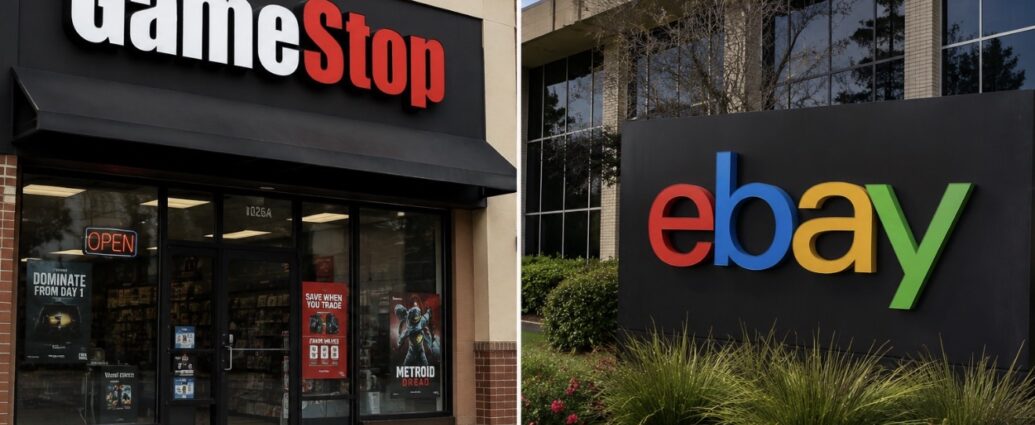
The proposed deal — announced Sunday, May 3 — stunned both retail and technology investors. GameStop, the former mall-based video game retailer turned meme-stock icon, submitted an unsolicited, nonbinding offer to acquire eBay for $125 per share in a transaction structured as roughly 50% cash and 50% GameStop stock.
The proposal values eBay at approximately $55.5 billion, representing a 20% premium to eBay’s prior closing price and roughly a 46% premium over where the stock traded in early February before GameStop quietly began accumulating shares.
GameStop argued the merger could create a serious long-term competitor to Amazon by combining eBay’s online marketplace infrastructure with GameStop’s physical retail footprint and growing logistics ambitions.
But within 48 hours, investor excitement had largely turned into skepticism.
The Financing Questions Begin
GameStop said it secured a $20 billion financing commitment letter from TD Bank and projected the combined company could reduce approximately $2 billion in annual operating expenses, largely by cutting eBay’s massive sales and marketing budget.
According to the company’s presentation materials, those savings alone could theoretically boost eBay’s earnings per share from roughly $4.26 to $7.79 under traditional accounting metrics.
Yet almost immediately, analysts began questioning the central issue hanging over the deal: how exactly does GameStop finance a $55.5 billion acquisition when the company itself is worth only a fraction of that amount?
Even including its large cash reserves and proposed stock component, analysts estimate GameStop still faces a financing gap potentially exceeding $15 billion.
That concern exploded into public view Monday morning during Cohen’s appearance on CNBC’s Squawk Box.
The Interview That Changed the Story
CNBC anchor Andrew Ross Sorkin repeatedly pressed Cohen on the mechanics of financing the acquisition, asking how GameStop realistically planned to close such a massive funding gap.
Cohen’s answers appeared to unsettle investors rather than reassure them.
“Half cash, half stock. The details are on our website,” Cohen said during one exchange.
When Sorkin pushed further about where the remaining billions would come from, Cohen responded, “Yeah, we’ll see what happens.”
The exchange quickly spread across financial media and social platforms, with analysts and investors describing the interview as combative, evasive, and lacking basic financial clarity.
Cohen also acknowledged during the interview that he had not yet held substantive discussions with eBay management regarding the proposed acquisition.
“We are just starting,” he said.
The market reaction was immediate.
GameStop shares plunged more than 10% Monday following the interview and remained below pre-announcement levels through Wednesday trading despite a partial rebound. Investors appeared increasingly concerned that the proposal was more aspirational than executable.
eBay shares initially rose approximately 5% after the offer became public but continued trading well below the proposed $125 takeover price — traditionally a sign that markets view a deal as unlikely to close.
Analysts Call the Deal a Long Shot
Wall Street analysts were unusually blunt in their assessments.
GlobalData retail analyst Neil Saunders described the bid as “a David trying to take over a Goliath in order to buy David relevance,” questioning whether the transaction makes operational or financial sense.
Emarketer principal analyst Sky Canaves raised doubts about the strategic rationale behind combining eBay’s online marketplace with GameStop’s approximately 1,600 physical retail locations.
“There’s little evidence eBay users are looking for a physical pickup model,” Canaves noted, challenging Cohen’s broader vision of creating an Amazon competitor.
Others questioned whether GameStop’s management team has the infrastructure, operational expertise, or financing relationships necessary to integrate a company several times its own size.
eBay’s Own Struggles
For eBay, the unexpected bid arrives during a difficult transition period.
The once-dominant e-commerce platform has spent years attempting to defend market share against Amazon, Walmart, TikTok Shop, Temu, and Shein. eBay’s gross merchandise volume peaked near $100 billion during the pandemic-era online shopping surge in 2020 before falling to approximately $79.6 billion in 2025.
Under CEO Jamie Iannone, the company has increasingly focused on niche categories including collectibles, trading cards, luxury resale items, sneakers, and automotive parts in an effort to stabilize growth and retain higher-margin customers.
Whether eBay’s board seriously entertains Cohen’s proposal remains unclear. The company confirmed receipt of the offer and said it would review the proposal, but executives have not publicly indicated support for the transaction.
For now, Wall Street appears unconvinced.
What was initially framed as a bold attempt to reinvent GameStop as a next-generation e-commerce player has rapidly become a test of credibility for Ryan Cohen himself — and a reminder that in modern markets, ambitious headlines alone are not enough to satisfy investors demanding financial reality behind the vision.
© JBizNews.com. All rights reserved. This article is original reporting by JBizNews Desk. Unauthorized reproduction or redistribution is strictly prohibited.