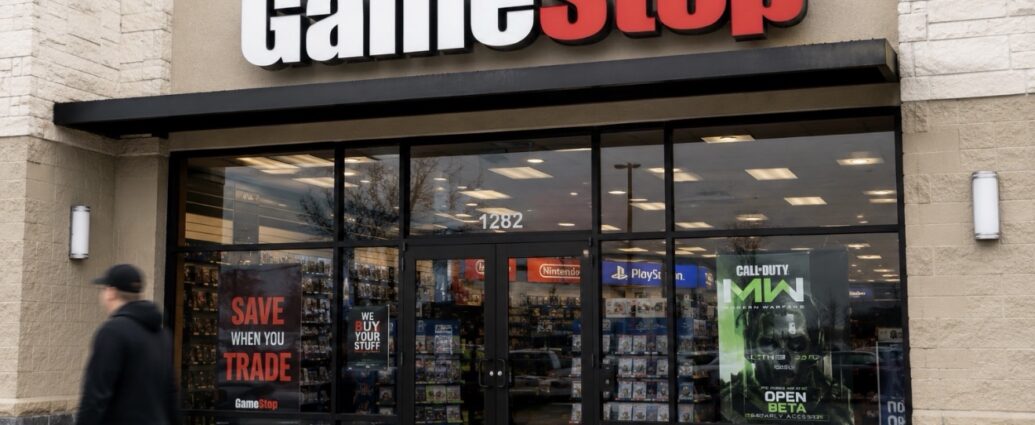
GameStop is considering walking away from its attempt to buy eBay outright and instead asking eBay to team up with it, according to people familiar with the deliberations. The idea now on the table is simple: rather than purchasing the marketplace, GameStop would put its stores to work for eBay and take seats on eBay’s board in exchange. No decision has been made, and the change of course is under discussion as of Monday, with nothing filed and no proposal formally submitted.
The shift, first reported by Bloomberg, would end one of the most improbable takeover campaigns in recent American retail history. Chief Executive Ryan Cohen launched it on May 3 with a non-binding offer of $125 a share in cash and stock, valuing eBay at roughly $56 billion. eBay’s board rejected it nine days later, describing the approach as neither credible nor attractive and saying it had confidence in its existing management.
What replaces it would be a commercial arrangement built around physical locations. GameStop runs roughly 1,600 stores across the United States. eBay runs a fee-based online marketplace with no storefronts of its own. Under the arrangement being weighed, those stores would serve eBay’s business in the categories where both companies are trying to grow — trading cards and collectibles, which carry far better margins than used game discs or consumer electronics.
The logic is more practical than it sounds. Expensive collectibles change hands online only when a buyer trusts that the card is authentic and will arrive intact. Authentication and shipping are the friction points in that market, and they are physical problems that a website cannot solve on its own. A network of stores within a short drive of most of the country gives eBay somewhere to send cards for grading, verification and fulfillment without building that infrastructure itself. Cohen made a version of this argument publicly in July, saying the combined footprint would put an authentication point within about a 15-minute drive of roughly 80% of the population.
Money is the reason the takeover stalled. GameStop set out to buy a company several times its own size, and doing that requires enormous borrowing or the creation of enormous amounts of new stock. Cohen proposed both. His financing consisted of a non-binding commitment worth about $20 billion from TD Securities, and that facility carried a condition: the combined company would have to earn an investment-grade credit rating after the deal closed. That circular requirement — the debt depends on the credit rating, the credit rating depends on the debt working out — is what critics never got past. Moody’s warned in May that the structure would be credit negative for eBay because of the leverage involved.
Cohen spent the summer escalating rather than retreating. GameStop built its position in eBay to 9.8%, or about 43.4 million shares, according to its July filings, making it one of the marketplace’s largest owners. He forfeited a performance-based compensation award in June, a move widely read as a signal that the acquisition had become his singular focus. In a July interview he declined to say whether he would raise the price, saying only that he would not negotiate against himself and that “we’re coming for eBay one way or another.” He has repeatedly said he would take the case directly to shareholders if the board refused to engage.
A partnership would sidestep the machinery an acquisition requires. There would be no antitrust review of a merger, no vote by either company’s owners, and no need for GameStop to issue the vast block of new shares that unsettled its own investor base. What GameStop would give up is control. What it would gain, if eBay agrees, is board representation and a role inside a marketplace it cannot afford to own.
It would also let Cohen keep the part of the plan that always made the most sense to retail analysts. The strategic case for combining a store chain with a marketplace was never really about ownership; it was about pairing eBay’s reach in collectibles with somewhere physical to handle the goods. A joint venture delivers that pairing without the balance sheet gymnastics.
eBay has not said whether it would entertain the idea, and neither company commented on the reporting. Cohen has not ruled out other options, and the people describing the discussions cautioned that he could still land somewhere else entirely — including simply holding the stake and continuing to press from the outside, which is the position he already occupies as one of eBay’s biggest shareholders.
JBizNews Desk | New York
© JBizNews.com All Rights Reserved. Reproduction or distribution without written permission is prohibited.