Three years after October 7, the question facing many former hostages is no longer how to bring them home. It is what happens after they get there.
That question resurfaced in an N12 investigation broadcast Wednesday, in which former hostages described sleepless nights, difficulty working, housing problems, and families still struggling to function months or years after returning from Gaza.
A Jerusalem Post examination of the government framework raises another question: Money was allocated for some of the very services now said to depend on donations. What happened to it?
Government procurement records show that in September 2025, the Welfare and Social Affairs Ministry approved a joint project with Lehoshit Yad, the nonprofit featured in the N12 report, to operate its Shavim LeHaim community for captivity survivors and their families.
The project totaled NIS 3.03 million and was scheduled to operate through the end of 2026. The ministry was to provide NIS 1.515 million, with the organization contributing the same amount.
The ministry’s document said the community then comprised 144 people from 54 families, including 58 children and teenagers who had returned from Hamas captivity.
Yet in its response to N12 this week, the Welfare Ministry said Lehoshit Yad chose to operate outside the formal arrangement and therefore did not utilize the available budget.
The dispute comes as former hostages confront problems extending far beyond their initial medical treatment.
Former hostages face ongoing struggles
N12 interviewed Yosef-Haim Ohana, who spent 738 days in Hamas captivity and said he is still moving between his grandmother’s home and friends’ places while trying to secure housing.
Segev Kalfon described waking at night believing he was hearing explosions. Eitan Yahalomi, who was 12 when he was kidnapped from Nir Oz and is now 15, said he rarely leaves home and spends much of the night on his phone.
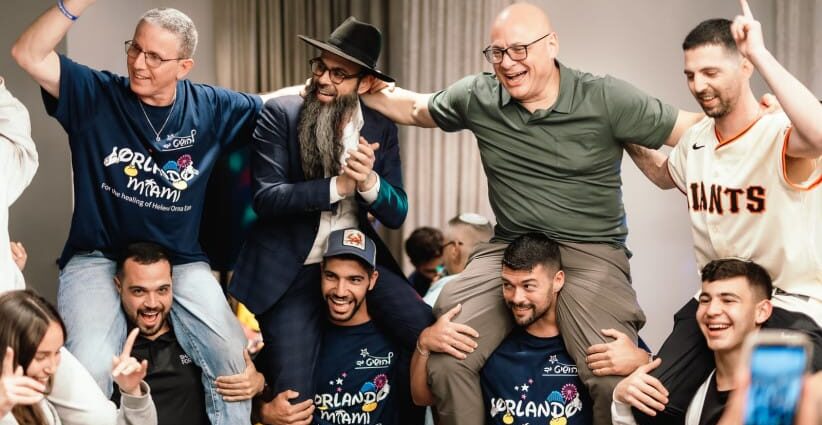
One of the few things that regularly draws Yahalomi outside, he said, is the Lehoshit Yad community.
“I can’t see myself without the organization,” he told N12.
The difficulty of treating captivity as an individual trauma has been acknowledged by the state itself.
When the National Insurance Institute (NII) and Sheba Medical Center launched a long-term rehabilitation programin March 2025, the institute said existing legal assistance for second- and third-circle degrees of relationship did not fully address the complexities emerging after hostages returned.
Legal framework surrounding support for ex-hostages is still expanding
The Health Ministry says every returning hostage has been assigned a coordinating nurse and can receive continued physical and mental-health treatment. The NII provides automatic disability recognition, rehabilitation assistance, and financial benefits.
The legal framework is still being expanded.
A government bill granting released hostages automatic rights equivalent to 100% disability and state-funded medical treatment without a time limit passed its first reading in May 2025. The Knesset’s Labor and Welfare Committee began preparing it for second and third readings in December.
A separate Knesset discussion in February called for broader recognition of the Gaza captivity’s effects on entire families, as well as for long-term rehabilitation.
Israel built an extensive system to receive people coming out of Gaza: hospitals, psychologists, social workers, grants, and rehabilitation staff. Three years after October 7, the challenge is whether those systems can adapt to needs that are highly individual and can last for years.
For former hostages who cannot work, housing benefits may still leave them unable to rent near their support network.
Parents who were never in Gaza may nevertheless be unable to sleep or return to work. Teenagers may receive professional treatment and still need other former hostage children around them before they are willing to leave their bedrooms.
The next question is whether the state and the organizations surrounding them can build a system designed for the years ahead, after the headlines fade.