
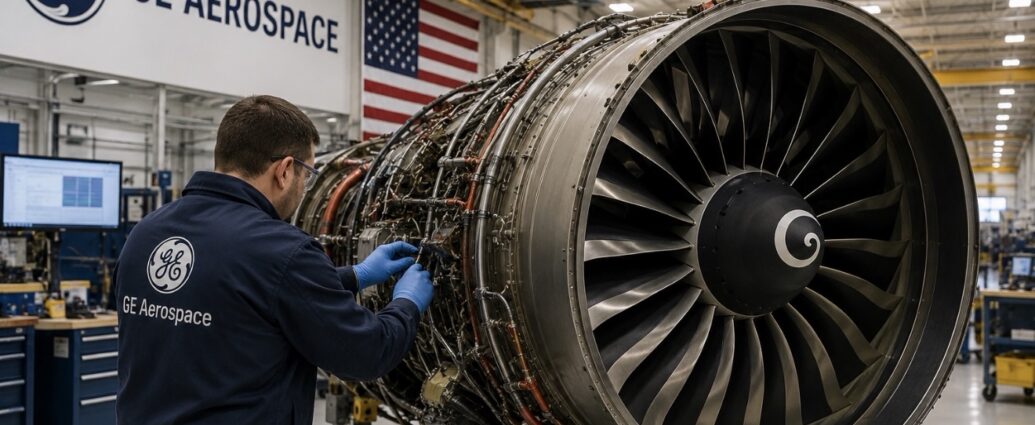
GE Aerospace reported strong second-quarter results on Thursday, July 16, raising its full-year earnings and cash-flow outlook after continued strength in its commercial aviation services business offset concerns over higher fuel prices and global airline capacity reductions. The company said demand for engine maintenance and replacement parts remains exceptionally strong as airlines continue operating older aircraft amid persistent shortages of new jets and engines.
The aerospace giant now expects adjusted earnings of $7.65 to $7.85 per share for 2026, up from its previous forecast of $7.10 to $7.40. GE also increased its expected free cash flow to between $8.9 billion and $9.2 billion, reflecting continued demand across its high-margin commercial services business.
The results exceeded Wall Street expectations.
Second-quarter GAAP revenue rose 21% to $13.35 billion, while adjusted revenue increased 24% to $12.63 billion. Adjusted earnings reached $2.02 per share, beating analyst estimates, while total orders climbed 17% to $16.5 billion, extending the company’s already substantial backlog.
Commercial Aviation Continues Driving Growth
The biggest contributor to GE Aerospace’s performance remains commercial aviation.
Although airlines around the world have reduced some schedules because of higher fuel costs and geopolitical uncertainty, carriers continue investing heavily in aircraft maintenance.
Unlike discretionary spending, engine overhauls cannot be delayed indefinitely.
Aircraft shortages caused by production delays at major manufacturers have forced airlines to keep older fleets flying longer than originally planned. Every additional flight hour increases demand for inspections, repairs and replacement parts.
GE Aerospace said its overhaul facilities remain heavily booked, while demand for spare parts continues exceeding available supply.
The company now holds approximately $170 billion in commercial services backlog, providing significant visibility into future revenue. GE expects double-digit growth in its commercial services business to continue through at least 2027.
Supply Chain Challenges Persist
Despite the strong quarter, executives acknowledged that supply-chain constraints remain one of the company’s largest operational challenges.
Material shortages continue delaying delivery of some components, particularly spare parts used in commercial aviation.
GE said it is investing in manufacturing capacity, supplier expansion and facility upgrades to improve production while supporting both engine manufacturing and aftermarket service demand.
The company also continues upgrading durability improvements for its LEAP family of engines, one of the industry’s most widely used next-generation commercial aircraft engines.
Defense Business Adds Momentum
Beyond commercial aviation, GE Aerospace also reported continued growth within its defense and propulsion technologies business.
Military engine demand remained healthy during the quarter, contributing additional revenue growth alongside commercial operations.
The combination of commercial services and defense continues providing GE with diversified revenue streams that have helped offset broader economic uncertainty.
Market Reaction
Despite the strong financial results and higher guidance, GE Aerospace shares traded lower during Thursday’s session.
Investors focused on moderating order growth and broader market weakness affecting industrial and aerospace stocks.
Analysts noted that while order growth remains strong, it has slowed from the exceptionally rapid pace reported earlier this year.
Even so, the company’s improved outlook demonstrates continued confidence in long-term aviation demand.
Why It Matters
GE Aerospace sits at the center of the global aviation industry.
Its engines power thousands of commercial aircraft worldwide, making the company’s results an important indicator of airline activity, global travel demand and industrial manufacturing.
The latest earnings suggest airlines remain willing to spend aggressively on maintenance even as they manage higher operating costs.
That resilience supports not only GE Aerospace but also suppliers, maintenance providers, airports and manufacturers throughout the aviation ecosystem.
With international travel continuing to recover and aircraft production still constrained, the aftermarket business remains one of the industry’s strongest profit drivers.
For now, GE Aerospace appears well positioned to benefit from that trend.
JBizNews Desk | Cincinnati
© JBizNews.com All Rights Reserved. Reproduction or distribution without written permission is prohibited.




