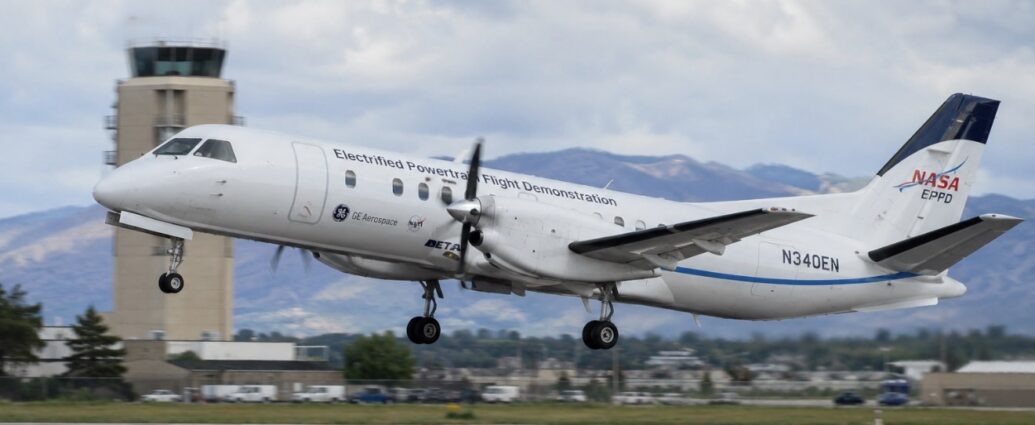
According to GE Aerospace, on Monday, July 20, the company successfully completed the world’s first high-altitude flight demonstration assisted by hybrid-electric propulsion under NASA’s Electrified Powertrain Flight Demonstration (EPFD) program, marking a significant milestone in the development of next-generation commercial aircraft. The achievement is important for airlines, manufacturers and suppliers because it advances technology that could reduce fuel costs, improve efficiency and support the aviation industry’s long-term sustainability goals.
The demonstration used a modified Saab 340B aircraft equipped with a hybrid-electric propulsion system developed by GE Aerospace in collaboration with BETA Technologies. The flight validated the system under real operating conditions at commercial cruising altitudes, providing engineers with valuable performance data as development continues.
For the airline industry, fuel remains one of the largest operating expenses. Even modest improvements in fuel efficiency can save carriers millions of dollars annually while helping them comply with increasingly stringent environmental regulations. Hybrid-electric propulsion is widely viewed as one of the most practical transitional technologies before battery-powered commercial aircraft become feasible.
Unlike fully electric aircraft, hybrid-electric propulsion combines conventional turbine engines with electric motors that provide additional power during the most energy-intensive phases of flight, including takeoff and climb. The result is lower fuel consumption while maintaining the reliability and range required for commercial aviation.
The flight represents years of collaboration between GE Aerospace, NASA, and industry partners working to move hybrid-electric technology from laboratory testing to real-world aviation applications. High-altitude testing is particularly important because commercial aircraft spend much of their operating time above 30,000 feet, where propulsion systems must perform under demanding conditions.
The project also supports CFM International’s Revolutionary Innovation for Sustainable Engines (RISE) program, a joint initiative between GE Aerospace and Safran Aircraft Engines. The program is evaluating advanced engine technologies capable of improving fuel efficiency by more than 20% compared with today’s most efficient single-aisle aircraft engines.
Those technologies include hybrid-electric propulsion, advanced engine cores and open-fan engine designs that could eventually power the aircraft expected to succeed today’s Boeing 737 and Airbus A320neo families.
The milestone also carries implications throughout the aerospace supply chain.
Hybrid-electric aircraft require advanced electric motors, power electronics, thermal management systems, lightweight composite materials and sophisticated software. As manufacturers continue investing in electrified propulsion, suppliers producing those components could benefit from growing demand over the coming decade.
For aircraft manufacturers, the successful demonstration provides additional confidence that hybrid-electric propulsion is progressing toward commercial viability. Airlines continue seeking more fuel-efficient aircraft as they modernize fleets and attempt to lower operating costs while meeting environmental objectives.
Government support also remains an important part of the industry’s transition. NASA’s continued investment in electrified flight technologies reflects broader public-private efforts to accelerate innovation while maintaining the safety and reliability standards required for commercial aviation.
Although hybrid-electric commercial aircraft are still years from widespread deployment, Monday’s demonstration represents another important step toward future aircraft capable of reducing both operating expenses and emissions.
For businesses across the aviation sector, the development highlights continued investment in advanced aerospace technologies that could influence future airline purchasing decisions, manufacturing priorities, supplier contracts and long-term capital investment throughout the industry.
JBizNews Desk | New York
© JBizNews.com All Rights Reserved. Reproduction or distribution without written permission is prohibited.