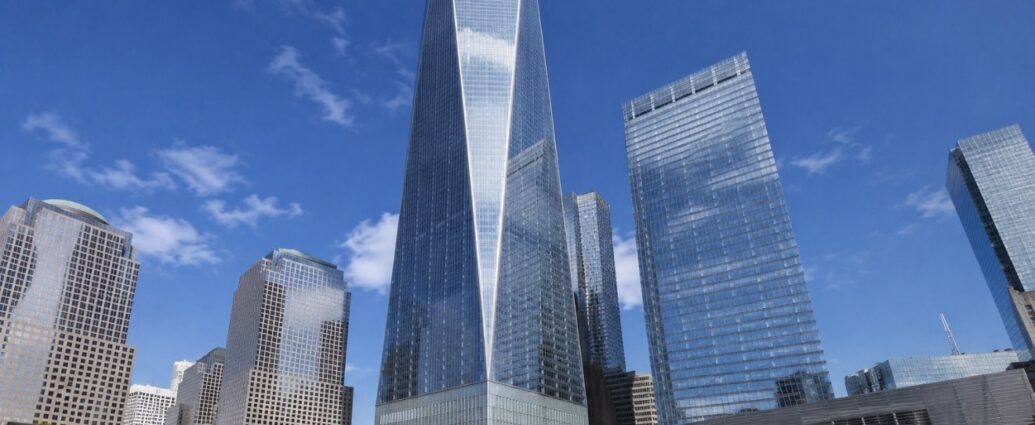
A decade after Three World Trade Center opened in Lower Manhattan, one of its largest remaining vacant spaces has finally found a tenant. Glasshouse, one of New York City’s best-known luxury event and hospitality companies, has signed a lease for 66,436 square feet across three floors of the tower, marking one of the most significant leasing transactions in Lower Manhattan this year and another sign that demand for premier office and event space continues to strengthen.
The lease, announced Monday, July 13, 2026, fills the building’s podium-level event space that had remained vacant since the tower opened in 2018. The deal gives Glasshouse its first flagship location in Downtown Manhattan and adds momentum to the continuing revival of New York City’s commercial real estate market.
Owned by Silverstein Properties, Three World Trade Center is one of the centerpiece office towers rebuilt at the World Trade Center following the September 11 attacks. Standing approximately 1,079 feet tall with 80 stories, the building is already home to major corporate tenants including GroupM, McKinsey & Company, Kantar, and Hudson River Trading.
While office leasing has steadily improved over the past two years, large podium spaces designed for conferences, banquets and special events have proven more difficult to fill. Glasshouse’s decision to lease the property represents a major milestone for the tower and removes one of its last high-profile vacancies.
According to leasing details released Monday, Glasshouse will occupy three floors and develop a premier event venue capable of hosting corporate conferences, galas, product launches, weddings and large-scale private functions. The company expects the venue to accommodate up to 2,000 guests, making it one of the largest event spaces in Lower Manhattan.
The expansion reflects growing confidence in New York City’s recovery as corporations continue bringing employees back to the office while increasing demand for in-person meetings, networking events and conferences.
Commercial real estate analysts say companies increasingly want modern buildings with premium amenities rather than older office inventory. Buildings located near major transportation hubs, restaurants and hotels have generally outperformed much of the broader office market, with the World Trade Center campus benefiting from direct access to multiple subway lines, PATH trains and regional transportation.
The transaction also highlights the continued strength of the hospitality and events industry. After several years of pandemic-related disruptions, corporate travel, conventions and private events have steadily rebounded across New York City, supporting demand for flexible, high-capacity venues.
For Silverstein Properties, landing Glasshouse represents another important achievement in completing the long-term redevelopment of the World Trade Center campus. The developer has spent more than two decades rebuilding the site into one of the world’s premier business districts, attracting financial firms, technology companies, media organizations and professional services firms.
The lease follows several other high-profile commercial real estate announcements in Manhattan this year, including continued construction on Two World Trade Center, which will become American Express’s future global headquarters, and ongoing work on Citadel’s planned headquarters at 350 Park Avenue. Together, those projects underscore renewed confidence in premium Manhattan office assets despite broader challenges facing parts of the office market.
Industry experts note that while older Class B and Class C office buildings continue to struggle with higher vacancy rates, demand for newly constructed Class A towers remains considerably stronger. Companies are increasingly consolidating operations into fewer, higher-quality buildings that offer modern workspaces, advanced technology infrastructure and amenities designed to attract employees back to the office.
Glasshouse’s investment also reflects confidence in Lower Manhattan’s evolution beyond its traditional financial services base. The neighborhood has become increasingly diversified, attracting technology firms, media companies, hospitality operators and residential development while remaining one of the city’s most important business centers.
As construction cranes continue reshaping portions of Manhattan’s skyline and leasing activity accelerates across premium buildings, Monday’s announcement offers another indication that investors and businesses remain willing to commit significant capital to New York City’s long-term future.
For the city’s commercial real estate sector, filling one of Lower Manhattan’s most prominent remaining vacancies represents more than a single lease—it signals continued momentum in one of the nation’s most closely watched office markets.
JBizNews Desk | New York
© JBizNews.com All Rights Reserved. Reproduction or Distribution without Written Permission is Prohibited.