May 1, 2026
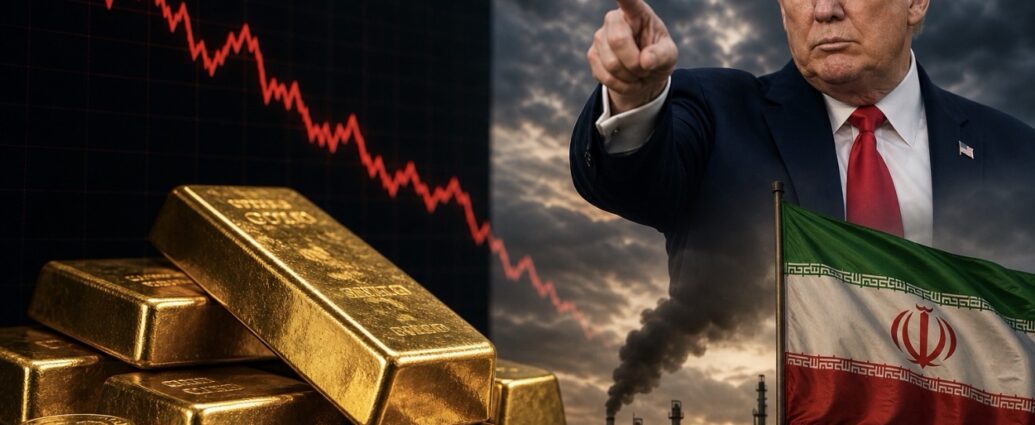
Gold is under pressure this week as President Donald Trump made clear the U.S. naval blockade of Iranian ports is staying in place — and investors are beginning to worry that higher oil prices could keep interest rates elevated for longer, making gold a less attractive place to park money.
Spot gold was up slightly Friday at $4,724.19 an ounce, but is still down more than 2% for the week — on track for its first weekly loss in five weeks. U.S. gold futures for June delivery rose 0.4% to $4,741.30. 
The metal has had a rough ride since the U.S.-Iran conflict began. Gold hit a record high of $5,594.82 an ounce on January 29 and has shed more than 20% since then. Silver has fallen even harder, losing nearly half its value from its all-time high. 
The reason gold keeps falling even as a war rages in the Middle East comes down to one word: inflation. The Iran conflict has pushed oil prices sharply higher, stoking fears that inflation will stay elevated. When inflation looks stubborn, central banks are more likely to keep interest rates high — and high interest rates make bonds and cash more attractive than gold, which pays no interest. 
Trump said this week he is sticking with the naval blockade of Iranian ports. Iran’s supreme leader Mojtaba Khamenei pushed back, vowing his government will not give up its nuclear or missile programs and signaling Tehran intends to keep control of the Strait of Hormuz. 
The situation has been described as a “dual blockade” — the U.S. Navy blocking Iranian ports while Iran restricts traffic through the Strait of Hormuz, a waterway that once carried roughly 25% of the world’s seaborne oil trade. 
Giovanni Staunovo, analyst at UBS, explained the dynamic plainly: gold fell this week because oil prices went higher, which pushed up inflation expectations, which in turn drove up the dollar and bond yields — all of which work against gold. 
Despite the recent weakness, not everyone has given up on the metal. Goldman Sachs is holding its year-end price target of $5,400 an ounce, pointing to continued central bank buying and expectations that the Federal Reserve will eventually cut rates by 50 basis points. Analysts Daan Struyven and Lina Thomas acknowledged the near-term risk but said medium-term upside remains intact. 
Analysts at BNP Paribas noted that gold’s current behavior has clear historical precedent. In 2008, 2020, and 2022, gold initially dropped when major shocks hit markets, as investors rushed to hold dollars instead. In all three cases, a sustained rally followed. 
For now, the path forward for gold depends largely on what happens in the Strait of Hormuz. If talks between Washington and Tehran produce a deal, oil prices could fall, inflation fears could ease, and gold could stabilize. If the blockade holds and the conflict drags on, gold faces more headwinds — even in the middle of a war.
JBizNews Desk
© JBizNews.com. All rights reserved. This article is original reporting by JBizNews Desk. Unauthorized reproduction or redistribution is strictly prohibited.