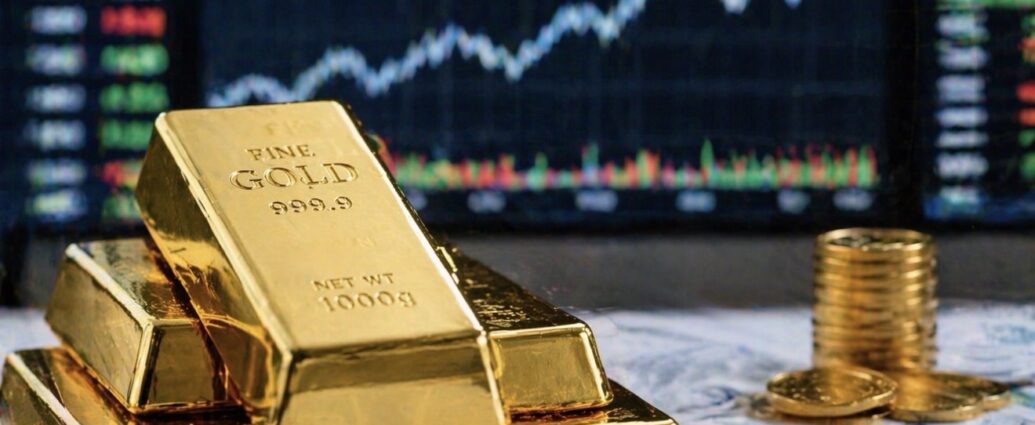
Gold’s recent pullback has failed to shake institutional conviction, with major investors continuing to position for long-term currency debasement despite heightened volatility driven by geopolitical tensions and shifting rate expectations.
While momentum has slowed in recent weeks, strategists at Wells Fargo Investment Institute say writing off gold’s broader trajectory would be premature, pointing instead to a market undergoing consolidation after an extended rally. “We continue to see gold as a compelling medium-term opportunity,” the firm said in a recent client note, emphasizing that the underlying macro drivers remain intact.
Gold was one of the standout performers in 2025, supported by aggressive central bank buying, persistent inflation concerns, and elevated geopolitical risks. Data from the World Gold Council shows central banks continued to accumulate bullion at near-record levels, reinforcing gold’s role as a strategic reserve asset amid growing skepticism toward fiat currencies.
That strength carried into early 2026 before sentiment shifted sharply. Gold posted its worst monthly performance since 2008 in March, as escalating tensions tied to the U.S.–Iran conflict fueled inflation expectations and forced markets to scale back anticipated Federal Reserve rate cuts. Rising yields, a traditional headwind for non-yielding assets, contributed to the selloff.
Despite the correction, investor demand has proven resilient. The SPDR Gold Trust (NYSE: GLD), the world’s largest gold-backed exchange-traded fund, remains up roughly 11% year-to-date, underscoring continued institutional allocation even as volatility persists.
“The bigger picture continues to revolve around currency debasement,” said George Milling-Stanley, Chief Gold Strategist at State Street Global Advisors. “With governments running large deficits and central banks balancing inflation with growth, gold remains a key hedge against the erosion of purchasing power.”
Analysts point to structural shifts in global financial systems as an additional tailwind. Several emerging market central banks, including China’s People’s Bank of China, have steadily increased gold reserves in recent years as part of broader diversification away from the U.S. dollar.
At the same time, geopolitical uncertainty continues to reinforce gold’s safe-haven appeal. While conflict-related volatility has contributed to short-term price swings, it has also strengthened gold’s positioning as a strategic asset during periods of global instability.
Still, some market participants caution that near-term risks remain. “Higher real yields could continue to pressure gold prices in the short run,” said Ole Hansen, Head of Commodity Strategy at Saxo Bank. “The market may face intermittent setbacks if rate expectations continue to shift.”
For investors and policymakers alike, gold’s resilience highlights a deeper concern about the long-term trajectory of global currencies. Expanding fiscal deficits, rising sovereign debt, and persistent inflation pressures are reinforcing the case for hard assets as a hedge against monetary erosion.
Looking ahead, gold’s path will be closely tied to Federal Reserve policy, inflation dynamics, and geopolitical developments. While volatility is likely to remain elevated, institutional positioning suggests the core thesis is unchanged: gold is increasingly viewed not just as a tactical trade, but as a strategic safeguard against currency debasement in an uncertain global economy.
JBizNews Desk