Subheadline:
David Solomon says investors are showing more greed than fear as OpenAI, Anthropic, and SpaceX prepare massive public offerings that could reshape Wall Street.
By JBizNews Desk
June 3, 2026
The head of Goldman Sachs says investors have tipped into outright greed.
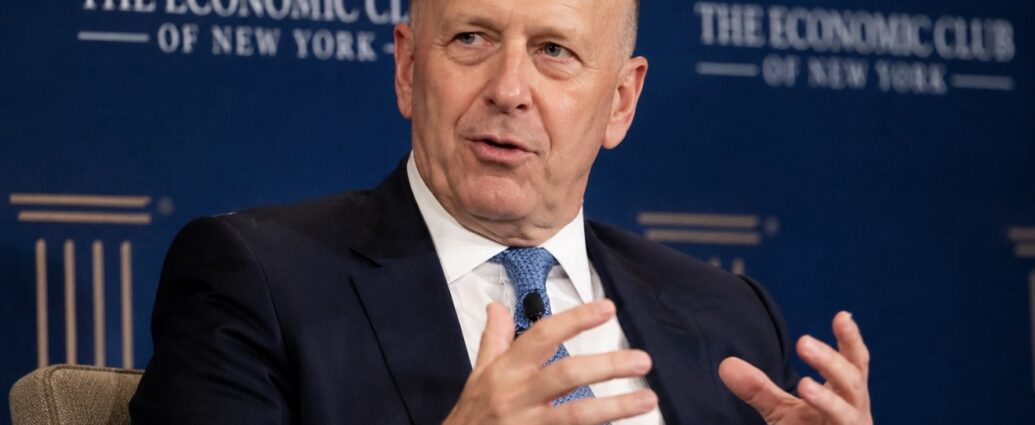
Speaking Tuesday at an event hosted by the Economic Club of New York, Goldman Sachs CEO David Solomon was asked whether financial markets could absorb the enormous wave of stock offerings expected from artificial-intelligence companies. His answer was unusually direct.
“We are definitely in a moment where there’s more greed than there is fear.”
Solomon made the remarks during an interview with CNBC’s Leslie Picker, responding to questions about the growing pipeline of AI companies preparing to tap public markets.
The timing is significant. Some of the biggest names in technology — including OpenAI, Anthropic, and Elon Musk’s SpaceX — are preparing public offerings that could value individual companies at hundreds of billions, and potentially more than a trillion dollars. At the same time, dozens of AI-related businesses are seeking billions in fresh capital to build data centers, expand computing infrastructure, and purchase advanced semiconductor chips.
Wall Street Still Has Money to Spend
Solomon’s core message was simple: investors still have plenty of cash.
“There’s plenty of liquidity in the system if the world continues to remain as optimistic,” Solomon said.
In other words, the capital exists to fund these massive offerings — provided investor confidence remains intact.
As evidence, Solomon pointed to Alphabet’s recent $80 billion stock offering, one of the largest equity raises ever attempted. Despite concerns about dilution, Alphabet’s shares largely held up following the announcement.
Goldman Sachs served as an adviser on that transaction.
To Solomon, the market’s reaction suggests investors remain willing to finance enormous AI-related spending plans.
Goldman Stands to Benefit
The comments carry additional weight because Goldman is positioned at the center of the AI IPO boom.
The firm has reportedly secured the lead underwriting role for the highly anticipated SpaceX offering and is considered a leading candidate for future roles in potential OpenAI and Anthropic listings.
Following nearly $17 billion in profit last year, Goldman is poised to benefit substantially if the current IPO pipeline remains active.
Solomon himself appeared aware of how his comments might be received.
He joked during the discussion that he knew his use of the word “greed” would likely become the headline.
Why Solomon Thinks the Boom Can Continue
While acknowledging elevated enthusiasm, Solomon argued that today’s markets may still be early in the AI investment cycle.
He pointed to record levels of household and institutional wealth, suggesting that large stock offerings can be absorbed without draining investor demand elsewhere.
The proceeds from successful IPOs, he noted, tend to flow back into the economy through taxes, spending, venture investments, and new business creation.
“There’s a good chance that we’re earlier in the cycle than later,” Solomon said.
His advice to companies considering fundraising was equally straightforward:
When capital is available and a company needs it, raise it.
But the Mood Can Change Quickly
Despite the optimism, Solomon stopped short of sounding euphoric.
“Greed can turn into fear very quickly,” he warned, adding that while investor enthusiasm can last much longer than many people expect, it is never permanent.
That caution echoes remarks made recently by JPMorgan Chase CEO Jamie Dimon, who warned that market participants have become increasingly exuberant.
Neither executive predicted a crash.
Both simply observed that investor enthusiasm surrounding artificial intelligence has reached unusually elevated levels.
Why It Matters Beyond Wall Street
The stakes extend far beyond investment banks and technology companies.
The upcoming AI IPO wave could become one of the largest periods of capital formation in modern financial history.
The money raised will help fund:
- Massive AI data centers
- Advanced semiconductor purchases
- New cloud-computing infrastructure
- Artificial-intelligence research and development
These investments will directly influence the technologies consumers and businesses use every day.
If markets remain receptive, AI companies may secure the capital needed to accelerate development for years.
If investor sentiment shifts and fear replaces greed, the funding window could narrow rapidly.
The Bottom Line
David Solomon’s message was not that markets are irrational.
It was that investors remain highly willing to take risk, particularly when artificial intelligence is involved.
For now, the appetite appears strong enough to support some of the largest IPOs and stock offerings ever attempted.
Whether that optimism proves justified may become one of the defining financial stories of the AI era.
New York — JBizNews Desk
© JBizNews.com All Rights Reserved. Reproduction or distribution without written permission is prohibited.