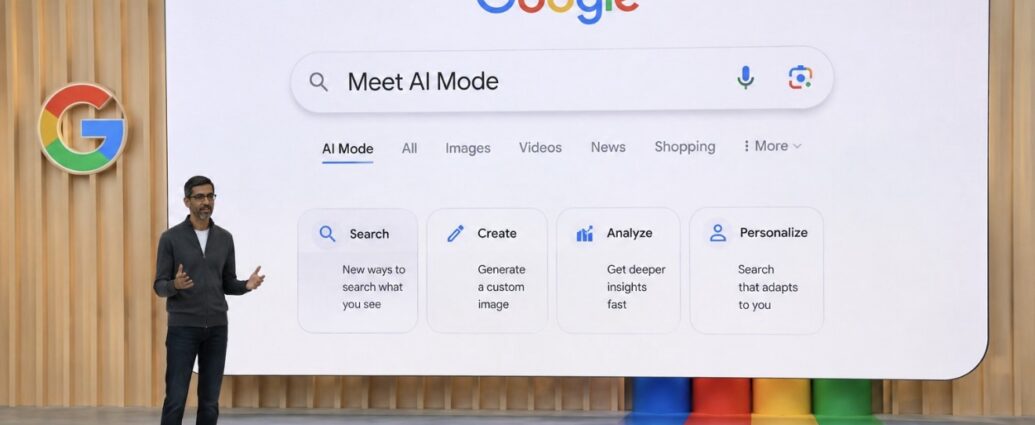
Google is changing the internet’s most famous search bar.
At its annual developer conference Tuesday, the company unveiled the biggest redesign of Google Search in years, transforming the simple search box millions use every day into something much closer to an AI assistant that can answer questions, complete tasks and even work on projects for users automatically.
For everyday consumers, the shift signals a major change in how people may use the internet going forward — and how aggressively Google is trying to compete with ChatGPT, Claude and other AI tools that are rapidly changing online behavior.
Instead of typing a few keywords and getting a list of blue links, users will increasingly interact with Google more like they chat with an AI assistant.
The new search experience allows people to ask longer, conversational questions, create AI “agents” that track tasks over time and even delegate ongoing work directly through Google.
The overhaul is powered by Google’s newest AI model, Gemini 3.5 Flash, which is becoming the core engine behind the company’s expanding AI features.
Google executives framed the redesign as the next evolution of search itself.
The company is betting that people increasingly want answers and completed tasks — not just links to websites.
Some examples of what the new AI-powered Google can do:
- Monitor topics over time
- Summarize emails and documents
- Create to-do lists
- Research products
- Track recurring tasks
- Work across Gmail, Google Docs and Slides
- Continue working even after users close their devices
Google is also introducing a feature called “Spark,” which acts more like a persistent digital assistant capable of operating in the background over extended periods.
The changes reflect how quickly the AI race has intensified.
For the first time in its history, Google faces a serious threat to its core search business from AI competitors.
OpenAI’s ChatGPT, Anthropic’s Claude and AI-native search startups like Perplexity have increasingly pulled users away from traditional Google searches, especially for research, coding and information-heavy questions.
That has created enormous pressure inside Google to reinvent search before competitors redefine how people access information online.
Despite those threats, Google says overall search activity continues growing.
Still, the company clearly recognizes that the format of search is changing rapidly.
For decades, Google made money by showing users links alongside advertisements. AI-generated answers could disrupt that model because users may no longer need to click through to websites as often.
That creates a delicate balancing act for Alphabet, Google’s parent company:
- Push aggressively into AI
- While protecting the advertising business that generates most of its profits
The company also faces another challenge: trust.
AI assistants remain imperfect and can still make mistakes, misunderstand requests or provide incorrect information.
Even Google executives acknowledged the technology is not yet fully reliable enough for users to completely trust autonomous AI agents with important tasks.
Still, the industry is moving rapidly in this direction.
OpenAI, Google, Anthropic and Microsoft are all racing to create AI systems that function more like full digital assistants rather than standalone chatbots.
The companies increasingly envision a future where AI continuously helps manage schedules, communications, research, shopping and everyday work in the background.
For consumers, that could eventually make computers and phones feel less like tools people manually operate — and more like systems actively helping them complete tasks automatically.
The speed of competition has become extreme.
Google executives said some internal AI teams now release updates nearly every day to keep pace with rivals.
The pressure is especially intense because whoever becomes the dominant AI assistant platform could control the next generation of internet behavior — much like Google Search dominated the last one.
The rollout of Google’s new AI search features will happen gradually over the coming months, with some advanced capabilities initially limited to paying subscribers.
But Tuesday’s announcement makes one thing clear:
the simple Google search bar that defined the internet for nearly 30 years is rapidly evolving into something very different.
And the battle over what replaces it is becoming the biggest fight in technology.
— JBizNews Desk
© JBizNews.com. All rights reserved. This article is original reporting by JBizNews Desk. Unauthorized reproduction or redistribution is strictly prohibited.