For months, US President Donald Trump has framed himself as the world leader who was willing to confront the Islamic Republic more aggressively than any Western leader before him.
The president spoke openly about supporting Iran’s protesters, warned Tehran that America’s patience had run out, and encouraged Iranians to keep pushing against a regime that for nearly half a century has ruled them through religious repression, political domination, public executions, and fear.
“Iranian Patriots, KEEP PROTESTING – TAKE OVER YOUR INSTITUTIONS!!!” Trump wrote on social media in January, after the regime’s brutal crackdown on anti-government demonstrations. “HELP IS ON ITS WAY.”
This came after thousands – estimates range from 30,000 to 40,000 – protesters were killed in two days alone on the streets of Iran between January 8-9.
Across the country, many believed Washington had finally understood the true nature of the Islamic Republic and the desperation of the Iranian people living beneath it.
What did Iranian citizens get out of the war with Israel, US?
Now, only months later, those same Iranians are watching Trump move toward an agreement with the very regime he once appeared determined to isolate and weaken, and they feel betrayed.
Reports over the weekend that the US and Iran are close to finalizing a framework agreement over the Strait of Hormuz and a broader ceasefire arrangement may have reassured markets worried about energy prices and regional escalation.
Gulf states are pushing for calm, and oil traders want stability. Trump himself is facing political pressure over the economic impact of the war and rising fuel costs ahead of the midterm elections later this year.
But while US negotiators, through Pakistani mediator efforts, discuss shipping lanes, sanctions relief, or uranium enrichment clauses, the Iranian people are once again being left to hang out to dry and at the mercy of the same regime that massacred them so mercilessly only months ago.
The Islamic Republic and those who rule it are good at playing this game. They have a way of dealing with the West that Western leaders still do not understand, despite all the examples and proof needed from the past. It is why Tehran has already begun framing the negotiations as a victory against the enemy.
Iranian Foreign Ministry spokesman Esmail Baghaei posted an image to X/Twitter on Saturday night as news of the deal was announced. It was loaded with symbolism from Persian history.
It depicted the relief at Naqsh-e Rostam showing the Sasanian king Shapur I standing over the defeated Roman emperor Valerian, believed to be the only Roman emperor ever captured alive.
In the Roman mind, Rome was the undisputed center of the world. Yet the Iranians shattered that illusion; when Marcus Julius Philippus (Philip the Arab) marched east against Persia, the campaign did not result in Roman victory — it ended in a peace established on Sasanian terms:… pic.twitter.com/hLSqAUzb7p
— Esmaeil Baqaei (@IRIMFA_SPOX) May 23, 2026
“In the Roman mind, Rome was the undisputed center of the world,” Baghaei wrote. “Yet the Iranians shattered that illusion; when Marcus Julius Philippus (Philip the Arab) marched east against Persia, the campaign did not result in Roman victory – it ended in a peace established on Sasanian terms: the emperor had to come to terms!”
It is not difficult to see the symbolism in his message. The regime wishes to project that the US, the modern Rome, has been “brought to its knees” by the regime and has been forced to seek peace with the victorious republic.
And from the regime’s perspective, why would it not believe that?
Those who rule from Tehran, those who have had unfiltered access to the internet while the rest of the country has been barred from the internet for 86 days, know the truth of how much damage has been done to the regime, despite proclamations of victory.
And yet now, on the brink of a victory, Trump is pulling back. He is giving the regime time to breathe, time to regroup, and time to release its vengeance on its own people.
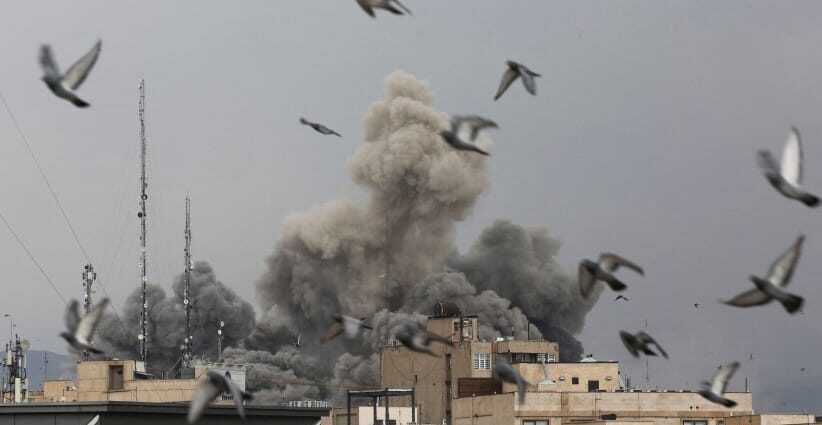
Trump has spent the past month and a half holding the threat of continued military action over Iran, since the six-week campaign – led by Israel and the US, which began on February 28 – ended last month.
Reports of imminent strikes came and went, and threats were issued and softened. Critics have mocked the pattern with the phrase “Trump Always Chickens Out,” arguing that Tehran learned how to wait out Washington’s pressure until political and economic considerations overtook strategic ones.
And it seems that moment has finally arrived.
The regime has always been patient in this way: it survives by absorbing pressure, enduring isolation, and waiting for the international community to lose focus or simply give up. Then, once external attention shifts elsewhere, it turns inward again against its own population.
And here we are again.
According to Amnesty International, Iran carried out at least 2,159 executions in 2025, the highest number recorded anywhere in the world and part of a global surge in executions driven overwhelmingly by the Islamic Republic. More than 200 executions have reportedly already taken place in 2026.
This is the regime Trump is now attempting to stabilize through negotiation.
This is the regime that shut down the internet, sealed off cities, deployed Basij forces to checkpoints, and reportedly brought in Iraqi militias to help suppress unrest.
This is the regime whose judiciary chief, Gholam-Hossein Mohseni-Ejei, ordered that death sentences and confiscations be issued “more frequently” in April.
This is the regime whose senior IRGC representative Abdollah Haji-Sadeghi warned Iranian youth only weeks ago that “the era of mercy is over.”
Nothing about the ideological structure of the Islamic Republic has changed, despite Trump’s claims of “new people” meaning a “new regime.” The people sitting across the negotiating table today are not “new people.”
They are the same system, the same security apparatus, the same hardliners who wish to wipe Israel off the map and call the US the “Great Satan,” and the same revolutionary movement that has spent decades funding proxy warfare across the region and terrorizing its own citizens.
That is why many Iranians inside and outside the country have spent months pleading with the West not to leave the regime standing once the fighting subsided.
For months, Iranian dissidents and ordinary citizens alike have pleaded with the West not to leave the regime standing once the pressure eased. That fear is fully justified.
There is, of course, nothing wrong with wanting an end to war, but there is a difference between ending a war and pretending the underlying problem has disappeared.
The Islamic Republic has repeatedly shown that it uses diplomacy to buy time rather than to moderate itself.
US Secretary of State Marco Rubio warned about exactly this years ago when opposing Barack Obama’s nuclear deal, arguing that Tehran would use sanctions relief and negotiations to strengthen its military and regional capabilities while continuing its long-term strategic ambitions.
More than a decade later, it is difficult to argue that Rubio was wrong.
Once the headlines move on from the Strait of Hormuz and oil markets stabilize, the regime will still be there. The prisons will still be there, and the executions will still take place.
Will the Iranian people be willing to take to the streets again, only to be gunned down as they were in January?
For many of them, the man who once promised that ‘help is on its way’ now looks like another Western leader who has betrayed them, willing to leave them alone with the Islamic Republic.