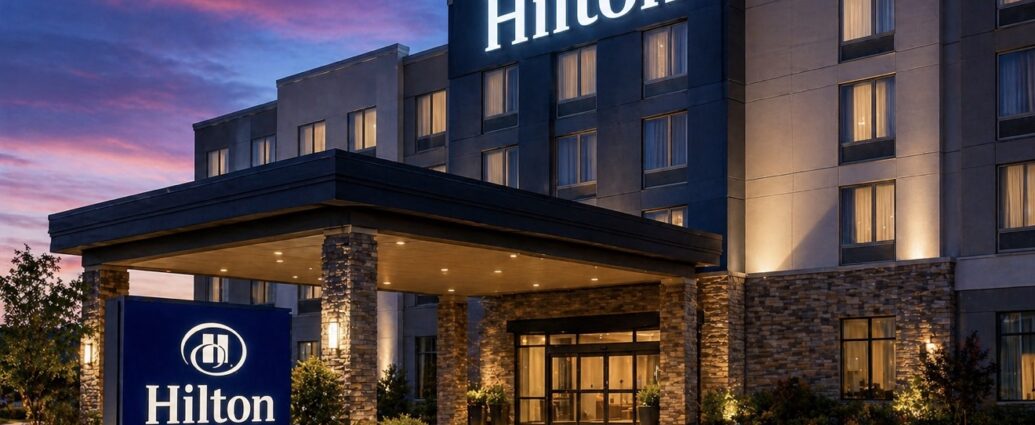
Hilton Worldwide Holdings is making a sharper bet on middle-market travel just as much of the travel industry keeps chasing affluent customers, with Chief Executive Christopher Nassetta telling analysts the economy increasingly looks “C-shaped” rather than split cleanly between winners and losers. On Hilton’s first-quarter earnings call, according to the company’s transcript and earnings materials released in late April, Nassetta said he sees “a more balanced convergence demand shape,” arguing that lower- and mid-priced lodging demand is strengthening even as luxury travel remains resilient, a view that matters for investors trying to gauge where the next leg of hotel growth will come from.
That stance cuts against a broader premium push across travel. Delta Air Lines Chief Executive Ed Bastian told Fortune in a widely cited interview that “Delta is not a low-cost airline,” underscoring how major carriers increasingly rely on premium cabins, loyalty revenue and wealthier travelers for growth. Reporting from Reuters and other outlets in recent quarters has shown airlines including Delta and United Airlines leaning harder into higher-end demand, even as some domestic economy demand softened, creating a backdrop in which Hilton’s emphasis on midscale lodging stands out.
The company’s own operating data suggest the strategy is not just rhetorical. In its latest quarterly update, Hilton said systemwide revenue per available room, or RevPAR, rose year over year, while Nassetta told investors that “our RevPAR expansion now comes from our economy and mid-scale brands,” according to the earnings-call transcript and reporting from Bloomberg. That is a notable shift for a hotel industry long associated with luxury and upper-upscale pricing power, especially as consumers navigate still-elevated borrowing costs and uneven wage gains.
The contrast with rivals is clear. Marriott International Chief Executive Anthony Capuano told the Wall Street Journal that “when you look internationally, there is an almost insatiable demand for luxury,” highlighting the strength of brands such as Ritz-Carlton and St. Regis. Marriott has continued to point investors toward high-end and resort demand as a key earnings driver, while Hilton is signaling that the next broad-based opportunity may sit lower on the price ladder, particularly in the U.S. domestic market where road trips, small-business travel and value-conscious leisure bookings still carry weight.
That helps explain why Hilton keeps emphasizing brands such as Hampton by Hilton, which the company describes in investor materials as the largest brand in its system by room count. In a recent company release, Hilton said its development pipeline reached roughly 527,000 rooms, up about 5% from a year earlier, giving it a large runway for expansion into segments that appeal to cost-conscious travelers and franchisees. Nassetta said the company remains confident in “the middle market,” according to Hilton’s public remarks, a signal that management sees more durable demand there than many investors may have assumed when luxury travel dominated the post-pandemic recovery.
The macro backdrop could support that thesis, though the picture remains mixed. Federal Reserve Chair Jerome Powell said after the central bank’s recent policy meeting that inflation has eased substantially from its peak but remains above target, while Reuters reported that officials still want greater confidence before cutting rates. That matters for hotels because lower inflation and eventual rate relief could free up discretionary spending for middle-income households, yet sticky prices for food, insurance and credit continue to pressure the same consumers Hilton is counting on for broader midscale momentum.
Investors also need to separate leisure strength from corporate travel, which still has not fully normalized in some segments. Hilton executives said on the earnings call that business-transient and group trends remain constructive, but industry data tracked by STR and discussed in coverage by CNBC and Reuters show that recovery patterns differ by market, with gateway cities and convention-heavy destinations often moving on a different timetable than suburban and highway hotels. In that environment, a company with deep exposure to select-service and midscale properties could benefit if travelers trade down on price without giving up trips altogether.
The market question now is whether Hilton’s “C-shaped” framing turns into a sustained earnings advantage or simply captures a temporary rebalancing after years of outsized luxury demand. Analysts cited by Bloomberg and Reuters have noted that hotel operators still face labor costs, construction inflation and a consumer who remains selective, even as room demand holds up better than many expected. For Hilton, the next few quarters will test whether its midscale brands can keep lifting RevPAR, occupancy and unit growth at a time when rivals continue to tout the spending power of top-tier travelers. If that bet pays off, it could reshape how the lodging sector talks about demand in 2025 and beyond.
JBizNews Desk