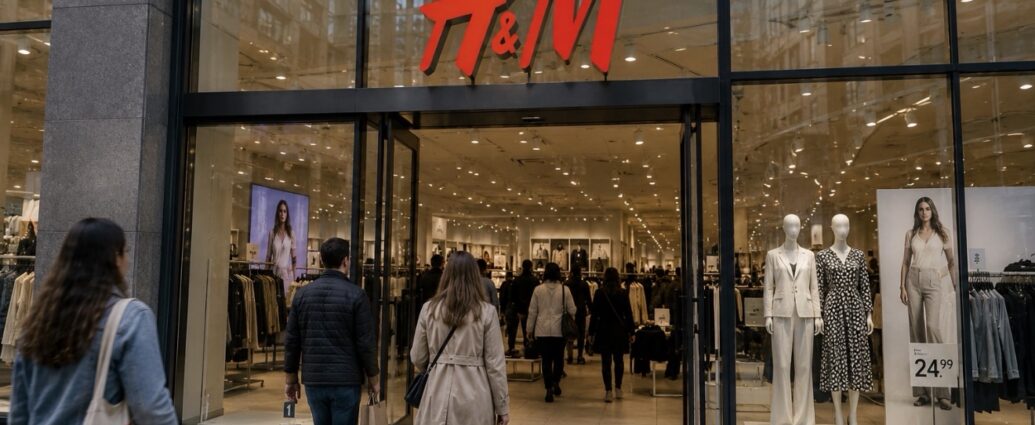
H&M, the Swedish fashion retailer, reported second-quarter earnings on Thursday, June 25, that fell short of analysts’ expectations as restructuring costs offset continued improvements in the company’s underlying profitability. Chief Executive Daniel Ervér said sales for the quarter came in below the company’s own expectations, although he emphasized that the retailer continues to make progress in strengthening its long-term financial performance. Investors reacted cautiously, sending H&M shares down about 2.5% following the results.
For the three months ended May 31, H&M reported net sales of 54.83 billion Swedish kronor, a decline of 3.3% from the same period a year earlier. The company said the stronger Swedish currency weighed on reported results, while sales measured in local currencies were essentially unchanged.
Operating profit totaled 5.91 billion kronor, little changed from last year but below analysts’ expectations of approximately 6.38 billion kronor.
A significant factor behind the weaker earnings was a 679 million kronor (approximately $69 million) one-time restructuring charge related to organizational changes across the company’s global sales markets and central operations.
Excluding those costs, the financial picture improved considerably.
Adjusted operating profit increased 11%, while the adjusted operating margin expanded to 12.0%, up from 10.4% a year earlier.
Chief Financial Officer Adam Karlsson said the company’s gross margin improved to 56.6%, helped by stronger supply-chain management, improved purchasing costs and disciplined inventory management that limited the need for additional discounting.
Those improvements reflect H&M’s broader turnaround strategy.
During the past several years, management has focused on improving profitability by selling more merchandise at full price, reducing excess inventory and streamlining operations rather than relying heavily on promotions to drive sales.
However, that same discipline has also created new challenges.
Ervér acknowledged that tighter inventory management has occasionally left certain products and markets understocked, limiting the company’s ability to fully meet customer demand. The retailer also experienced temporary disruptions during May and June while consolidating logistics operations across Western Europe.
Management identified the United Kingdom and parts of Western Europe as particularly difficult markets, where cautious consumer spending continues affecting sales.
The company also continues reducing its physical store footprint.
At the end of the quarter, H&M operated 4,038 stores worldwide, down from 4,166 one year earlier. During the quarter alone, the retailer closed 17 flagship H&M stores, bringing total closures during the first half of the year to 61 locations.
At the same time, the company continues encouraging customers to shop online, where digital sales now account for slightly more than 30% of total revenue. It also expanded several of its premium retail concepts, including COS and Arket.
While closing underperforming stores lowers operating expenses, it also reduces the company’s physical presence in markets where competition from online retailers remains intense.
International expansion remains an important part of the company’s growth strategy.
During the quarter, H&M opened its first store in Rio de Janeiro and announced plans to enter Paraguay later this year, followed by Argentina in 2027. Additional expansion is also planned across Brazil, while first-time entries into Malta and Azerbaijan are also underway.
The company said it continues monitoring developments in the Middle East, although management noted the region represents only a relatively small portion of overall sales. Executives also emphasized that the company’s flexible supply chain reduces dependence on expensive air freight and allows it to respond more effectively to changing market conditions.
Looking ahead, management expects June sales measured in local currencies to remain roughly in line with last year’s levels.
The company also warned that expenses will increase during the second half of the year as investments continue in digital infrastructure, technology upgrades and artificial intelligence tools designed to identify fashion trends more quickly and improve merchandising decisions.
Analysts at Morgan Stanley, which maintains an Underweight rating on the stock, described the quarterly results as generally in line with expectations but expressed concern that sales momentum may weaken further later this year while rising raw-material and transportation costs continue pressuring margins.
For consumers, employees and investors, the quarter illustrates the difficult balancing act facing many global retailers.
H&M has made meaningful progress improving profitability and strengthening operations, but reigniting consistent sales growth while maintaining pricing discipline remains the company’s biggest challenge as consumers continue spending cautiously in an increasingly competitive retail environment.
JBizNews Desk
© JBizNews.com All Rights Reserved. Reproduction or distribution without written permission is prohibited.