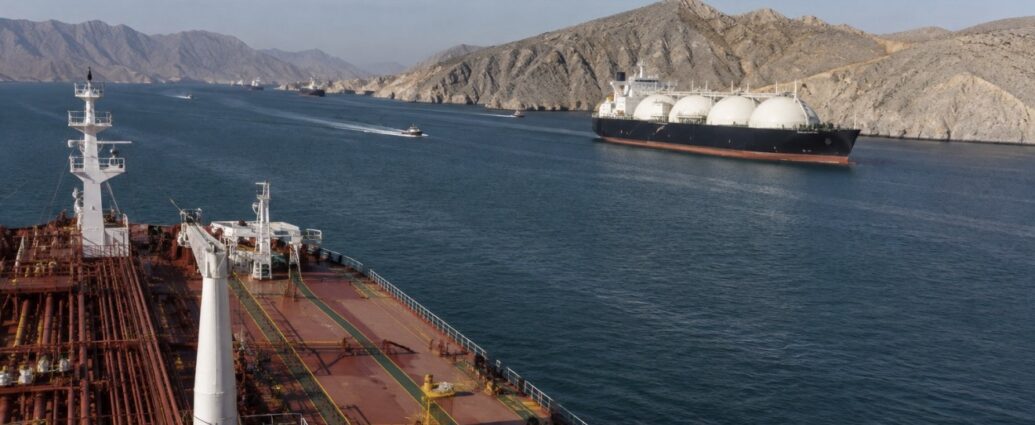
Commercial shipping through the Strait of Hormuz remained severely restricted Friday morning after two more vessels were attacked, keeping one of the world’s most important energy corridors far below normal traffic levels and renewing pressure on oil prices.
Only nine commercial vessels crossed the strait Thursday, compared with roughly 130 to 140 ships a day before the Iran war.
That means traffic through Hormuz is still running at only a small fraction of normal levels despite limited movement beginning to resume.
The latest disruption followed attacks on two vessels operated by Abu Dhabi National Oil Company while they were transiting the strait. No casualties were reported.
The attacks reinforce the biggest problem facing shipowners: even if a vessel is technically allowed to pass, insurers, crews and operators must decide whether the voyage is worth the physical and financial risk.
That risk is already showing up in energy markets.
Brent crude moved back toward $88 a barrel Friday morning, while West Texas Intermediate also climbed as traders priced in the possibility that Gulf exports could remain constrained longer than expected.
The Strait of Hormuz is one of the most important chokepoints in the global economy.
Before the war, roughly one-fifth of the world’s oil and liquefied natural gas supply moved through the waterway, connecting major producers including Saudi Arabia, the United Arab Emirates, Kuwait, Iraq and Qatar with customers in Asia, Europe and elsewhere.
The disruption is already beginning to redraw global oil flows.
Asian refiners have increased purchases from alternative suppliers, including the United States, as companies try to reduce their dependence on cargoes that must pass through Hormuz.
U.S. crude exports to Asia have risen sharply, giving American producers an unexpected advantage from the disruption.
For businesses that consume fuel, however, the economics move in the opposite direction.
Restricted shipping pushes up tanker rates, marine-insurance premiums, freight expenses and inventory costs even before the higher price of crude itself reaches businesses and consumers.
That means a company does not need to buy oil directly to feel the effect.
Trucking companies pay more for diesel. Airlines pay more for jet fuel. Manufacturers pay more to move raw materials. Retailers eventually absorb higher transportation costs on imported goods.
The important number Friday is therefore not simply the price of Brent crude.
It is nine ships.
Against the roughly 130 to 140 vessels that normally crossed Hormuz every day before the war, the waterway remains effectively operating at emergency levels.
Until commercial traffic begins returning in meaningful volume, Hormuz remains one of the largest unresolved risks hanging over global energy prices, shipping costs and inflation.
JBizNews Desk | Strait of Hormuz
© JBizNews.com All Rights Reserved. Reproduction or distribution without written permission is prohibited.