HOUSE ADVANCES PERMANENT DAYLIGHT SAVING TIME BILL AS TRUMP BACKS END TO CLOCK CHANGES, WITH RETAILERS, RESTAURANTS AND WORKFORCE POISED FOR ECONOMIC BOOST
By JBizNews Desk
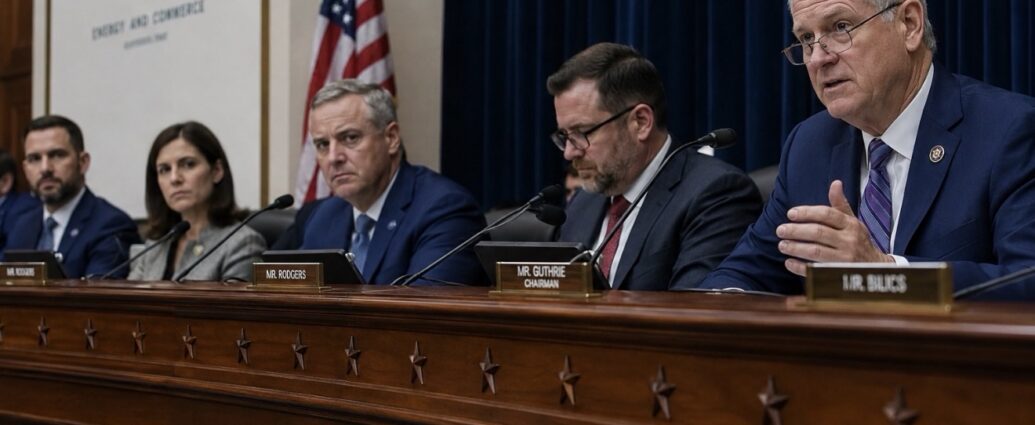
May 23, 2026 — The House Energy and Commerce Committee on Thursday, May 22, voted 48-1 to advance the Sunshine Protection Act, folding the long-stalled measure into the broader Motor Vehicle Modernization Act and sending it to the House floor in what Congressional sponsors are billing as the most serious push in four years to lock the United States into permanent daylight saving time. President Donald Trump endorsed the vote Thursday evening on Truth Social, writing that “Hundreds of Millions of Dollars are spent every year by people, Cities, and States, being forced to change their Clocks,” and pledging to “work very hard” to see the bill signed into law.
The legislation, originally introduced by Sen. Rick Scott (R-Fla.) and Rep. Vern Buchanan (R-Fla.), would permanently advance the nation’s clocks forward one hour, ending the twice-yearly springing forward and falling back that has governed American timekeeping for decades. Buchanan’s office confirmed the bill carries 32 bipartisan cosponsors in the House, with the Senate companion measure carrying 18 cosponsors. States such as Hawaii and most of Arizona that currently opt out of daylight saving would retain that flexibility under the bill’s framework.
For American businesses, the economic stakes are substantial. Chambers of Commerce across the country have historically backed permanent daylight saving time, citing extended evening daylight as a proven driver of after-work foot traffic into restaurants, retail centers, sporting venues and entertainment districts. Analysis from the JPMorgan Chase Institute has previously documented that the fall switch back to standard time triggers card-spending declines of between 2.2% and 4.9% depending on metro area, with supermarkets absorbing per-capita retail drops of nearly 6%. Locking in permanent daylight time would, in effect, eliminate that recurring autumn drag on consumer activity, delivering what one Orrin G. Hatch Foundation policy director previously described as “a stimulus package all on its own.”
Hospitality stands to be a primary beneficiary. PNC economist Kurt Rankin has noted that restaurants, hotels, golf operators, fuel retailers and outdoor recreation businesses capture outsized sales lifts from extended evening daylight, sectors that collectively employ tens of millions of American workers and remain central to small-business job creation. The National Retail Federation has historically backed daylight saving time as a tailwind for member sales, and the trade group has been actively examining the implications of a permanent shift on the broader retail economy.
The workforce productivity case is equally direct. University-based research has long documented that the spring-forward transition costs the average American worker roughly 40 minutes of sleep, producing measurable spikes in workplace errors, injuries and absenteeism in the days that follow. A 2014 University of Colorado Boulder study tied a 17% jump in traffic fatalities to the spring transition, while other peer-reviewed work has linked the biannual disruption to elevated heart attack and stroke risk in the immediate aftermath. Employers across manufacturing, logistics, healthcare and corporate sectors absorb those costs through lost output, higher insurance claims and degraded performance, a recurring annual tax on American labor productivity that the Sunshine Protection Act would eliminate outright.
Compliance and operational costs would also fall. Cities, school districts, transit systems, broadcasters and Fortune 500 IT departments collectively spend significant sums each year reconfiguring scheduling systems, signage, public clocks and software for the twice-annual shift, costs Trump highlighted in his Thursday statement, noting that “many of these Clocks are located in Towers, and the cost of renting, or using, Heavy Equipment to do this twice a year is prohibitive.” For multinational corporations coordinating across U.S. time zones, a fixed national clock simplifies meeting logistics, payroll cycles and supply-chain coordination with international partners.
The bill’s prospects on the House floor remain uncertain. The Senate unanimously passed an earlier version of the Sunshine Protection Act in March 2022 only to see it stall in the House, and Senate Commerce Committee Chair Ted Cruz has previously cautioned that there are “very real and complicated issues and countervailing arguments on both sides,” with sleep scientists and pediatric medicine groups continuing to lobby in favor of permanent standard time rather than permanent daylight time. But the 48-1 committee vote, the bipartisan cosponsor roster and direct White House backing mark the most favorable alignment for the measure since 2022.
For Congress, the calculation is increasingly an economic one. With the U.S. consumer economy representing roughly two-thirds of gross domestic product and small businesses driving the majority of net new job creation, even modest, durable tailwinds for retail and hospitality spending carry real macroeconomic weight. Eliminating the recurring productivity hit on the American workforce — across factories, offices, hospitals and the federal payroll itself — represents a rare piece of legislation with the potential to deliver measurable gains to GDP, employment and consumer activity without expanding the deficit. Whether the House converts this momentum into final passage will shape the daylight, and the economic rhythm, of every American workday going forward.
JBizNews Desk
© 2026 JBizNews. All Rights Reserved. Reproduction or distribution without written permission is prohibited.