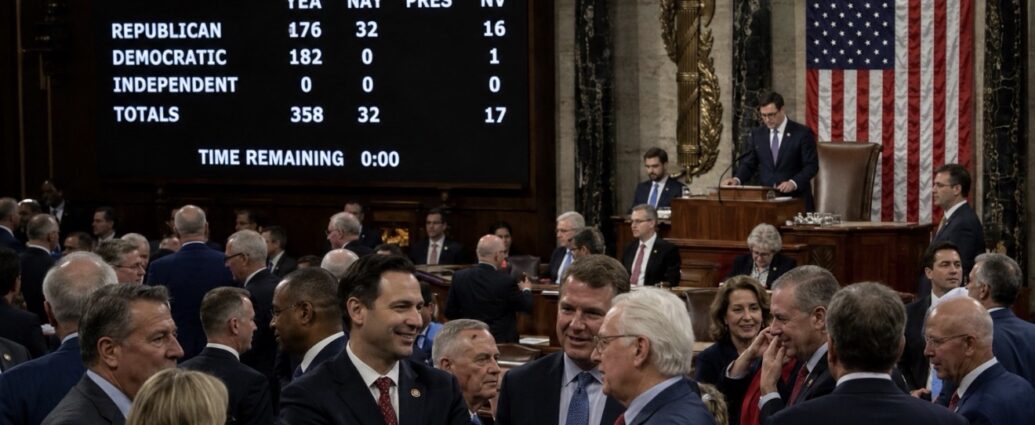
The House of Representatives on Tuesday approved what lawmakers are calling the most significant federal housing legislation in decades, passing the 21st Century ROAD to Housing Act by a decisive 358-32 vote and sending the measure to President Donald Trump, who is expected to sign it into law.
The legislation follows overwhelming bipartisan approval in the Senate, where lawmakers backed the bill by an 85-5 margin a day earlier.
The package represents one of the rare major bipartisan achievements of the current Congress and comes as housing affordability remains one of the top concerns for voters nationwide.
At its core, the legislation is designed to address what economists increasingly identify as the primary driver of rising home prices: a shortage of housing supply.
The bill includes provisions intended to speed up residential construction, reduce regulatory delays, encourage local zoning reforms, expand financing options for multifamily developments, promote manufactured and modular housing, and strengthen programs serving veterans and rural communities.
Supporters argue the reforms could reduce the time and cost required to bring new housing projects to market.
Lawmakers from both parties say increasing housing supply is essential if affordability is to improve for future homebuyers.
One of the most closely watched provisions targets institutional investors.
The legislation places new limits on large corporate investors purchasing single-family homes, an issue that has become increasingly controversial as private-equity firms and investment funds expanded their presence in residential housing markets over the past decade.
Many first-time buyers have argued that institutional investors contribute to affordability challenges by competing directly with families for available homes.
Republicans and Democrats spent months negotiating the provision before ultimately agreeing to retain it in the final bill.
While both parties supported the legislation, they emphasized different priorities.
Senate Banking Committee Chairman Tim Scott highlighted the importance of increasing housing supply and expanding opportunities for first-time homebuyers.
Democrats focused heavily on provisions aimed at limiting investor activity and increasing housing access.
Rep. Maxine Waters described the bill as an important step forward while acknowledging that additional housing reforms may still be necessary in future legislation.
Passage was not without controversy.
A group of conservative lawmakers initially threatened opposition because the package did not include unrelated voter-registration provisions supported by some Republicans.
Ultimately, congressional leadership moved forward with the housing legislation as a standalone measure.
All 32 votes against the bill came from Republicans, while every Democrat present voted in favor.
Housing experts remain divided on how quickly the measure will affect affordability.
Some economists argue that institutional investors play only a relatively small role in the overall housing shortage and that supply constraints remain the primary challenge.
Others believe investor restrictions could help ease competition in certain markets.
Many analysts note that the legislation’s largest impact will likely come from its supply-focused provisions, though those benefits may take years to materialize as new housing projects move through planning and construction.
The timing reflects growing pressure on policymakers.
Mortgage rates remain near 6.5%, affordability remains strained, and housing inventory remains historically tight across much of the country.
Recent studies show that starter homes now exceed $1 million in hundreds of American communities, while surveys continue finding that many Americans believe homeownership has become increasingly difficult to achieve.
For builders, developers, and local governments, the legislation creates new opportunities to accelerate projects and access federal support.
For prospective homebuyers, the bill represents a long-term effort to increase supply and improve affordability.
Whether it ultimately succeeds will depend less on the legislation itself and more on how many new homes are actually built in the years ahead.
JBizNews Desk | New York
© JBizNews.com All Rights Reserved. Reproduction or distribution without written permission is prohibited.