JBizNews Desk | May 10, 2026
She was one of the most discreet executives in the Elon Musk orbit — a former venture capitalist who held senior roles at Tesla, xAI, and Neuralink, served on OpenAI’s board, and kept a secret so profound that not even her own father knew the truth.
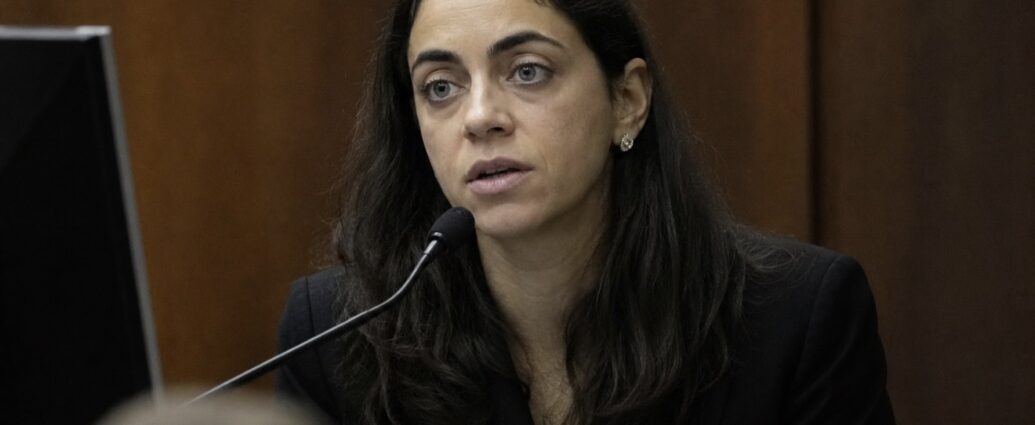
Now Shivon Zilis has been thrust into the center of one of the most consequential corporate trials in American history — not just as a witness, but as the person whose testimony may determine the future of OpenAI and the direction of the global AI race.
Musk, who co-founded and funded OpenAI, sued the company and its leaders — including CEO Sam Altman and president Greg Brockman — alleging they deceived him, breached a charitable trust, and unjustly enriched themselves when the organization pivoted from a nonprofit mission to a profit-oriented structure.
The case, currently before U.S. District Judge Yvonne Gonzalez Rogers in a federal courthouse in Oakland, California, could have sweeping ramifications for the AI industry.
If Musk wins and the judge grants the remedies he is seeking, OpenAI could be forced to revert to a nonprofit structure — and both Altman and Brockman could be removed from the board.
Zilis was initially listed as a co-plaintiff in the case.
She dropped off at her own request before the trial began.
But her role in the events at the heart of the lawsuit has made her testimony unavoidable.
The Secret at the Center of the Trial
Zilis testified this week that she first met Musk in 2016 through her early role as an adviser to OpenAI.
What followed was, by her account, a single romantic encounter that evolved into a friendship and eventually a job — and then something far more complicated.
Toward the end of 2020, Musk proposed fathering her children.
“He in general was encouraging everyone around him to have kids, noticed I had not, and said if that was ever interesting, he would be happy to make a donation,” Zilis said on the stand.
Their twins were born via IVF in 2021.
Zilis signed a confidentiality agreement — and no one, including her father, knew who the father was.
In 2022, Business Insider broke the story.
Zilis initially described Musk’s role as that of a donor.
His involvement evolved into fatherhood, she testified, and they went on to have two more children.
Musk referred to Zilis as his “partner” during his own testimony last week.
The two live together when traveling, she confirmed, and he visits her and the children in Austin, Texas, where she is based.
Her Role as a Conduit Between Musk and OpenAI
Beyond the personal relationship, Zilis’ testimony revealed the extent to which she served as a direct information channel between Musk and OpenAI’s leadership during critical years — a role that both sides of the lawsuit are now trying to use to their advantage.
She was instrumental in Musk’s dealings with OpenAI from the company’s early years, including discussions in 2017 about the potential formation of a for-profit structure to fund AI development.
She participated in discussions about possible solutions to OpenAI’s funding concerns — including the potential development of a for-profit corporation and the possibility of having Tesla absorb OpenAI — in emails, messages, and meeting notes that were submitted as evidence.
After Musk left OpenAI’s board in 2018 and stopped providing funding, Zilis continued her role as a conduit.
In a text message entered into evidence, she asked Musk directly:
“Do you prefer I stay close and friendly with OpenAI to keep info flowing or begin to disassociate? Trust game is about to get tricky so any guidance for how to do right by you is appreciated.”
Musk told her to stay close — and confirmed he planned to recruit several OpenAI staffers to Tesla.
OpenAI alleged that Zilis, while still serving on its board, was aware that Musk planned to launch a competing AI company before that information was public.
Text messages to a friend, entered as evidence, showed Zilis writing that she had to resign from the board because Musk’s “effort has become well known.”
She wrote:
“When the father of your babies starts a competitive effort and will recruit out of OpenAI, there is nothing to be done.”
OpenAI president Greg Brockman testified that Zilis had told the board her relationship with Musk was “platonic,” which is why she was permitted to remain.
He said he was unaware of their personal relationship until later.
What Each Side Is Trying to Prove
OpenAI attorneys used Zilis’ testimony to argue that she and Musk discussed creating a for-profit entity for the AI company — undermining Musk’s claim that he was blindsided by OpenAI’s pivot toward profit.
Musk’s attorneys, in turn, attempted to prove through Zilis that she also believed OpenAI had violated its original nonprofit mission.
Under questioning from Musk’s attorneys, Zilis said the group never discussed replacing the nonprofit structure with a for-profit corporation outright — and that many funding possibilities were explored, including granting Musk a majority stake in OpenAI.
She testified that her personal relationship with Musk did not affect her conduct as a board member, saying she had “an allegiance to the best outcome of AI for humanity.”
Zilis had voted in favor of the $10 billion Microsoft investment in OpenAI that Musk later heavily criticized.
She testified her views on the company changed after Musk’s criticism of that deal and after Microsoft CEO Satya Nadella’s intervention to restore Altman as CEO following his brief ouster in 2023.
“It just seemed like everything we’d put together from the nonprofit to just retain the mission to make this good for humanity, just somehow had been ripped out or lost its teeth,” she said.
Why the Outcome Matters for Business
The Musk v. OpenAI trial is not merely a dispute between two of the most powerful figures in technology.
It is a case that will directly shape the legal and structural framework within which the global AI industry operates.
OpenAI has denied Musk’s claims, arguing he sued the company because he could not gain full control of it — and that he left in 2018 only to later found a direct competitor in xAI.
If Judge Gonzalez Rogers sides with Musk and orders OpenAI to revert to its nonprofit structure, the implications for the company’s planned transition to a fully for-profit public benefit corporation — and its ability to raise the billions in capital needed to compete with Google, Meta, and xAI — would be immediate and severe.
For investors, companies, and consumers whose daily lives are increasingly shaped by AI technology, the Oakland courtroom is where the rules of that technology’s future are being written — one witness at a time.
© JBizNews.com. All rights reserved. This article is original reporting by JBizNews Desk. Unauthorized reproduction or redistribution is strictly prohibited.