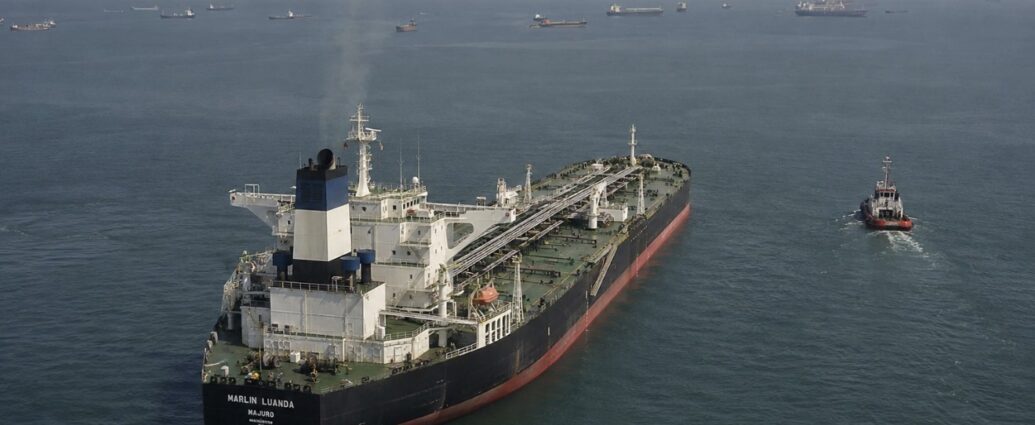
Despite the largest oil supply disruption ever recorded — roughly 10 million barrels a day of crude exports cut off from the Persian Gulf since the Strait of Hormuz effectively closed in late February — global crude prices on Thursday closed just above $100 a barrel, well below the levels seen during far smaller disruptions like the 2022 Russian invasion of Ukraine.
The reason, according to the International Energy Agency and U.S. officials, is that the world’s two largest economies — the United States and China — have quietly stepped in to plug much of the gap, leaning on a combination of record U.S. exports, mass releases from strategic reserves, and a tacit working understanding reaffirmed this week in Beijing.
The disruption itself is staggering. In its latest update this week, the IEA said that roughly 10% of total global oil consumption has been removed from accessible supply, with Persian Gulf export volumes collapsing from a normal level of about 15 million barrels a day to an effective 7 million.
By volume, the IEA has characterized the closure as the largest supply disruption in the history of the global oil market — exceeding both the 1973 OPEC embargo and the 1979 Iranian Revolution. Yet Brent crude has held just above $107 and West Texas Intermediate near $103 — elevated, but a far cry from the $150-to-$200 spike that pre-war modeling suggested a Hormuz closure of this scale would trigger.
The American leg of the response is being led directly out of the oilfield.
Oil exports from producers outside the Middle East, led by U.S. shale producers and U.S. refiners, have surged by roughly 3.5 million barrels a day during the Iran war, according to the IEA. The United States, now both the world’s largest oil producer and a major net exporter, has effectively become the global market’s marginal supplier.
U.S. Energy Secretary Chris Wright, speaking to CNBC Friday from the export terminal at Port Arthur, Texas, said the administration has been pushing producers to maximize output throughout the crisis.
“There’s a natural energy trade there,” Wright told CNBC’s Brian Sullivan. “I suspect we’ll see a growth in their oil imports from the United States.”
He was referring to China, the world’s largest oil importer.
Washington has also tapped its strategic reserve aggressively. The U.S. Strategic Petroleum Reserve, established in 1975 and rebuilt under the Trump administration, sat at 415 million barrels in March and had been drawn down to roughly 409 million barrels by April 10, according to U.S. Energy Information Administration data, as the United States joined other International Energy Agency member states in a coordinated emergency release.
Analysts estimate strategic reserve consumption across consuming nations is running at roughly twice the rate originally modeled in pre-war contingency planning.
The Chinese leg of the response is more opaque but no less consequential.
China — which under normal conditions sources roughly 40% of its crude imports through Hormuz — has spent the past decade quietly building one of the world’s largest oil stockpiles for exactly this scenario.
As of December 2025, the EIA estimated China held roughly 360 million barrels in government strategic inventories and as much as 1 billion barrels in commercial inventories at refineries, far above U.S. commercial holdings of about 411 million barrels.
Beijing’s independent “teapot” refineries in Shandong province had also been importing roughly 1.4 million to 1.5 million barrels a day of Iranian crude before the war through a shadow tanker fleet that has continued moving some volumes even with the strait closed.
The combined effect is a market that, while severely stressed, has avoided a price catastrophe.
Saudi Arabia’s pipeline infrastructure — particularly the East-West pipeline to Yanbu on the Red Sea — has handled what diversion capacity it can, with Arab medium grades increasingly substituting for lost Iraqi Basra crude in European refining systems, according to commodity-analytics firm Kpler.
The OPEC+ group on March 1 added only 206,000 barrels a day of formal production, a muted response reflecting the physical reality that Saudi Arabia and the United Arab Emirates cannot instantly maximize wellhead output without damaging reservoirs, and that bypass pipeline capacity remains only a fraction of normal Strait of Hormuz throughput.
President Donald Trump’s two-day Beijing summit with Chinese President Xi Jinping, which concluded Friday, formalized at the leader level what had already been functioning operationally for months.
The two leaders agreed in their joint statement that the Strait of Hormuz “must remain open” to support the free flow of energy, according to the White House. Trump also said China had committed to purchase American crude — an agreement Wright characterized as the natural next step in a complementary trade relationship between the world’s largest exporter and largest importer.
The structural question, Wright acknowledged, is duration.
Even an optimistic ceasefire scenario in the U.S.-Iran war would leave global markets facing months of strategic reserve rebuilding, infrastructure repair around the strait, and a structural shift toward security-driven stockpiling.
Kpler estimated that Brent for delivery later in 2026 is currently undervalued at around $74, with a “normalized fair value” closer to $85.
The longer Hormuz stays closed, the harder the emerging U.S.-China oil backstop will be to sustain. For now, it is the only thing standing between the global economy and an oil shock the modern energy system has never been tested against.
JBizNews Desk
© JBizNews.com. All rights reserved. This article is original reporting by JBizNews Desk. Unauthorized reproduction or redistribution is strictly prohibited.