North Korea’s economy is growing, and the reason behind it is surprising. The Bank of Korea, South Korea’s central bank, estimated in 2025 that the North’s economy grew 3.7% in 2024 — its fastest pace since 2016. The bank, the most trusted outside source on the North’s hidden economy, put the country’s output at about $26.6 billion.
That growth did not come from making phones or sneakers. It came from war.
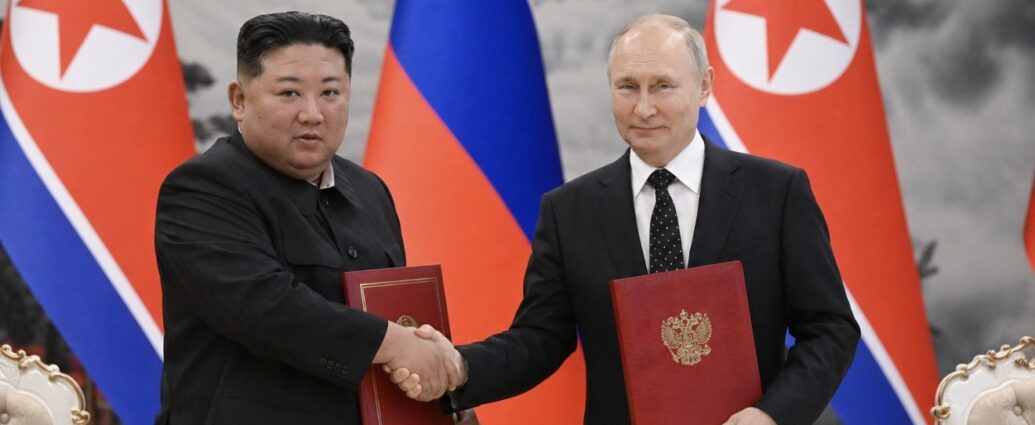
Since Russia invaded Ukraine in 2022, Vladimir Putin has needed one thing North Korea has plenty of: ammunition. Kim Jong Un has been happy to sell it. The two leaders signed a defense pact in June 2024. Since then, North Korean shells, rockets and short-range missiles have moved to the Russian front line by train and ship. In return, Russia sends back fuel, food, weapons parts, technology and hard cash.
The sums are huge by North Korean standards. South Korean intelligence and research institutes estimate the North earned somewhere between $7.67 billion and $14.4 billion from sending troops and weapons to Russia between August 2023 and December 2025. That may be more than half of everything the country produces in a year.
It is not just artillery. In a threat report released in March 2026, the U.S. Office of the Director of National Intelligence said North Korea’s foreign-cash earnings are at their highest level since before sanctions were tightened in 2018. The causes: arms sales to Russia and computer hacking. U.S. officials estimate the North pulls in at least $1 billion a year from cybercrime alone.
Here is the business angle. The war has turned North Korea’s weapons program into an export business.
The Bank of Korea said the North’s heavy chemical sector jumped 10.7% in 2024, its fastest increase on record. The reason was simple: more metal parts for weapons sold to Russia. Sanctions were meant to shut that industry down. A wartime buyer gave it a reason to run at full capacity instead.
So why are sanctions losing some of their bite?
First, Russia now supplies many of the goods North Korea once struggled to obtain — fuel, weapons parts, food and technology. Those shipments reduce the pressure sanctions were designed to create.
Second, China remains the North’s economic lifeline. Roughly 98% of North Korea’s trade passes through China. That channel has never fully closed.
But a stronger regime balance sheet does not necessarily mean a better life for ordinary citizens.
Groups that monitor North Korea’s informal markets, including Daily NK and Asia Press, reported that the won weakened sharply during 2024 and 2025, with some estimates suggesting it moved from roughly 8,000 per U.S. dollar to as high as 36,000 in certain markets. Prices for everyday goods also climbed.
Cash is flowing into the state. It is not reaching ordinary households in the same way. The regime has increasingly relied on cash payments rather than traditional state distribution systems, a sign of how much the economy has changed under sanctions and isolation.
So the picture splits in two. The regime is bringing in more cash. Ordinary households are not seeing the same benefits.
For the rest of the world, the lesson is uncomfortable. Sanctions work best when a country stands alone. North Korea no longer stands alone. It has a major customer in Russia and a critical supplier in China.
The short-term story is a wartime windfall. Weapons shipped today generate revenue today. That can fade if the fighting eventually ends.
The longer-term question is whether North Korea can turn wartime earnings into a broader economy that improves living standards and stabilizes its currency. So far, there is little evidence that has happened. The regime’s foreign-currency earnings have surged. The challenges facing ordinary North Koreans remain.
JBizNews Desk — Asia
© JBizNews.com All Rights Reserved. Reproduction or distribution without written permission is prohibited.