Few foreign diplomats have experienced a posting quite like Frédéric Journès.
Arriving in Israel just before one of the country’s most traumatic periods, the outgoing French ambassador has spent nearly three years navigating war, hostage diplomacy, regional escalation, and one of the lowest points in modern Franco-Israeli relations.
“I came here because I loved your country,” he says in an extensive interview with The Jerusalem Post. “And I still love it to the bone.”
When Hamas launched its surprise attack on southern Israel on October 7, 2023, Journès was not in the country.
“I was in Greece for the birthday of one of my friends,” he recalled. “My husband started texting me from the mamad. That’s when I began to understand the magnitude of what was happening.”
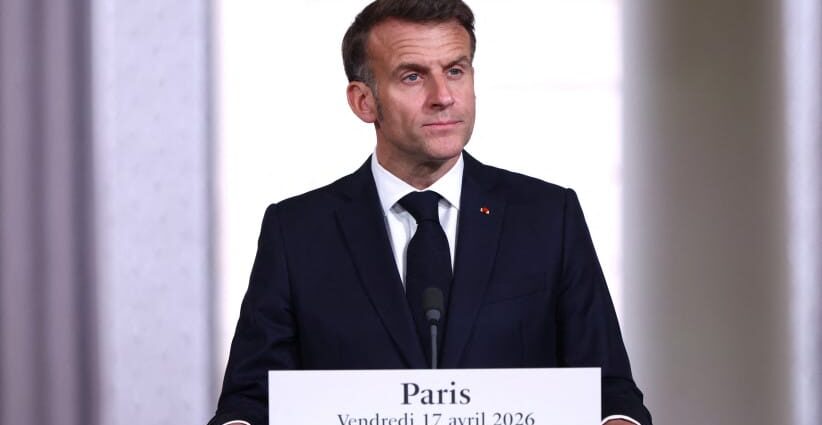
Within weeks, French President Emmanuel Macron became one of the first world leaders to visit Israel, expressing solidarity while proposing an international coalition against Hamas.
According to Journès, Israel should have embraced the idea.
‘Israel wouldn’t have been alone’
“I regret deeply that we didn’t take the time to consider that proposal,” he said. “Israel wouldn’t have been alone. Probably the warfare would have been different.”
Drawing comparisons with the international coalition against ISIS, he argued that multinational operations provide both military and diplomatic advantages.
“It took time, but we were successful,” he said. “The benefit in terms of international reputation was formidable.”
The French vision, he explained, involved combining intelligence capabilities, securing international legitimacy through the UN Security Council, and defining a political exit strategy before launching a prolonged campaign.
Journès did not attempt to minimize the deterioration in relations between Paris and Jerusalem.
“The relationship is not difficult,” he said bluntly. “It’s super bad.”
Although he said he maintained working relationships with senior Israeli political and security officials, he acknowledged that structured political dialogue has largely disappeared.
The ambassador attributed much of the decline to Israel’s international standing following the war in Gaza.
“The consequences of the war, the choice of a very brutal and destructive warfare, have been a catastrophe for the reputation of this country,” he argued.
“What they hated was the destruction, and Israel couldn’t hear it.”
At the same time, he lamented the collapse of public trust between the two allies.
“Yes, we have lost the trust of many Israeli people,” he said. “But Israel has also lost the consideration of a huge part of world opinion.”
‘You have to make friends again’
His prescription was straightforward.
“You have to work back on that. You have to make friends again.”
Despite the political disputes, some of Journès’ strongest memories centered on hostage families.
Rather than focusing exclusively on diplomacy, he said he deliberately invested time in helping people directly affected by the war.
“It was the families who had lost children, the families of hostages, the French citizens who were trapped here,” he said.
He praised members of his diplomatic staff who maintained weekly contact with relatives and described arranging meetings between hostage families and French leaders, including President Macron and First Lady Brigitte Macron.
“They are not numbers,” Journès said. “They are persons.”
He recalled insisting that French officials publicly name individual hostages rather than refer to them anonymously.
“Say their names,” he said. “Make them human.”
One of the sharpest disagreements between Paris and Jerusalem concerned Israel’s campaign in Lebanon.
French officials publicly urged restraint, prompting criticism from Israeli leaders who argued that France was undermining efforts to weaken Hezbollah.
Journès rejected that accusation, saying France opposed the way the campaign developed rather than Israel’s right to defend itself.
“We thought the operation was a mistake because it wasn’t as well planned as the first one,” he said.
He argued that the widespread destruction of villages in southern Lebanon damaged Israel diplomatically without producing the desired strategic results.
“Images of blowing villages on French television were a catastrophe,” he said. “You even lost the right-wing Christian vote. People were asking, ‘Why are churches and monasteries being destroyed?'”
Among the most contentious issues between the two countries was France’s refusal to allow several Israeli-chartered civilian aircraft carrying munitions to cross French airspace during Israel’s campaign against Iran this year..
Journès insisted the controversy had been misunderstood.
“The number of planes for which we said no was six,” he explained. “During the same period, hundreds of American flights were authorized because of our NATO obligations.”
The rejected flights, he emphasized, were carrying offensive weapons rather than defensive systems.
“They were bombs aimed at destroying infrastructure in Iran, into a war that we had disapproved,” he said. “That would have made us co-belligerent.”
Asked whether France viewed the Iran campaign as a mistake, he answered unequivocally.
“Yes.”
After years of participating in negotiations over Iran’s nuclear program, Journès argued that the military campaign ultimately strengthened rather than weakened Tehran’s leadership.
“The regime survived,” he said. “They’re not afraid anymore of the American strike.”
Journès also defended France’s decision to recognize a Palestinian state, and the French president’s attempt to convince more countries to recognize a Palestinian state, rejecting Israeli accusations that the move rewarded Hamas.
“I don’t think the goal of Hamas has ever been to have a Palestinian state living side by side with Israel,” he said. “They want no Israeli state.”
Recognition, he argued, was part of a broader diplomatic package that also envisioned regional normalization with Israel and the removal of Hamas from power.
“It is not a gift when the elimination of Hamas as a governing force in Gaza and the full disarmament of Hamas is part of the plan.”
Reflecting on the broader relationship, Journès argued that Israel often mistakes disagreement for hostility.
“The biggest mistake,” he said, “is to confuse someone who disagrees with someone who is against you.”
He contrasted Israel’s approach with NATO and the European Union, where allies routinely negotiate despite profound differences.
“Israel works differently,” he said. “You’re either with me or against me. It’s binary.”
After France restricted the display of certain offensive weapon systems in the Eurosatory defense exhibition outside Paris, Israeli officials accused Paris of discrimination.
Journès insisted that was never the intention.
“We didn’t discriminate against Israeli industries,” he said. “We invited all of them.”
According to the ambassador, France merely asked exhibitors not to prominently display bombs or models of munitions used in Gaza and Lebanon, arguing that doing so was politically impossible given French public opinion.
“If you remove the mock-ups of the bombs, we take down the walls,” he recalled telling Israeli exhibitors.
Instead, France encouraged companies to showcase defensive technologies.
“I said, expose Iron Dome. Expose David’s Sling. They saved Tel Aviv. They saved my life.”
Journès noted that he personally spent hundreds of hours in protected rooms during missile attacks.
“I counted,” he said with a smile. “I was in a shelter 267 times.”
But he claims Israel refused the deal. “They refuse. It’s a little bit of Israeli chutzpah, but we can be very stubborn as well.”
The deterioration in Franco-Israeli ties has also been reflected in the relationship between President Emmanuel Macron and Prime Minister Benjamin Netanyahu.
Asked when the two leaders last spoke, Journès said it had been several months, dating back to discussions surrounding France’s deployment of its carrier strike group to the region.
According to the ambassador, the lack of regular dialogue is symptomatic of the broader diplomatic freeze.
“My advice to the president right now is: wait and see before you restart a dialogue,” he said. “In this election moment, which is going to be heavily politicized, I don’t trust that we can have a reliable conversation.”
More broadly, he argued that one of Israel’s greatest diplomatic challenges has been allowing political disagreements to erode strategic relationships.
“France happens to be a power,” he said. “We have military capabilities, intelligence, and common interests regarding Iran’s nuclear program and ballistic missiles. Right now we don’t speak with Israel. The problem is that we’re speaking with everybody else”. The ambassador adds that Israel cannot talk only with countries that agree with her. Asked whether relations between the two countries were getting better, he answered: “Well, it could hardly get worse.”
Although deeply critical of many Israeli decisions, Journès ended the interview on an emotional note.
“I will miss the courage of the Israeli people,” he said. “You’re impressive people.”
He smiled while listing what he would – and would not – miss.
“I’ll miss the chutzpah,” he joked. “I’m not going to miss the balagan.”
Above all, he expressed hope that the strategic partnership between France and Israel could be restored.
“It could hardly get worse,” he said with a laugh when asked whether relations could improve.
Then, turning serious, he offered one final appeal.
“I will never stop being committed to the relationship with you,” he said. “You’re way too important not to have a solid relationship and a solid dialogue.”
After nearly three years marked by unprecedented regional upheaval and diplomatic strain, Journès leaves Israel convinced that disagreements between allies need not become permanent estrangement.
“Try to make friends with us again,” he said. “You will see there are people who love you.”