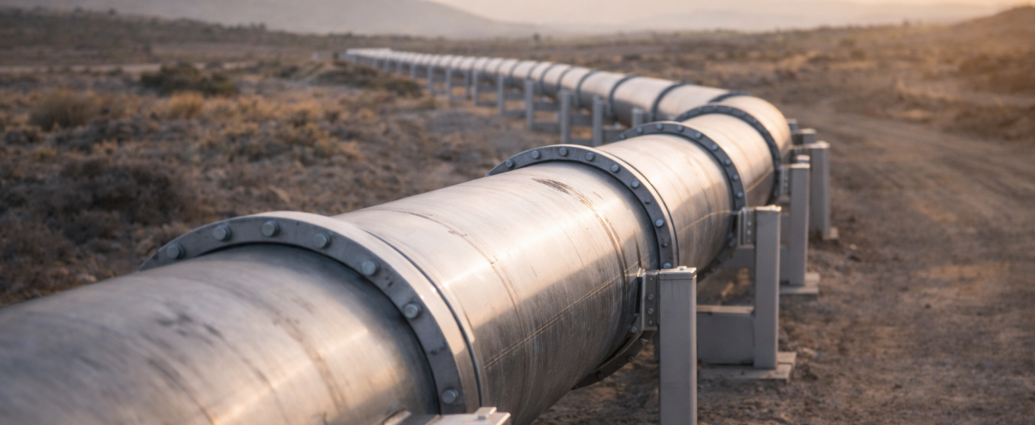
A senior global energy official is urging a renewed focus on overland export routes from the Middle East, with International Energy Agency Executive Director Fatih Birol advocating for the expansion and optimization of the Iraq–Turkey pipeline as a strategic alternative to the Strait of Hormuz, one of the world’s most vulnerable energy chokepoints.
Speaking in remarks reported by Turkish outlet Hürriyet, Fatih Birol said diversifying export routes is increasingly critical as geopolitical risks continue to threaten maritime oil flows through the Persian Gulf. “Relying heavily on a single corridor like Hormuz exposes global markets to significant disruption risk,” Birol said, emphasizing the importance of strengthening alternative infrastructure.
The Strait of Hormuz remains a critical artery for global energy markets, with roughly one-fifth of the world’s oil supply passing through the narrow waterway. Analysts have long warned that escalating tensions involving Iran and regional actors could jeopardize shipments, creating volatility in oil prices and supply chains. Bob McNally, president of Rapidan Energy Group and former White House energy advisor, noted, “Any credible alternative route that reduces dependence on Hormuz has immediate strategic value for both producers and consumers.”
The proposed emphasis on the Iraq–Turkey pipeline comes as Ankara and Baghdad continue to navigate disputes over oil exports from Iraq’s semi-autonomous Kurdistan region. The pipeline, which runs from northern Iraq to Turkey’s Mediterranean port of Ceyhan, has faced intermittent shutdowns in recent years due to legal and political disagreements. Turkish Energy Minister Alparslan Bayraktar has said previously that “resolving outstanding issues with Iraq remains a priority to fully restore and potentially expand flows.”
For Iraq, the pipeline represents a critical opportunity to diversify export routes and reduce reliance on southern terminals that ultimately feed into Hormuz-bound shipments. Iraqi Oil Minister Hayan Abdel-Ghani has acknowledged the importance of maintaining multiple export channels, stating, “Iraq’s long-term energy strategy includes strengthening infrastructure that ensures stable and diversified access to global markets.”
Energy economists say the timing of the proposal reflects heightened concern about geopolitical instability and its impact on global energy security. Amrita Sen, director of research at Energy Aspects, said, “The conversation around bypassing Hormuz tends to intensify whenever regional tensions rise, but implementing viable alternatives requires sustained political coordination and investment.”
The broader push also aligns with efforts by consuming nations to secure more resilient supply chains. European policymakers, still recalibrating energy strategies following disruptions tied to the Russia-Ukraine war, have shown increasing interest in diversified supply routes from the Middle East. Kadri Simson, European Commissioner for Energy, has emphasized that “energy security depends not only on supply volumes but also on the reliability and diversity of transport routes.”
Still, significant hurdles remain. Expanding or fully optimizing the Iraq–Turkey pipeline would require political alignment between Baghdad, Erbil, and Ankara, as well as regulatory clarity and infrastructure investment. Industry experts caution that without resolution of existing disputes, the pipeline’s full potential cannot be realized. Helima Croft, head of global commodity strategy at RBC Capital Markets, said, “The infrastructure exists, but the bottleneck is political, not technical.”
Market participants are closely watching whether renewed diplomatic engagement could unlock progress. A fully operational and expanded Iraq–Turkey corridor could shift regional energy dynamics, offering producers a meaningful hedge against disruptions in Hormuz and providing buyers with greater supply security.
For global markets, the implications extend beyond the Middle East. Oil traders and policymakers alike view alternative transit routes as a key buffer against price shocks. “Even incremental diversification of supply routes can have an outsized impact on market stability,” McNally added.
As geopolitical risks remain a persistent feature of the energy landscape, the push by Fatih Birol underscores a broader strategic recalibration—one that prioritizes flexibility, redundancy, and resilience in global energy flows. Whether the Iraq–Turkey pipeline can fulfill that role will depend not only on infrastructure, but on the political will to align competing interests across the region.
—JBizNews Desk