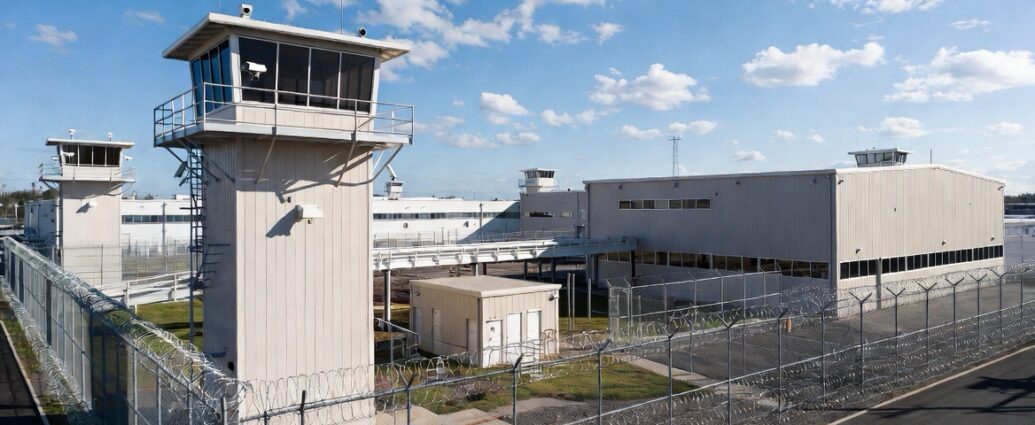
New York — The two largest U.S. private prison companies are reporting record financial results as the federal government expands immigration detention capacity, according to company earnings reports, investor presentations, and federal contract disclosures. The surge has transformed what was once a struggling industry into one of the fastest-growing corners of the government-contractor market.
GEO Group reported net income of approximately $254 million for 2025, a company record and roughly seven times higher than the prior year. Rival CoreCivic posted profit of about $116.5 million, up sharply from 2024 as both companies benefited from new immigration detention contracts and the reopening of previously idle facilities.
The gains come as the Trump administration pursues a significant expansion of immigration enforcement operations. Federal spending on detention infrastructure has increased dramatically, creating new opportunities for companies that operate correctional and detention facilities under government contracts.
On a recent earnings call, GEO Group Executive Chairman George Zoley told investors the company secured approximately $520 million in new annualized contracts during 2025, the largest amount of new business in the company’s history. Much of that growth came from agreements with U.S. Immigration and Customs Enforcement (ICE) and other federal agencies seeking additional detention capacity.
The company has reopened facilities that previously sat vacant and expanded operations at existing locations. GEO says it now manages roughly 50,000 beds across its network of detention, correctional, and community supervision facilities.
CoreCivic has experienced a similar surge.
According to company filings, revenue from ICE, its largest government customer, rose more than 96% during the first quarter of 2026 compared with the same period a year earlier. The increase followed the activation of multiple facilities and the acquisition of additional detention capacity designed to accommodate rising federal demand.
Executives at both companies have repeatedly told investors they expect growth to continue as the government expands detention operations nationwide.
The financial turnaround marks a dramatic reversal for an industry that faced significant political and financial challenges only a few years ago. Several major banks reduced lending relationships with private prison operators, while some government agencies moved away from private detention contracts.
Today, the environment looks very different.
Congress recently approved funding that significantly increases resources available for immigration enforcement and detention. Industry analysts estimate that federal detention spending could reach levels never before seen, creating billions of dollars in potential contract opportunities.
Supporters argue the facilities provide capacity the government cannot quickly build on its own.
Critics counter that the rapid growth raises concerns about accountability, detention conditions, and the role of private profit in immigration enforcement.
Human-rights organizations and immigration advocates have long argued that private detention operators have financial incentives that may conflict with detainee welfare. Both GEO Group and CoreCivic reject those claims and say they operate under strict federal standards and oversight requirements.
The debate has not slowed investor enthusiasm.
Shares of both companies have risen substantially since the administration’s immigration enforcement expansion began. Investors increasingly view detention operators as direct beneficiaries of federal spending growth, much like defense contractors benefit from military spending increases.
Analysts note that unlike many traditional industries, private prison companies depend heavily on government policy decisions. Changes in enforcement priorities can have immediate effects on occupancy rates, revenues, and profitability.
That creates both opportunity and risk.
A future administration could pursue different immigration policies, reducing detention needs and reversing some of the industry’s gains. Investors have seen similar swings before as election outcomes reshaped federal detention priorities.
For now, however, demand continues to move in one direction.
Federal officials have indicated they want significantly greater detention capacity, and private operators remain among the fastest ways to provide it. Building new government-owned facilities can take years, while existing private facilities can often be activated much more quickly.
The resulting increase in occupancy has helped improve margins across the industry. Fixed costs are spread across more detainees, making each facility more profitable as utilization rises.
The economic impact extends beyond the companies themselves.
Many detention centers are located in smaller communities where they serve as major employers. Facility expansions often create new jobs ranging from corrections officers and medical personnel to maintenance workers and administrative staff.
Supporters frequently point to those local economic benefits when defending detention contracts.
Opponents argue taxpayers should closely scrutinize how public funds are being spent and whether private contractors are delivering appropriate value.
Regardless of where the political debate ultimately lands, the business results are difficult to ignore.
Record profits, expanding contracts, rising occupancy, and increased federal spending have combined to create one of the strongest operating environments the private detention industry has experienced in years.
As immigration enforcement remains a central national issue, the companies positioned to house detainees are finding themselves at the center of one of Washington’s fastest-growing spending categories.
JBizNews Desk | New York
© JBizNews.com All Rights Reserved. Reproduction or distribution without written permission is prohibited.