
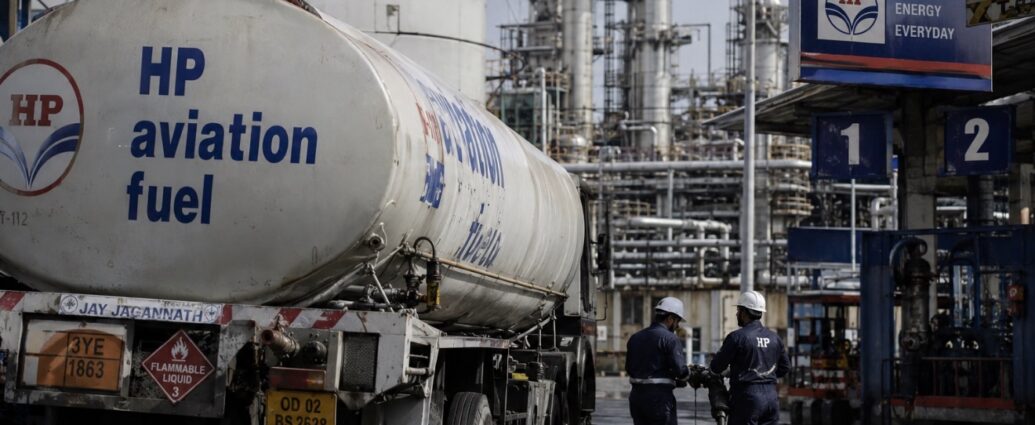
India has sharply increased taxes on fuel exports in an effort to keep more diesel and jet fuel inside the country, tightening global supplies just as businesses around the world are already paying higher prices for refined petroleum products.
The move lands directly on U.S. consumers, airlines and trucking companies that rely on the same global diesel market as the U.S.–Iran conflict continues to disrupt energy flows and strain refined fuel supplies.
Under an order issued Monday, New Delhi raised the special additional excise duty on diesel exports to 25.5 rupees per liter from 15.5 rupees, while the duty on aviation turbine fuel climbed to 22 rupees from 14.5 rupees. The levy on gasoline exports also increased by one rupee to 3.5 rupees per liter. The petrol and diesel changes took effect August 3, with the jet fuel increase beginning Wednesday.
The government said the objective is straightforward: discourage exports and ensure more fuel remains available for domestic consumers.
The increase is steep by any measure. Just over two weeks ago, on July 16, India lowered the levy on gasoline exports while raising diesel to 15.5 rupees and jet fuel to 14.5 rupees. The latest revision nearly doubles the diesel duty again while increasing the jet fuel levy by more than 50%.
The higher taxes make overseas sales significantly less profitable, encouraging refiners to supply the domestic market instead of shipping fuel abroad.
Why India Is Keeping More Fuel at Home
India reviews export duties every two weeks, adjusting them to reflect crude oil prices and domestic market conditions.
Because the country imports more than 85% of the crude oil it consumes, it is especially vulnerable to global price spikes. Higher oil prices increase India’s import bill, weaken the rupee, fuel inflation and raise transportation and manufacturing costs across the economy.
The windfall tax was first introduced in July 2022, generating roughly 250 billion rupees, or about $2.62 billion, during its first year before declining to 130 billion rupees in fiscal 2023-24. It was eliminated in December 2024 but reinstated in March 2026 after oil prices surged following the outbreak of the regional conflict. Since its return, the levy has been presented as a way to guarantee domestic fuel supplies by making exports less attractive.
The timing is notable.
Brent crude fell roughly 5% Monday to $83.82 per barrel after President Donald Trump canceled a planned strike on Iran and announced that new talks with Tehran would begin, while regional allies including Saudi Arabia pushed Washington toward diplomacy. Iran denied direct negotiations with the United States but acknowledged indirect talks through Oman concerning the reopening of the Strait of Hormuz.
India proceeded with the tax increase anyway, suggesting policymakers believe supply risks will outlast the latest diplomatic headlines.
Where the Pain Lands for U.S. Buyers
American consumers and businesses have a direct stake in what Indian refiners do with their surplus fuel.
Indian exports have become an important balancing supply for global diesel markets. Keeping more barrels inside India leaves fewer cargoes available internationally, tightening a market that was already facing limited inventories.
Analysts have warned that higher Indian export duties will reduce fuel shipments at a particularly difficult moment. Diesel inventories remain exceptionally tight worldwide, while Russian refined-product exports have also been constrained following sustained Ukrainian drone attacks on Russian refining facilities.
Ole Hansen, Head of Commodity Strategy at Saxo Bank, summarized the situation simply: “The real stress in energy markets is not in crude oil but in refined products.”
Market data reinforces that point.
Diesel refining margins have hovered near $70 per barrel, compared with roughly $60 for jet fuel, leaving diesel unusually expensive for an extended period. European gasoil futures have traded above $1,150 per metric ton while middle-distillate inventories remain near multi-decade lows, with global refinery capacity struggling to keep pace with demand.
Those costs eventually flow through to American trucking companies, farmers, manufacturers, airlines and homeowners who rely on heating oil in the Northeast.
Distillate fuels—including diesel and heating oil—represented roughly 19% of U.S. petroleum consumption during 2025, or about 3.9 million barrels per day. Jet fuel accounted for another 8%, or approximately 1.7 million barrels daily. Those are enormous volumes competing for a shrinking pool of exportable refined fuel.
Inside India, the policy is also creating friction.
Airline groups warn that the new 22-rupee-per-liter tax on jet fuel exports will ultimately increase aviation costs in one of the world’s fastest-growing air travel markets. Export-oriented refiners also face lower profitability on international shipments just as overseas cargoes had become their strongest source of earnings.
For Washington, India’s decision is another reminder that energy security is becoming increasingly national.
More governments are choosing to keep fuel at home instead of selling it abroad, reducing the volume available on world markets. Even as one of the world’s largest energy producers, the United States still buys and sells within that same global marketplace—meaning overseas policy decisions can quickly translate into higher costs for American businesses and consumers.
JBizNews Desk | New Delhi
© JBizNews.com All Rights Reserved. Reproduction or distribution without written permission is prohibited.




