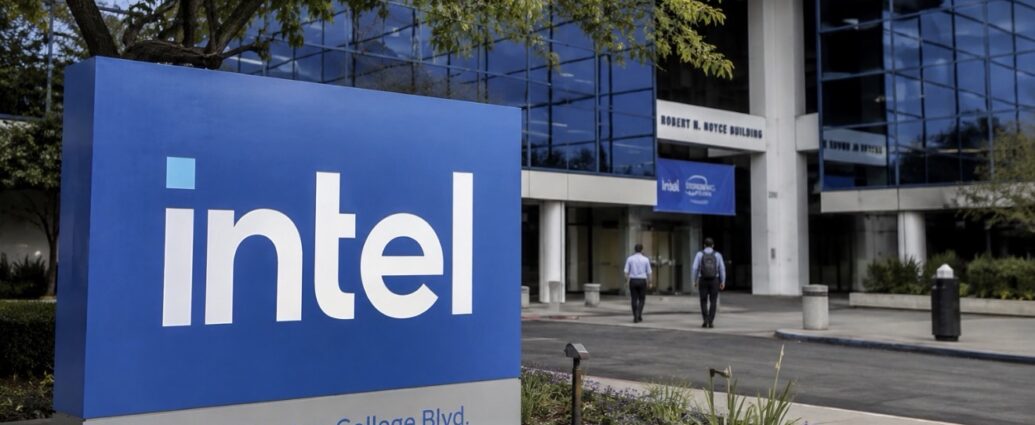
Intel has increased its planned stock offering from $15 billion to $20 billion, a move that says as much about the economics of artificial intelligence as it does about Intel itself.
The chipmaker announced Monday that it planned to raise $15 billion by selling new shares. By Tuesday morning, after strong investor demand, Intel expanded the deal to $20 billion.
That raises a simple question: Why does a company as large as Intel suddenly need that much new money?
The answer is that the AI boom is extraordinarily expensive.
Most consumers experience artificial intelligence as software — a chatbot, search tool or feature inside a phone or computer. But underneath that software sits an enormous physical infrastructure: semiconductor factories, advanced packaging plants, data centers, power equipment, cooling systems and thousands of high-end servers.
Intel wants to supply more of that infrastructure.
The company is spending heavily to expand chip manufacturing and its foundry business, where Intel makes semiconductors for outside customers rather than only designing chips for itself.
That strategy puts Intel more directly against Taiwan Semiconductor Manufacturing Co., the world’s dominant contract chipmaker.
Building those factories requires enormous amounts of money years before they generate meaningful revenue. A modern semiconductor fabrication plant can cost tens of billions of dollars, and companies must continue spending even while technology changes and newer generations of chips are being developed.
That is where the stock offering comes in.
Instead of borrowing another $20 billion and adding more debt to its balance sheet, Intel is selling new ownership in the company.
Investors are buying approximately 210 million newly issued Intel shares at $95 apiece. Intel expects to receive close to $20 billion after underwriting costs, and the banks managing the sale have an option to buy additional shares.
For existing shareholders, there is a downside.
When a company creates and sells new shares, every existing shareholder owns a slightly smaller percentage of the company. That is known as dilution.
Think of Intel as a pizza. The company did not shrink the pizza, but it added more slices. Someone who previously owned one slice out of 10 now effectively owns one slice out of a larger total.
Companies generally accept that dilution when management believes the money raised can create more value than the dilution destroys.
Intel is effectively telling investors that access to capital now is more valuable than preserving the existing share count.
The fact that the offering grew from $15 billion to $20 billion is also important.
Companies typically announce a proposed offering and investment banks then gauge demand from institutional investors. When demand is strong enough, the company can increase the size of the sale.
So the upsizing suggests large investors were willing to provide Intel with substantially more capital than it initially sought.
That does not mean Wall Street suddenly believes Intel’s turnaround is guaranteed.
It means investors see enough potential in Intel’s position within the AI infrastructure race to commit billions of dollars to it.
There is another reason the timing makes sense.
Intel’s stock has recovered substantially, allowing the company to raise considerably more cash for every share it sells than it could have when its share price was much lower.
Raising equity when a stock is strong is generally less dilutive than waiting until the company is under financial pressure.
Intel also has another advantage: demand for AI computing is forcing technology companies to search for additional semiconductor capacity.
For years, much of the industry concentrated production at TSMC. The AI boom has exposed the risk of relying too heavily on a limited number of advanced manufacturing facilities.
If Intel can successfully build a competitive foundry business, companies looking for additional U.S.-based semiconductor manufacturing could become customers.
That is the bet behind the spending.
Intel is asking shareholders to accept dilution today in exchange for the possibility that billions of dollars in new factories and technology will create a much larger business tomorrow.
And Intel is not alone.
Across the technology industry, companies are raising debt, selling shares, forming infrastructure partnerships and bringing private-equity firms into projects because the physical cost of AI is becoming too large for even giant corporations to comfortably finance on their own.
The first phase of the AI boom was about chips.
The second was about data centers.
The next phase may increasingly be about who can finance all of it.
Intel’s decision to raise its offering from $15 billion to $20 billion is one of the clearest examples yet.
JBizNews Desk | Santa Clara, California
© JBizNews.com All Rights Reserved. Reproduction or distribution without written permission is prohibited.