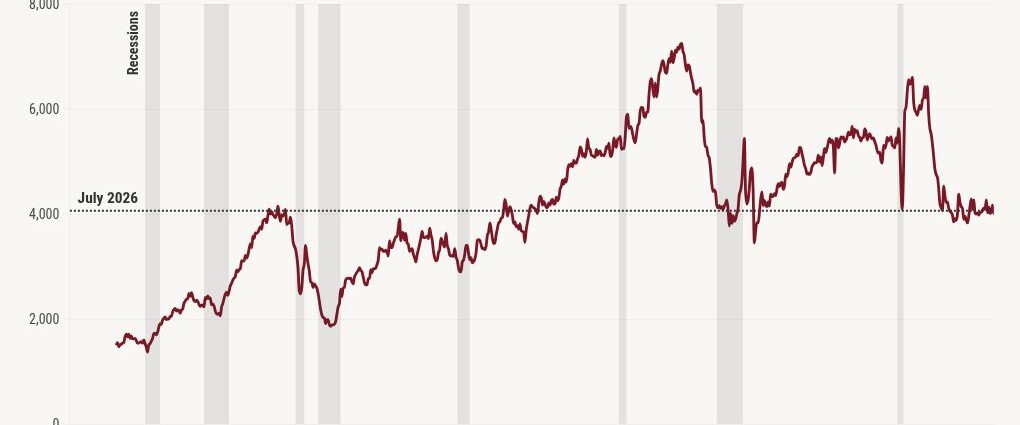
Housing inventory is down year over year, and price growth stands at 2.0% per the NAR existing home sales report. That combination might seem bad for affordability, but the truth is housing inventory is back at a healthy level, with price growth still in check and below wage growth, which ran at 3.2% in the July jobs report.
Also, housing inventory is only down a smidge year over year, but today I want to highlight why that is important going forward for years to come.
The housing inventory data from NAR isn’t a shock to our readers and those who have listened to our podcast. The supply and demand equilibrium changed in mid-June of 2025 and when rates fall and demand picks up a bit, it’s hard for inventory to really grow. However, inventory-wise, even though we aren’t back to the normal levels of 2-2.5 million, we have been at much healthier inventory levels in both 2025 and 2026.
I have always believed that if we have total active inventory levels between 1.52 million and 1.93 million with four months of supply, we are good: there’s no shortage and we have plenty of homes out there to have a functioning marketplace. Today, we are at 1.54 million units with 4.6 months of supply.
Housing inventory levels in both 2025 and 2026 have slowed price growth down to much healthier levels, running between 1%-2% growth nationally. This is much better than what we saw in 2020, which had 10% home-price growth, 2021, which had 19% home-price growth, and 2022, when even with sales crashing that year, we had 6% home-price growth.
With this type of home-price growth in 2025 and 2026, affordability is getting a bit better on its own without help from lower mortgage rates.
NAR report: Existing-home sales decreased by 1.7% month-over-month and increased 0.7% year-over-year, according to the National Association of REALTORS® Existing-Home Sales report.
“Home sales have been remarkably stable, even amid the rising mortgage rate environment of the past few months,” said NAR Chief Economist Lawrence Yun. “Year-to-date sales are up 2.4% and there’s no doubt that the housing market would be thriving if average mortgage rates were to return near 6%.”
As you can see in the chart below, home sales haven’t really gone anywhere for years, but they do perform better under one backdrop: when mortgage rates are closer to 6%.
My 2026 forecast for existing home sales was for 237,000 more home sales if mortgage rates could stay at 6.25% or lower, because since the start of 2023, housing demand has performed better when rates get below 6.64% and head toward 6%. This year, once you exclude the snowstorm data, housing demand has been positive almost every week when mortgage rates are closer to 6%. Existing home sales have even held up with mortgage rates between 6.25%-6.50%. However, now with mortgage rates above 6.64%, we can see in our data that housing demand is slowing down — nothing too bad, but not growing like we had seen before.
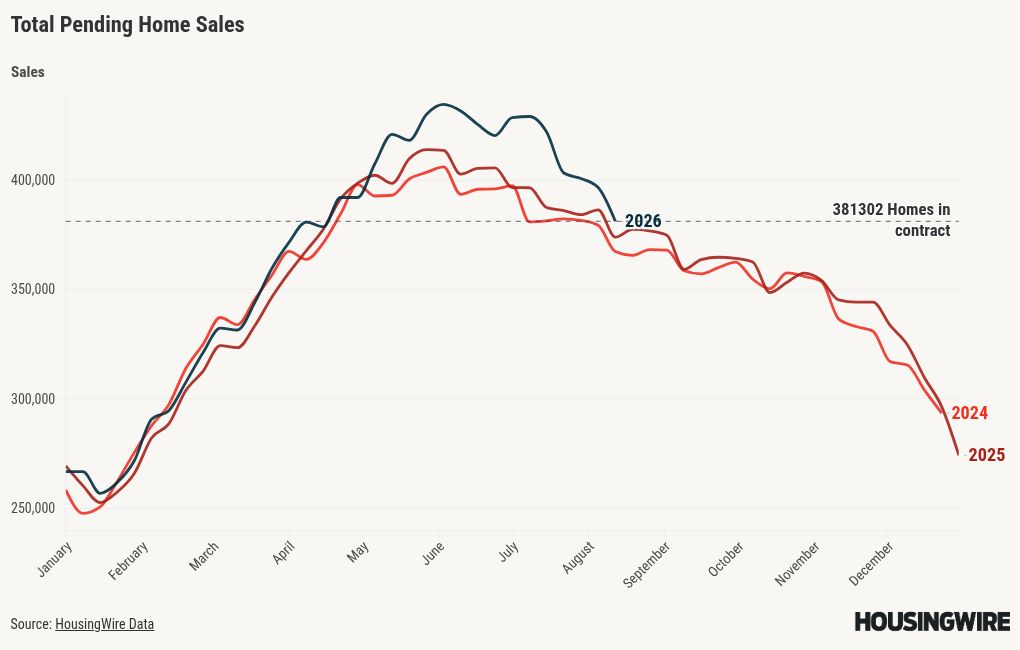
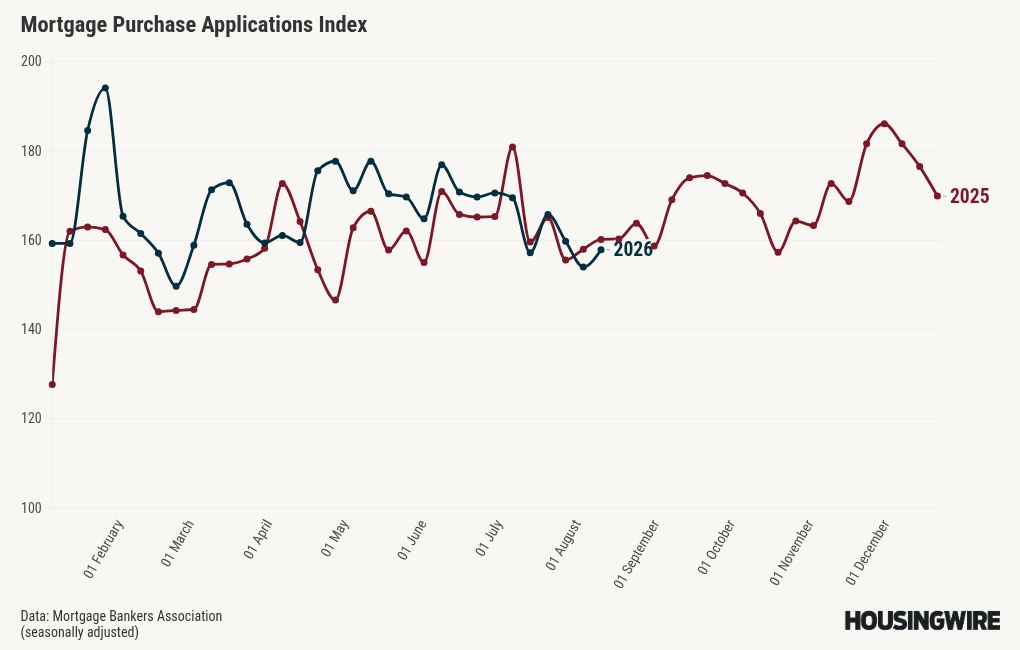
One thing to remember: the year-over-year comps will make it harder for housing to show growth in demand. Takeaway point: today’s purchase application data is up 3% week to week but down 1% year over year. Last year at this time, mortgage rates started to fall, so demand started to pick up; so take that variable into consideration going forward.
Conclusion
Overall, not too much is happening in housing if you read all the data together — prices are up just a smidge, home sales are up 2.4% year to date and there is not much growth in inventory. However, when you look at the internal storylines, there are a lot of positive things happening this year which didn’t happen during the years following COVID.
Mortgage rates are close to yearly highs as the conflict with Iran persists and a lot of Fed members want rate hikes, but for now, housing has held up better than in previous years, and a lot of that has been due to inventory growing from a savagely unhealthy level in 2022 to a healthier level in 2026.