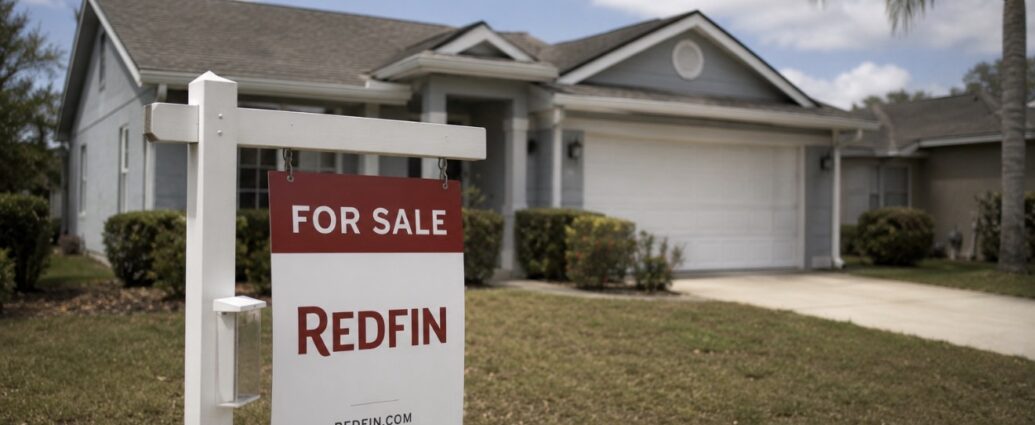
Wall Street investors and corporate landlords are pulling back from the U.S. housing market, marking a significant shift that could reshape competition for homes across the country.
According to a Redfin report released May 28, investor purchases of U.S. homes fell 6% year-over-year during the first quarter of 2026, reaching their lowest level since 2020 and among the weakest levels recorded since before the pandemic housing boom.
The report, based on county-level purchase records across 39 major U.S. metropolitan areas, found that both large institutional investors and smaller landlords have become increasingly cautious as high borrowing costs and elevated home prices squeeze returns.
The reason is simple: housing has become a much tougher investment.
Mortgage rates remain significantly higher than the ultra-low levels that fueled investor buying during the pandemic. Although rates eased into the low-6% range during the first quarter, they remain roughly double the levels many investors enjoyed just a few years ago.
At the same time, home prices continue to hover near record highs in many markets.
That combination is making it increasingly difficult for investors to generate attractive returns through rental income or property appreciation.
As a result, many investors are choosing to sit on the sidelines rather than pursue acquisitions that may not produce sufficient profits.
The cooling investment climate is particularly evident in traditionally affordable housing segments.
Investor purchases of condominiums fell 8%, reaching their weakest first-quarter level since 2015. Townhouse purchases dropped 13%, while purchases of single-family homes declined 6%.
Despite the slowdown, single-family homes still accounted for roughly 70% of all investor purchases, underscoring their continued importance within the rental housing market.
The retreat is especially visible in Florida.
Orlando recorded one of the steepest declines among major metropolitan areas, with investor purchases falling 25% from a year earlier. Investors have increasingly backed away from several Florida markets as rising insurance costs, growing housing inventory, softening home prices, and escalating homeowner-association fees weigh on profitability.
Cleveland also saw investor purchases decline sharply, falling 21% year-over-year.
Not every market is experiencing a pullback.
Investor purchases increased most sharply in San Francisco, rising 19%, followed by Virginia Beach at 15% and San Jose at 12%.
The gains highlight the continued appeal of technology-driven housing markets benefiting from strong job growth and the ongoing artificial-intelligence investment boom.
Where economic growth remains strong and housing demand is accelerating, investors continue to see opportunity.
Where ownership costs are rising faster than rents, many are heading for the exits.
The broader housing market remains sluggish overall.
Investor-owned purchases represented approximately 19% of all home purchases during the first quarter, roughly unchanged from a year earlier. Meanwhile, the share of investor-owned properties listed for sale fell to 7.8% of total U.S. listings, the lowest level in five years.
For ordinary homebuyers, the trend may offer some relief.
For years, first-time buyers have complained about competing against investors capable of making all-cash offers and quickly acquiring starter homes.
With investors purchasing fewer properties, some buyers may encounter less competition, particularly in lower-priced housing segments.
However, the development also serves as a warning sign.
The same conditions discouraging investors—high home prices, elevated mortgage rates, and uncertain returns—continue to challenge families seeking to purchase homes for themselves.
In many markets, affordability remains one of the biggest obstacles facing prospective homeowners.
The housing market now finds itself in a holding pattern.
Investors are waiting for borrowing costs to fall and profitability to improve. Homebuyers are waiting for greater affordability. Sellers are waiting for stronger demand.
Until interest rates move decisively lower or home prices adjust, much of the market appears likely to remain frozen between those competing forces.
JBizNews Desk — Real Estate
© JBizNews.com All Rights Reserved. Reproduction or distribution without written permission is prohibited.