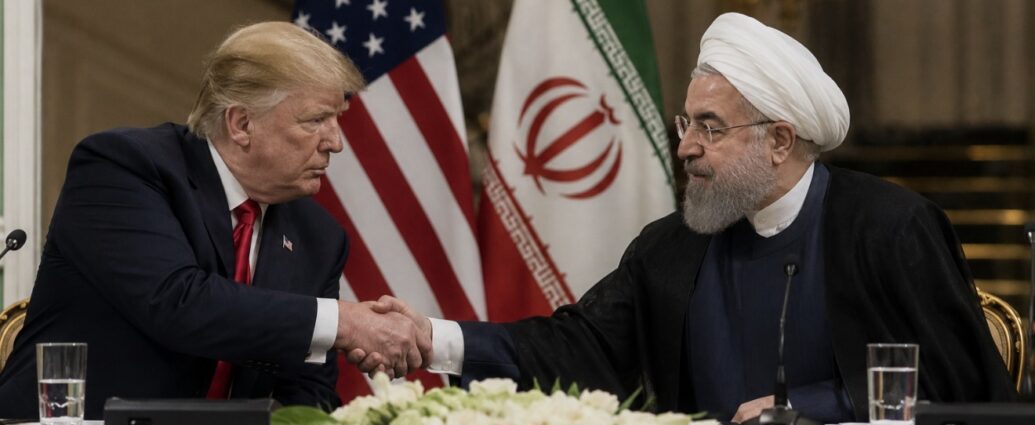
A senior Trump administration official told reporters Monday that the memorandum of understanding signed with Iran a day earlier leaves some of the hardest issues — sanctions relief, Iran’s nuclear program, and tens of billions of dollars in frozen Iranian money — for a later round of talks. For Tehran, that frozen money may be the biggest prize of all.
The agreement, signed digitally Sunday by President Donald Trump and Vice President JD Vance, opens a 60-day window for technical negotiations meant to produce a final deal. A formal signing ceremony with U.S. and Iranian officials, joined by Pakistani and Qatari mediators, is planned for Friday. But the official was blunt that this is a starting point, not a finished bargain.
What Iran wants is straightforward. Iranian state media, citing a 14-point draft, has described a plan to free up about $24 billion of Iran’s blocked funds during the 60-day period, with half handed over before final talks even begin. The Trump administration tells a different story.
A senior official said Friday that Iran would get nothing until it proves it is living up to the deal — turning over nuclear material, dismantling facilities, and committing to regional calm. Each step, the official said, earns Iran something in return. Treasury Secretary Scott Bessent, who oversees the sanctions machinery, has signaled the same caution. So the two sides do not yet agree on even the basic timing of any payout.
So where is all this money? Iran’s frozen and restricted assets are scattered across the globe, the leftover proceeds of oil and gas it sold but could not bring home once U.S. sanctions cut its banks off from the financial system. Estimates of the total run as high as $100 billion, though many put the realistically recoverable amount closer to $40 billion to $50 billion.
The single largest pile sits in China, Iran’s main oil customer, where Iranian funds are estimated in the tens of billions — figures range from about $20 billion to as much as $50 billion. Iraq owes Iran billions more for years of natural gas and electricity, with estimates between $6 billion and $15 billion. Qatar holds roughly $6 billion, money that originally sat in South Korea before being moved in a 2023 prisoner swap and then blocked again. Smaller sums are parked in Japan, Luxembourg, Oman, and the United Arab Emirates, and India is believed to hold around $7 billion.
None of this tension is new. Washington first froze Iranian assets in 1979 after the U.S. Embassy in Tehran was seized. The money came briefly within reach after the 2015 nuclear deal, then was locked away again in 2018 when Trump pulled the United States out of that agreement and reimposed sanctions. Each round of penalties trapped more of Iran’s oil earnings in accounts it could see but not touch.
For ordinary Iranians, the stakes are immediate. The Statistical Centre of Iran put annual inflation at 68.1% in February, the highest reading since World War II, and the recent fighting deepened an economy already in crisis. Even a partial release of frozen cash could steady Iran’s currency, ease the cost of imported food and medicine, and give the government some room to breathe.
The money is also tied to bigger questions for the world economy. Trump has said reopening the Strait of Hormuz — the narrow shipping lane Iran effectively shut during the war — is a priority in the talks. That waterway carries a large share of the world’s oil, and any lasting deal that frees Iranian funds would likely come paired with calmer energy markets and steadier prices at the pump well beyond the Middle East.
That is why companies far from Tehran are watching closely. Shippers, refiners, and importers have spent months pricing in the risk of a closed Hormuz, and a credible path to peace would start to unwind that premium. For businesses, the frozen-asset fight is not a side issue. It is one of the levers that decides whether the fragile truce holds.
For now, the frozen billions stay frozen. The weekend memorandum settled the easy part — an agreement to keep talking. The hard part, including who releases what money and when, is exactly what the next 60 days are meant to decide.
JBizNews Desk
© JBizNews.com All Rights Reserved. Reproduction or distribution without written permission is prohibited.