By JBizNews Desk | Sunday, May 10, 2026 | 12:18 PM ET
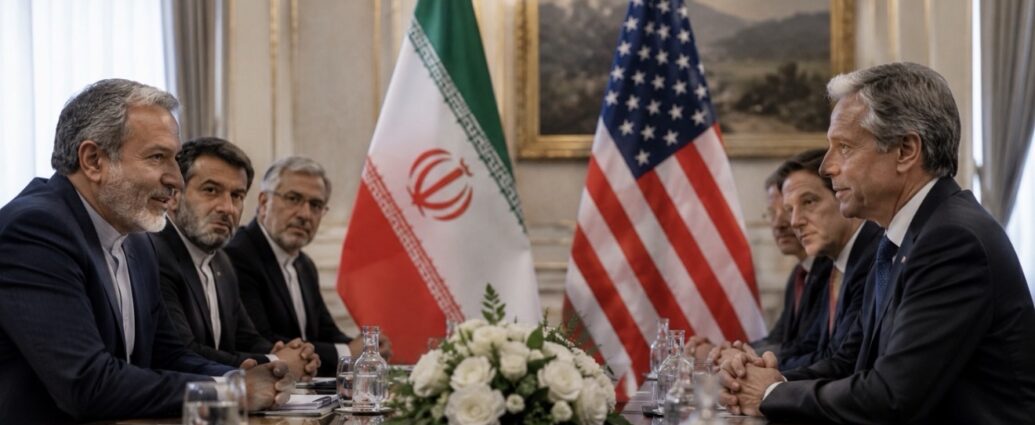
Sunday morning, Iran’s state news agency IRNA reported that Tehran had formally delivered its response to the latest U.S. proposal for ending the war to mediator Pakistan — a move that keeps the diplomatic channel alive even as drone strikes rattled Gulf waters and energy markets braced for what comes next. A Pakistani diplomatic source confirmed to Al Jazeera Arabic that the response had been transmitted to the U.S. side. The development arrived against a backdrop of surging gasoline prices, a Brent crude market trading around $101 a barrel, and consumer confidence at fresh record lows — all direct consequences of a Strait of Hormuz that has remained effectively closed since joint U.S.-Israeli strikes launched the war on February 28.
According to IRNA and Iran’s semi-official ISNA news agency, the core of Tehran’s response centers on two immediate priorities: permanently ending hostilities across all fronts of the war and restoring maritime security in the Persian Gulf and the Strait of Hormuz. According to Reuters, Iran’s proposal focuses the current phase of negotiations exclusively on the cessation of hostilities, with the more contentious question of Iran’s nuclear program deliberately set aside for a later stage. Al Jazeera’s Tehran correspondent reported that Iran is pursuing a three-phase approach, with the first phase lasting 30 days and focused entirely on ending the war on all fronts — including in Lebanon, where Hezbollah and Israeli forces have continued exchanging fire despite a separate ceasefire announced by President Donald Trump on April 16.
That sequencing places Tehran and Washington at an immediate point of tension. The U.S. proposal, a 14-point document transmitted earlier this week through Pakistan, would formally end the war and reopen the Strait of Hormuz, but it also demands that Iran halt uranium enrichment for at least 12 years and surrender an estimated 970 pounds of uranium enriched to 60% purity — a short technical step from weapons-grade levels — before broader talks begin. Iranian state media quoted Foreign Ministry spokesperson Esmaeil Baghaei as saying that at this stage Iran is not negotiating its nuclear program, framing the nuclear file as a matter for a subsequent phase rather than a precondition to peace.
Former U.S. Assistant Secretary of State Mark Kimmitt told Al Jazeera that President Trump’s demand for a full halt to uranium enrichment is unrealistic and unlikely to be accepted by Tehran, noting that Iran will insist on its right to enrich uranium to the 3.67% level permitted under international nuclear non-proliferation agreements. Ali Vaez, director of the Iran Project at the International Crisis Group, said both sides will either have to make painful concessions or leave major disagreements deliberately vague if they hope to finalize any workable framework.
Despite IRNA’s report that the response had already been delivered, U.S. Ambassador to the United Nations Michael Waltz said Sunday that Washington had not yet formally received Iran’s reply, attributing part of the delay to internal divisions inside Tehran’s leadership structure. U.S. Energy Secretary Chris Wright, appearing on CBS News’s Face the Nation, said he expected a response very soon, citing growing economic pressure on Iran’s leadership. CBS News also reported that Qatari Prime Minister Sheikh Mohammed bin Abdulrahman Al Thani met privately with Vice President JD Vance in Miami on Saturday, with no aides present, as part of an intensifying diplomatic push.
Iran’s counterproposal, as described by Iranian state media, includes demands for the withdrawal of U.S. forces from nearby areas, the lifting of the American naval blockade surrounding Iranian ports, the release of billions of dollars in frozen Iranian assets, the removal of sanctions, war reparations, an end to hostilities including in Lebanon, and the creation of a new control mechanism governing the Strait of Hormuz — a proposal that has alarmed Gulf governments and international shipping operators alike. Iran’s parliament is separately drafting legislation to formalize Tehran’s management authority over the strait, including provisions barring passage to vessels belonging to states it considers hostile. Brigadier General Amir Akraminia, spokesperson for the Iranian army, warned Sunday that countries enforcing U.S. sanctions against Iran would face problems transiting the strategic waterway.
The continued closure of the Strait of Hormuz is already producing consequences felt directly by consumers and businesses around the world. The International Energy Agency estimates the conflict is removing roughly 14 million barrels per day from global oil supply — potentially the largest energy disruption in modern history. Brent crude settled Friday at $101.29 per barrel, still posting a weekly loss of more than 6% as traders priced in ceasefire optimism, though analysts increasingly warn that optimism may prove premature.
Analysts at ANZ Research wrote in a note that the risk of the proposed U.S. peace framework collapsing will likely keep oil markets volatile for the foreseeable future. Shipping data from Kpler showed that only a limited number of vessels crossed the strait in recent days, while the International Maritime Organization estimated that as many as 20,000 seafarers remain stranded aboard vessels inside or near the waterway — a situation the organization described as unprecedented in the modern shipping era.
Saudi Aramco CEO Amin Nasser said Sunday that even if commercial traffic resumes immediately through the Strait of Hormuz, global energy markets would still require several months to rebalance. If disruptions continue beyond the coming weeks, he warned, normalization may not occur until 2027. June Goh, senior oil market analyst at Sparta Commodities, said traders are increasingly pricing in the likelihood of further oil infrastructure damage and a prolonged closure of the strait beyond the timeline publicly outlined by the Trump administration.
With President Trump scheduled to visit China this week — and Beijing pressing urgently for an end to a conflict that has ignited a global energy crisis and renewed fears of recession — the diplomatic exchange now moving through Islamabad carries consequences far beyond the Gulf. Whether Iran’s phased approach to negotiations gains traction in Washington over the coming days may ultimately determine whether the ceasefire survives, the Strait of Hormuz reopens, and fuel prices begin their long road back toward normal levels for consumers worldwide.
JBizNews Desk
© JBizNews.com. All rights reserved. This article is original reporting by JBizNews Desk. Unauthorized reproduction or redistribution is strictly prohibited.